News / National
Starlink plans direct-to-cell service for Zimbabwe
2 hrs ago |
95 Views
Zimbabwe has been listed among more than 150 countries where SpaceX's satellite internet service, Starlink, plans to offer its direct-to-cell mobile connectivity service, branded Starlink Mobile.
The United States Federal Communications Commission (FCC) approved Starlink's application for a global mobile roaming service on September 17, 2026, allowing the company to carry international voice, data and internet traffic across US borders through interconnections with affiliated entities in other countries.
The FCC document identifies 29 African countries where Starlink holds or has applied for permission to provide telecommunications services, including Zimbabwe, Botswana, Eswatini, Lesotho, Mozambique and Namibia.
Apart from Namibia, which has faced regulatory hurdles over local ownership requirements, the countries listed have granted Starlink permission to operate within their jurisdictions.
However, the FCC approval does not automatically grant Starlink permission to provide telecommunications services in every country listed. Local regulatory requirements will still apply.
Starlink Mobile is designed to connect compatible mobile phones directly to satellites when conventional cellular network coverage is unavailable. Rather than operating as a standalone cellular network, the service currently relies on partnerships with terrestrial mobile operators, including T-Mobile, Rogers Communications, Deutsche Telekom and Optus.
As of September 2026, Starlink had confirmed plans to introduce its direct-to-cell technology in more than a dozen African countries, primarily through partnerships with Airtel Africa.
In March 2026, MTN Zambia became the first cellular operator to complete field testing of Starlink Mobile, successfully conducting the country's first satellite-based data session and mobile money transaction using MTN Zambia's licensed spectrum and Starlink's low-Earth-orbit satellite constellation.
The technology could potentially extend mobile connectivity to remote and underserved communities where traditional telecommunications infrastructure is limited, although the timing of a commercial launch in Zimbabwe has not been confirmed.
Despite the anticipated expansion, Starlink's direct-to-cell technology has limitations. Satellite signals cannot reliably provide direct connectivity inside buildings because walls and roofs can weaken or block the signals.
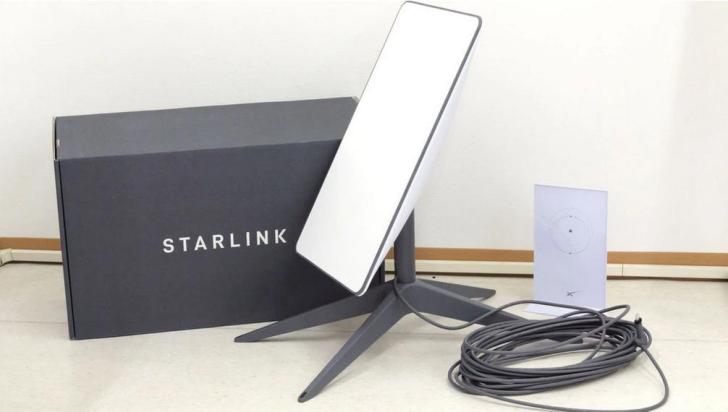
Customers seeking Starlink's conventional satellite internet indoors generally need an external satellite antenna connected to an indoor router through Wi-Fi or an Ethernet connection.
Although Starlink has secured mid-band spectrum in the 1.7GHz to 1.9GHz range, which offers better obstacle penetration than higher-frequency signals, the considerable distance between satellites and users on the ground remains a challenge.
The planned expansion could nevertheless mark a significant development for mobile connectivity in Zimbabwe, particularly in rural areas where conventional cellular coverage remains limited.
The United States Federal Communications Commission (FCC) approved Starlink's application for a global mobile roaming service on September 17, 2026, allowing the company to carry international voice, data and internet traffic across US borders through interconnections with affiliated entities in other countries.
The FCC document identifies 29 African countries where Starlink holds or has applied for permission to provide telecommunications services, including Zimbabwe, Botswana, Eswatini, Lesotho, Mozambique and Namibia.
Apart from Namibia, which has faced regulatory hurdles over local ownership requirements, the countries listed have granted Starlink permission to operate within their jurisdictions.
However, the FCC approval does not automatically grant Starlink permission to provide telecommunications services in every country listed. Local regulatory requirements will still apply.
Starlink Mobile is designed to connect compatible mobile phones directly to satellites when conventional cellular network coverage is unavailable. Rather than operating as a standalone cellular network, the service currently relies on partnerships with terrestrial mobile operators, including T-Mobile, Rogers Communications, Deutsche Telekom and Optus.
In March 2026, MTN Zambia became the first cellular operator to complete field testing of Starlink Mobile, successfully conducting the country's first satellite-based data session and mobile money transaction using MTN Zambia's licensed spectrum and Starlink's low-Earth-orbit satellite constellation.
The technology could potentially extend mobile connectivity to remote and underserved communities where traditional telecommunications infrastructure is limited, although the timing of a commercial launch in Zimbabwe has not been confirmed.
Despite the anticipated expansion, Starlink's direct-to-cell technology has limitations. Satellite signals cannot reliably provide direct connectivity inside buildings because walls and roofs can weaken or block the signals.
Customers seeking Starlink's conventional satellite internet indoors generally need an external satellite antenna connected to an indoor router through Wi-Fi or an Ethernet connection.
Although Starlink has secured mid-band spectrum in the 1.7GHz to 1.9GHz range, which offers better obstacle penetration than higher-frequency signals, the considerable distance between satellites and users on the ground remains a challenge.
The planned expansion could nevertheless mark a significant development for mobile connectivity in Zimbabwe, particularly in rural areas where conventional cellular coverage remains limited.
Source - online
Join the discussion
Loading comments…