News / National
Zimbabwe gun amnesty fuels Mnangagwa-Chiwenga speculation
2 hrs ago |
57 Views
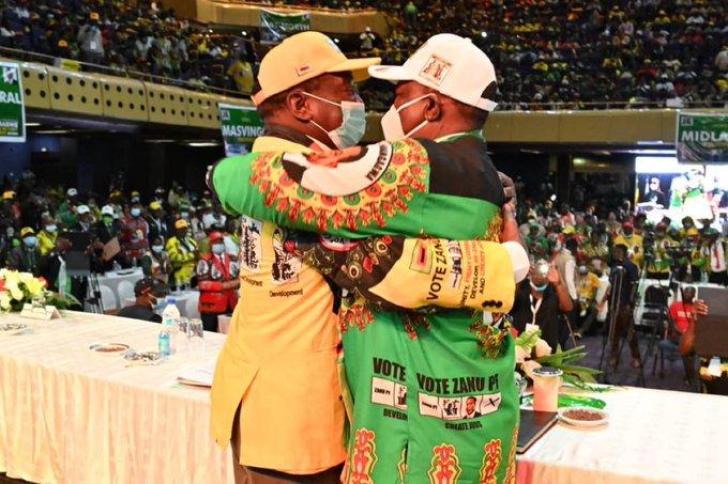
A firearms amnesty announced by the Zimbabwe Republic Police (ZRP) has sparked speculation on social media, with some Zimbabweans questioning whether the initiative is purely a public safety measure amid reported tensions between President Emmerson Mnangagwa and his deputy, Constantino Chiwenga.
In a statement issued on Monday, the police said Mnangagwa had granted a national amnesty allowing individuals and organisations to surrender unlicensed, smuggled or illegally acquired firearms and ammunition without facing prosecution.
The amnesty runs from October 12 to November 12, 2026, and allows voluntary surrender at the nearest police station without questioning, according to the ZRP.
The police said the initiative was intended to address the possession of illegal firearms, poor firearm security and outdated licensing records, which they said had contributed to crimes including armed robbery and murder.
"The amnesty allows individuals and institutions to voluntarily surrender unlicensed, smuggled or illegally acquired firearms and ammunition at their nearest police station, without being questioned," the statement said.
The ZRP added that people who complied would not face prosecution and would receive an official safe custody receipt.
It also raised concerns about licensed firearm holders failing to renew certificates or update their records, as well as firearms remaining in circulation following company closures, inactive gun club memberships or the death of licensed owners.
However, the announcement has attracted political interpretations online, with some social media users linking it to the increasingly public tensions within Zanu PF between Mnangagwa and Chiwenga.
The speculation follows Chiwenga's remarks at the recently concluded Zanu PF People's Conference, where he reportedly warned Mnangagwa to remember the circumstances that led to the 2017 military-assisted transition that removed the late President Robert Mugabe from power and brought Mnangagwa into office.
The remarks were widely interpreted as a sign of deepening divisions within the ruling party, although the firearm amnesty statement itself made no reference to Chiwenga or the factional tensions.
On Facebook, Shamiso Vuso questioned the timing of the announcement, writing: "Something is cooking. My President is afraid of something."
Another user, Siya Dube, expressed a similar suspicion in a post written in Shona, suggesting that authorities were worried about something and that people were waiting to see what would happen.
Kevin Mabhande also joked about the political implications, asking: "How are we going to support Chiwenga without our Guns?"
The comments reflect speculation among some social media users rather than evidence that the amnesty is connected to a political confrontation. Neither the ZRP statement nor the information provided establishes a link between the firearm surrender programme and the tensions between the two leaders.
Mnangagwa came to power in November 2017 after a military intervention that ended Mugabe's nearly four-decade rule. His rise initially raised hopes among some Zimbabweans for political and economic reforms, although his administration has since faced criticism over corruption, public service delivery and the state of democratic freedoms.
The latest debate comes as questions about succession and internal divisions continue to attract attention within Zanu PF.
For now, the police have presented the amnesty as a measure to improve firearm regulation and public safety, while the political interpretations circulating online remain unsubstantiated.
In a statement issued on Monday, the police said Mnangagwa had granted a national amnesty allowing individuals and organisations to surrender unlicensed, smuggled or illegally acquired firearms and ammunition without facing prosecution.
The amnesty runs from October 12 to November 12, 2026, and allows voluntary surrender at the nearest police station without questioning, according to the ZRP.
The police said the initiative was intended to address the possession of illegal firearms, poor firearm security and outdated licensing records, which they said had contributed to crimes including armed robbery and murder.
"The amnesty allows individuals and institutions to voluntarily surrender unlicensed, smuggled or illegally acquired firearms and ammunition at their nearest police station, without being questioned," the statement said.
The ZRP added that people who complied would not face prosecution and would receive an official safe custody receipt.
It also raised concerns about licensed firearm holders failing to renew certificates or update their records, as well as firearms remaining in circulation following company closures, inactive gun club memberships or the death of licensed owners.
However, the announcement has attracted political interpretations online, with some social media users linking it to the increasingly public tensions within Zanu PF between Mnangagwa and Chiwenga.
The remarks were widely interpreted as a sign of deepening divisions within the ruling party, although the firearm amnesty statement itself made no reference to Chiwenga or the factional tensions.
On Facebook, Shamiso Vuso questioned the timing of the announcement, writing: "Something is cooking. My President is afraid of something."
Another user, Siya Dube, expressed a similar suspicion in a post written in Shona, suggesting that authorities were worried about something and that people were waiting to see what would happen.
Kevin Mabhande also joked about the political implications, asking: "How are we going to support Chiwenga without our Guns?"
The comments reflect speculation among some social media users rather than evidence that the amnesty is connected to a political confrontation. Neither the ZRP statement nor the information provided establishes a link between the firearm surrender programme and the tensions between the two leaders.
Mnangagwa came to power in November 2017 after a military intervention that ended Mugabe's nearly four-decade rule. His rise initially raised hopes among some Zimbabweans for political and economic reforms, although his administration has since faced criticism over corruption, public service delivery and the state of democratic freedoms.
The latest debate comes as questions about succession and internal divisions continue to attract attention within Zanu PF.
For now, the police have presented the amnesty as a measure to improve firearm regulation and public safety, while the political interpretations circulating online remain unsubstantiated.
Source - Zimlive
Join the discussion
Loading comments…