News / National
Chamisa criticises Zimbabwe's political direction
2 hrs ago |
34 Views
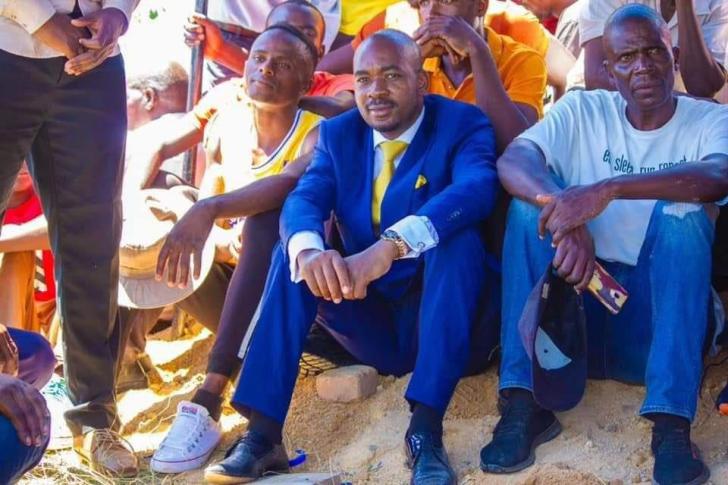
Nelson Chamisa has defended his decision to leave the opposition parties he previously led, insisting that his political mission extends beyond any individual party as he promises to establish a new citizens' movement.
In a series of social media posts, Chamisa has criticised Zimbabwe's political direction, questioned the concentration of power in individual leaders and urged supporters to remain committed to what he describes as a long struggle for change.
In his latest Facebook post, Chamisa said he was increasingly convinced that walking away from what he described as the "rottenness" within the Citizens Coalition for Change (CCC) and the Movement for Democratic Change Alliance (MDCA) was the right decision.
He said his conscience was clear, his vision had become sharper and his mission was greater than any political party, concluding with the slogan: "A citizens government in our lifetime!"
Chamisa left the CCC after the 2023 elections, alleging that ZANU-PF had infiltrated and taken control of the opposition party. He subsequently described his departure from the MDC and CCC as one of the best decisions of his political leadership and has since dismissed the CCC as "kids' play".
His latest remarks come amid an intensifying national debate over constitutional changes and the future of Zimbabwe's electoral system.
In another post, Chamisa criticised what he described as the deception and pretence surrounding the annual State of the Nation address. He argued that Zimbabwe's problems stem not only from one-party dominance but also from the concentration of power in individual leaders.
He invoked the country's political history, spanning Ian Smith, Robert Mugabe and Emmerson Mnangagwa, to argue that strong institutions and constitutionalism were more important than reliance on powerful individuals.
Chamisa also explained his use of the hashtag #NoTo2050, saying he was warning against normalising the indefinite extension of political power and weakening citizens' right to choose their leaders.
The debate has intensified following the enactment of the Constitution of Zimbabwe Amendment (No. 3) Act, 2026, which moves the next elections from 2028 to 2030 and extends the terms of the President, Members of Parliament and councillors. Opposition parties have challenged the changes, arguing that they raise constitutional concerns, while ZANU-PF maintains that the amendments adjust the electoral cycle.
Chamisa also used a separate post, under the hashtag #JustImagine, to question the practice of elevating individual leaders above national priorities. Using the United States as an example, he asked what the country would look like if every president had made his birthday a public holiday.
Although he did not name a Zimbabwean politician in the post, he concluded that the country needed "a new direction".
His most significant political promise remains the proposed New Citizens Movement, which he says is being built quietly and deliberately across the country.
Chamisa has urged supporters to play their part and subscribe to the initiative, suggesting that preparations are under way even though the project has yet to receive a widely visible public launch.
However, sceptics have questioned the prolonged delay, noting that the movement has been discussed since the beginning of the year without a clearly announced launch date, leadership structure or detailed political programme.
Chamisa has sought to explain the gradual approach by arguing that meaningful political change takes time and does not always require public spectacle.
Reflecting on the launch of the MDC at Rufaro Stadium on September 11, 1999, Chamisa said the original movement emerged from a broad consultative process involving civic organisations, labour groups and other stakeholders.
He recalled participating in the National Working People's Convention in February 1999 as a representative of students under the Zimbabwe National Students Union.
His central argument is that the MDC began as a people's movement but gradually became focused on winning parliamentary and local authority seats, losing sight of its broader objective of delivering political and social change.
Chamisa also acknowledged that the struggle against ZANU-PF had lasted much longer than the opposition's founders anticipated. Recalling early conversations about the possibility of reaching State House, he conceded that the destination had proved more distant than expected but insisted that the struggle remained worthwhile.
He cited the sacrifices made by opposition supporters, including lost jobs and property, abuse, imprisonment and deaths, before declaring: "Until victory!"
Despite his renewed optimism, Chamisa continues to face criticism over the opposition's failure to build durable organisational structures and sustain coordinated pressure against the ruling party. Critics have also questioned the CCC's lack of strong internal structures and a constitution, factors they argue contributed to its subsequent fragmentation.
The wider opposition remains divided over the best route forward, with some advocating unity among multiple political groups under a shared programme, while others favour a broader, people-led movement that extends beyond conventional party politics.
Chamisa's message remains that Zimbabwe's political transformation requires patience, institutional reform and sustained public participation. However, questions remain over when the New Citizens Movement will be launched, how it will be organised and what concrete programme it will offer.
Until those details emerge, the movement's proposed direction and its ability to unite Zimbabwe's fragmented opposition will remain central questions in the country's political debate.
Source - online
Join the discussion
Loading comments…