News / National
New Zimbabwe currency takes next step
15 mins ago |
25 Views
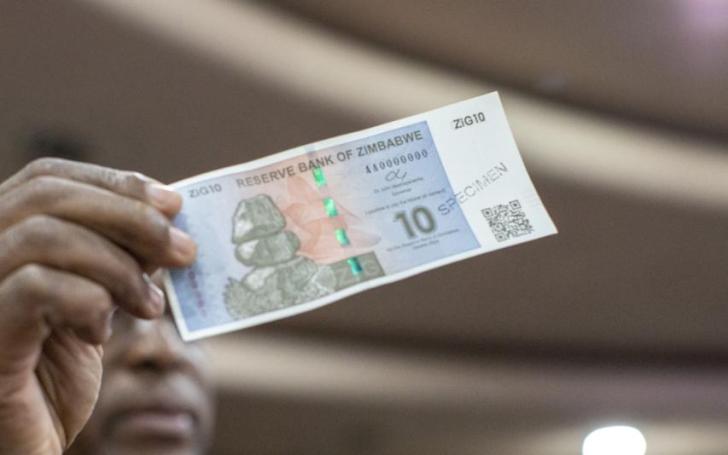
Zimbabwe is preparing to revive its domestic bond market as authorities seek to strengthen confidence in the gold-backed Zimbabwe Gold (ZiG) currency following a period of relative exchange-rate stability and declining inflation.
Reserve Bank of Zimbabwe (RBZ) Governor John Mushayavanhu said the country was entering a new phase of monetary reforms aimed at transforming the ZiG from a currency used primarily for everyday transactions into a reliable store of value and investment instrument.
Speaking in an interview in Johannesburg on Thursday, Mushayavanhu said the central bank was laying the groundwork for a domestic debt market that would allow investors to hold longer-term ZiG-denominated financial instruments.
"We want to make the ZiG a store of value, as opposed to just a transactional currency," he said.
"It's time for us now to start looking at developing a short-term yield curve for the ZiG."
The initiative marks another step in Zimbabwe's efforts to restore confidence in its monetary system after years of hyperinflation, currency instability and repeated attempts to introduce a sustainable local currency.
Introduced in April 2024 to replace the Zimbabwean dollar, the gold-backed ZiG represents Zimbabwe's sixth attempt to establish a stable domestic currency.
The central bank has already introduced ZiG-denominated term deposit instruments with maturities of 30 and 90 days, offering annual interest rates of 8% and 11%, respectively.
According to RBZ data, the instruments were fully subscribed at auction, with the securities priced on September 9, suggesting growing investor interest in local-currency investments.
Mushayavanhu said the next step would involve extending the maturity periods of these instruments and introducing government Treasury bonds to establish a more comprehensive yield curve.
"We have established the short-term yield which you would get, but what is now required is to elongate that curve," he said.
"You are going to be seeing government instruments, Treasury bonds, coming into the market to further elongate the yield curve."
A functioning domestic bond market would provide the government with an additional avenue for raising financing in local currency while creating investment opportunities for banks, pension funds, insurance companies and other institutional investors.
It could also help establish benchmark interest rates for longer-term lending and investment, potentially supporting broader economic development.
The RBZ is studying domestic bond markets in neighbouring countries, including South Africa, Namibia and Zambia, as well as those of Zimbabwe's major trading partners, to assess how its proposed market could develop.
Meanwhile, the ZiG has shown relative resilience against the United States dollar, depreciating by approximately 3% since the beginning of 2026 despite international economic uncertainty and pressure on several emerging and frontier-market currencies.
Mushayavanhu revealed that the central bank had spent approximately US$1.35 billion intervening in the foreign-exchange market during the first nine months of the year, helping to contain volatility and support the local currency.
Zimbabwe's foreign-exchange reserves have also increased to more than US$2 billion, strengthening the central bank's capacity to support the ZiG.
According to the governor, the reserves are sufficient to buy back the entire ZiG32 billion currently in circulation, which would imply an exchange rate of approximately ZiG18 to the US dollar.
However, the currency was trading at ZiG26.43 against the dollar on Thursday, a level Mushayavanhu believes does not accurately reflect its underlying value.
"When I look at the exchange rate, which is between 25 and 27 per dollar, I'm actually seeing an undervalued ZiG," he said.
"The difference between 18 and 25 or 26 or 27 per dollar to me is a premium that should not be there."
His assessment suggests that the central bank believes the ZiG has room to strengthen if market confidence improves and the perceived risks associated with holding the currency diminish.
However, the reserve-coverage calculation does not necessarily establish the currency's fair market value, which also depends on demand, liquidity, confidence and broader economic conditions.
The planned revival of Zimbabwe's domestic bond market will therefore represent an important test of whether the authorities can translate recent monetary stability into sustained investor confidence.
For Zimbabwe, where repeated currency failures have encouraged widespread reliance on the US dollar, convincing businesses and investors to hold longer-term ZiG-denominated assets will be crucial to rebuilding trust in the local financial system.
The success of the initiative is likely to depend on continued inflation control, exchange-rate stability, credible monetary policies and the government's ability to honour its obligations to investors.
Reserve Bank of Zimbabwe (RBZ) Governor John Mushayavanhu said the country was entering a new phase of monetary reforms aimed at transforming the ZiG from a currency used primarily for everyday transactions into a reliable store of value and investment instrument.
Speaking in an interview in Johannesburg on Thursday, Mushayavanhu said the central bank was laying the groundwork for a domestic debt market that would allow investors to hold longer-term ZiG-denominated financial instruments.
"We want to make the ZiG a store of value, as opposed to just a transactional currency," he said.
"It's time for us now to start looking at developing a short-term yield curve for the ZiG."
The initiative marks another step in Zimbabwe's efforts to restore confidence in its monetary system after years of hyperinflation, currency instability and repeated attempts to introduce a sustainable local currency.
Introduced in April 2024 to replace the Zimbabwean dollar, the gold-backed ZiG represents Zimbabwe's sixth attempt to establish a stable domestic currency.
The central bank has already introduced ZiG-denominated term deposit instruments with maturities of 30 and 90 days, offering annual interest rates of 8% and 11%, respectively.
According to RBZ data, the instruments were fully subscribed at auction, with the securities priced on September 9, suggesting growing investor interest in local-currency investments.
Mushayavanhu said the next step would involve extending the maturity periods of these instruments and introducing government Treasury bonds to establish a more comprehensive yield curve.
"We have established the short-term yield which you would get, but what is now required is to elongate that curve," he said.
"You are going to be seeing government instruments, Treasury bonds, coming into the market to further elongate the yield curve."
A functioning domestic bond market would provide the government with an additional avenue for raising financing in local currency while creating investment opportunities for banks, pension funds, insurance companies and other institutional investors.
The RBZ is studying domestic bond markets in neighbouring countries, including South Africa, Namibia and Zambia, as well as those of Zimbabwe's major trading partners, to assess how its proposed market could develop.
Meanwhile, the ZiG has shown relative resilience against the United States dollar, depreciating by approximately 3% since the beginning of 2026 despite international economic uncertainty and pressure on several emerging and frontier-market currencies.
Mushayavanhu revealed that the central bank had spent approximately US$1.35 billion intervening in the foreign-exchange market during the first nine months of the year, helping to contain volatility and support the local currency.
Zimbabwe's foreign-exchange reserves have also increased to more than US$2 billion, strengthening the central bank's capacity to support the ZiG.
According to the governor, the reserves are sufficient to buy back the entire ZiG32 billion currently in circulation, which would imply an exchange rate of approximately ZiG18 to the US dollar.
However, the currency was trading at ZiG26.43 against the dollar on Thursday, a level Mushayavanhu believes does not accurately reflect its underlying value.
"When I look at the exchange rate, which is between 25 and 27 per dollar, I'm actually seeing an undervalued ZiG," he said.
"The difference between 18 and 25 or 26 or 27 per dollar to me is a premium that should not be there."
His assessment suggests that the central bank believes the ZiG has room to strengthen if market confidence improves and the perceived risks associated with holding the currency diminish.
However, the reserve-coverage calculation does not necessarily establish the currency's fair market value, which also depends on demand, liquidity, confidence and broader economic conditions.
The planned revival of Zimbabwe's domestic bond market will therefore represent an important test of whether the authorities can translate recent monetary stability into sustained investor confidence.
For Zimbabwe, where repeated currency failures have encouraged widespread reliance on the US dollar, convincing businesses and investors to hold longer-term ZiG-denominated assets will be crucial to rebuilding trust in the local financial system.
The success of the initiative is likely to depend on continued inflation control, exchange-rate stability, credible monetary policies and the government's ability to honour its obligations to investors.
Source - businesstech
Join the discussion
Loading comments…





