News / Local
Chamisa hits back at critics
15 hrs ago |
590 Views
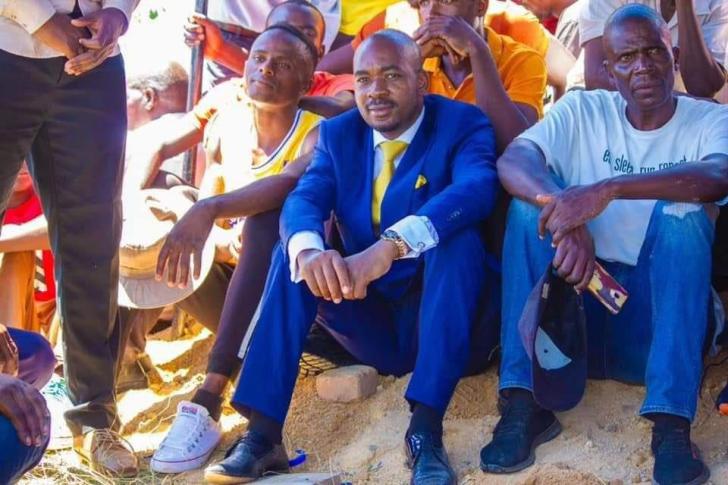
Former Citizens Coalition for Change (CCC) leader Nelson Chamisa has defended his political record, accusing some of his critics of finding it easier to attack fellow opposition figures than to confront Zimbabwe's entrenched ruling establishment.
Chamisa's remarks come amid growing scrutiny over his political comeback and his failure to prevent Zanu PF from advancing constitutional changes aimed at extending President Emmerson Mnangagwa's tenure and postponing elections to 2030.
The opposition leader returned to active politics nine months ago after taking a sabbatical following his departure from the CCC, a party he accused of having been infiltrated and captured by elements linked to the ruling party.
His return generated expectations among supporters who viewed him as a central figure in efforts to challenge Zanu PF's continued dominance of Zimbabwean politics.
Chamisa subsequently announced his Agenda 2026 political programme, pledging to resist constitutional amendments that would extend the terms of the President, Parliament and local authorities.
However, the ruling party's progress in advancing Constitutional Amendment No. 3 has prompted questions about his ability to translate public support into effective political resistance.
Critics have also questioned why Chamisa has struggled to consolidate the considerable electoral support he attracted during previous national elections into a sustained opposition movement.
Responding to the criticism in a post on X, formerly Twitter, Chamisa argued that challenging an established political system required considerable personal sacrifice, determination and courage.
"Leading a credible alternative and genuinely challenging an entrenched dictatorship is a demanding, costly and often perilous undertaking. It is certainly no walk in the park," he wrote.
"It requires tenacity, conviction, courage, sacrifice and an unwavering commitment to the cause."
Chamisa suggested that some political commentators and opposition figures had chosen to concentrate their criticism on fellow opposition leaders because doing so carried fewer risks than directly challenging those in government.
"Perhaps this is precisely why some find it easier to position themselves as the ‘opposition to the opposition’ rather than confront the difficult realities of challenging an entrenched system of power," he said.
He added that criticising the opposition was less demanding, stressful and risky than confronting the ruling establishment.
The remarks appear to reflect mounting frustration within Zimbabwe's fragmented opposition movement, where leadership disputes, competing political ambitions and disagreements over strategy have weakened efforts to present a united challenge to Zanu PF.
Chamisa's withdrawal from the CCC created a leadership vacuum that rival opposition figures have struggled to fill.
The party has since been embroiled in internal disputes and legal battles, while questions persist about the direction of opposition politics ahead of future elections.
Some political observers have argued that Chamisa's popularity has not translated into the organisational structures and political strategy needed to challenge Zanu PF effectively.
The opposition's difficulties have also been reflected in Parliament, where divisions have complicated efforts to coordinate resistance to government-backed legislative proposals.
However, Chamisa rejected suggestions that his leadership had failed to produce meaningful electoral results.
He pointed to the opposition's performances in the 2018 and 2023 general elections as evidence of his ability to mobilise substantial support despite what he described as an uneven political environment.
"We contested elections and doubled the opposition vote, even under conditions that were neither free nor fair," Chamisa said.
"That record speaks for itself and cannot simply be rewritten or wished away."
His comments also addressed disputes over the political legacy of the Movement for Democratic Change (MDC), previously led by the late Morgan Tsvangirai.
Chamisa maintained that the MDC had its own established identity, leadership structures and institutional assets, which should be distinguished from subsequent opposition formations.
"The MDC led by Morgan Tsvangirai has its home at Harvest House, with its own leadership, party colours, slogans and institutional property. These are matters of public record," he said.
He dismissed continued arguments over the ownership of opposition political history, urging those involved to acknowledge established facts and concentrate on the future.
"I have no interest in endless arguments over history or political ownership. Everyone should respect the facts, acknowledge the record and move on," Chamisa added.
His latest intervention comes as opposition leaders face increasing pressure to develop a coordinated response to constitutional changes and prepare for the country's next political contest.
Although Chamisa remains one of Zimbabwe's most recognisable opposition politicians, questions persist over the organisational direction of his political project and his ability to unite competing factions.
For his supporters, his previous electoral performances demonstrate his continued relevance as a potential challenger to Zanu PF.
His critics, however, argue that electoral popularity alone is insufficient without a functioning political organisation capable of translating support into tangible results.
The debate surrounding Chamisa's leadership is likely to continue as Zimbabwe's opposition grapples with internal divisions, constitutional disputes and the challenge of presenting a credible alternative to the ruling party.
Source - newzimbabwe
Join the discussion
Loading comments…