News / National
Mliswa tears into Uebert Angel over Chiwenga sermon
14 hrs ago |
945 Views
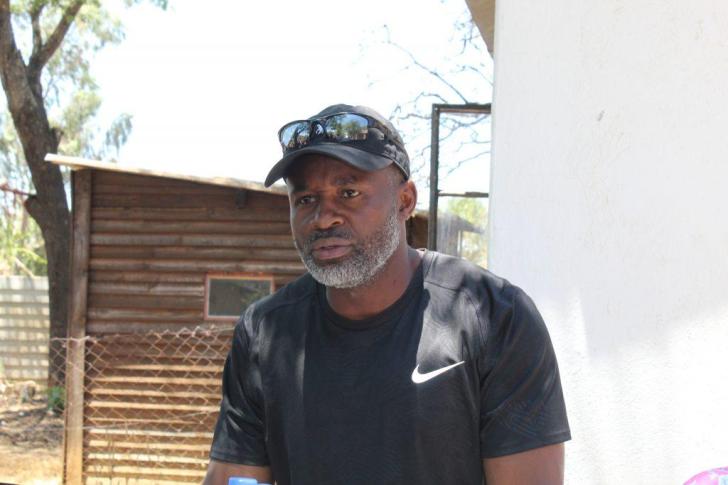
Former Norton legislator Temba Mliswa has launched a blistering attack on Presidential Envoy and Ambassador-at-Large Uebert Angel, accusing the prominent preacher of using religion to advance political interests and shield Vice-President Constantino Chiwenga from public criticism.
Mliswa also called for Angel's arrest over rape allegations, escalating a dispute sparked by the preacher's recent sermon defending Chiwenga amid reported tensions within Zanu PF.
In a lengthy statement published on X, formerly Twitter, under the title "The False Prophet Who Became a Praetorian," Mliswa questioned Angel's religious credibility, political motives and continued involvement in Zimbabwe's leadership disputes.
The controversy followed Angel's remarks during a Sunday church service at his Hippodrome ministry, where he condemned what he described as increasingly hostile attacks against Chiwenga.
"The vitriolic attacks against Vice President Constantino Chiwenga is a disgraceful exhibition of political impropriety. And a display of intellectual bankruptcy. Contempt masquerading as criticism is diabolic, it's evil," Angel told congregants.
However, Mliswa rejected the preacher's position, arguing that religious leaders had no authority to determine how citizens should criticise elected or appointed public officials.
He accused Angel of transforming the church pulpit into a political platform designed to discourage scrutiny of powerful individuals.
"Since when did the pulpit become the place where the citizen is taught what he may not say about his own Vice President?" Mliswa questioned.
The outspoken politician argued that Angel's distinction between legitimate criticism and unacceptable contempt was fundamentally flawed because it left unanswered who should determine the boundaries of permissible political expression.
"That is not theology but censorship!" he declared.
Mliswa drew on biblical examples to challenge Angel's interpretation of religious responsibility, citing prophets who openly confronted political rulers over their conduct.
He referred to Nathan's confrontation with King David, Elijah's condemnation of Ahab and John the Baptist's criticism of Herod, arguing that religious leaders were historically expected to challenge authority rather than protect it from scrutiny.
According to Mliswa, Angel had reversed that responsibility by using his religious influence to defend a powerful political figure against criticism.
The former legislator also questioned Angel's credibility as a prophet, referring to predictions he claimed the preacher had made in July about political succession.
Mliswa alleged that Angel had spoken about a successor who was "walking, but dead inside" and suggested that another political development would occur after August.
He argued that the predictions had not materialised, noting that Chiwenga remained Vice-President.
"A prophet whose prophecy fails does not get to reinvent failure as mystery but must be ignored," Mliswa wrote.
The former MP then turned his attention to the reported political tensions between President Emmerson Mnangagwa and Chiwenga, accusing Angel of selectively defending the Vice-President while ignoring alleged challenges to the President's authority.
Mliswa argued that Zimbabwe's constitutional system placed executive authority in the presidency and that the Vice-President served as Mnangagwa's deputy rather than as an independent centre of political power.
He questioned why Angel had not publicly condemned what he characterised as Chiwenga's conduct during the Zanu PF Annual National People's Conference in Chinhoyi on October 16.
Mliswa alleged that the Vice-President had openly challenged the President during the gathering, although his interpretation of the events remains a political allegation.
He further accused individuals associated with Chiwenga of promoting succession discussions while Mnangagwa remained in office.
According to Mliswa, Angel's silence on those developments exposed inconsistencies in the preacher's demand for respect towards political leaders.
He argued that the same principles Angel invoked to defend Chiwenga should apply equally to Mnangagwa.
"That is not neutrality nor prophecy but factionalism in a cassock," Mliswa wrote.
The former Norton MP also criticised what he described as the increasing involvement of religious figures in Zanu PF succession politics.
He claimed that political rivalries had created an environment in which religious leaders publicly endorsed competing political personalities while presenting their positions as spiritual guidance.
Mliswa urged churches to distance themselves from internal party disputes and concentrate on their religious responsibilities.
"Let politicians settle succession in the Party, in Parliament, in the courts and let the Church return to its first work: preach Christ," he said.
He maintained that religious leaders should speak against wrongdoing consistently, regardless of the political influence or position of those involved.
Mliswa further suggested that Angel's intervention was motivated less by concern for Chiwenga than by a desire to maintain his own political influence and access to powerful individuals.
"Instead, it was about protecting Angel; his access, relevance and proximity to power," he alleged.
The dispute has also been accompanied by Mliswa's call for action over rape allegations involving Angel. Those allegations remain unproven, and the material provided does not establish that criminal charges have been brought or that a court has made findings against the preacher.
Angel's public defence of Chiwenga has attracted attention partly because of his position as a presidential envoy, raising questions about the political implications of his statements.
The exchange comes amid continued speculation about succession dynamics within Zanu PF, particularly the relationship between Mnangagwa and his deputy.
While Mliswa's remarks represent his own interpretation of the political situation, they illustrate the increasingly confrontational nature of public debate surrounding the ruling party's leadership.
The controversy has also renewed discussion about the role of religious leaders in Zimbabwean politics and whether their public interventions should be regarded as expressions of faith, political advocacy or a combination of both.
Angel's response to Mliswa's latest accusations was not included in the information provided.
Source - Byo24News
Join the discussion
Loading comments…