News / National
Mnangagwa pledges cheaper SME formalisation
19 Jul 2026 at 11:56hrs |
0 Views
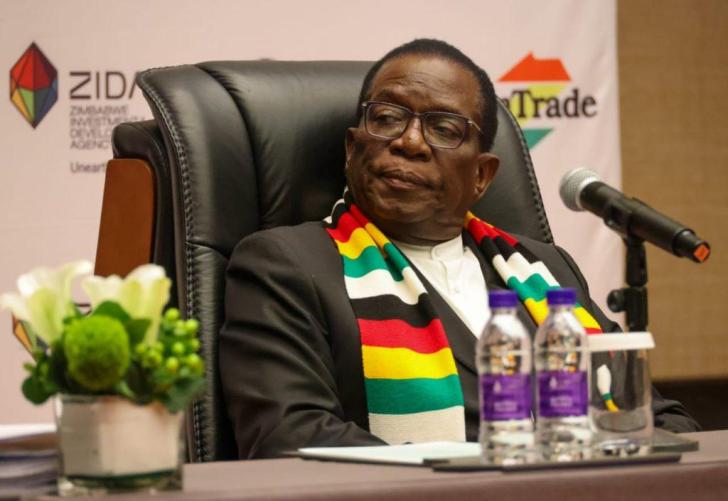
President Emmerson Mnangagwa has pledged to reduce the cost of formalising small businesses, saying government is implementing regulatory reforms to encourage more micro, small and medium enterprises (MSMEs) to join the formal economy.
Addressing the inaugural National MSME and Cooperatives Indaba on Friday, Mnangagwa described formalisation as a national priority and urged entrepreneurs to take advantage of reforms aimed at reducing the cost and complexity of doing business.
"Formalisation remains a critical national priority. Hence, the government has embarked on a comprehensive regulatory reform programme aimed at easing the cost of doing business and slashing compliance burdens," he said.
"In return, I urge our entrepreneurs to embrace formalisation and become active participants in building a stronger and more prosperous Zimbabwe."
The President said government wants to see businesses grow from micro enterprises into larger, more sustainable companies capable of driving economic development.
"Ultimately, enterprises must graduate from micro to small, small to medium, and medium to large-scale enterprises," Mnangagwa said.
"Through hard honest work, ingenuity, innovation, focus and zeal there is no limit to what can be achieved by you, our SMEs and cooperatives."
Zimbabwe's informal economy has expanded significantly in recent years and now accounts for more than 76 percent of total economic activity, according to the Zimbabwe National Statistics Agency (ZimStat). Most businesses operate outside formal tax and regulatory systems, reflecting broader economic challenges.
Economists argue that the growth of the informal sector is driven by factors including currency instability, high taxation, limited formal employment opportunities and the high cost of regulatory compliance.
Researchers have also identified tax compliance costs as one of the main reasons many small businesses choose to remain informal.
While welcoming government's commitment to reduce formalisation costs, analysts say broader reforms will be required to persuade more businesses to enter the formal economy.
They argue that high regulatory costs, macroeconomic instability, policy uncertainty and an enforcement-focused approach have discouraged formalisation. Addressing exchange rate distortions, improving policy consistency and providing stronger incentives for compliant businesses, they say, will be essential to achieving lasting success.
Government hopes the planned reforms will encourage more SMEs to formalise, broaden the country's tax base and support the growth of businesses into larger enterprises capable of creating employment and contributing more significantly to Zimbabwe's economic development.
Addressing the inaugural National MSME and Cooperatives Indaba on Friday, Mnangagwa described formalisation as a national priority and urged entrepreneurs to take advantage of reforms aimed at reducing the cost and complexity of doing business.
"Formalisation remains a critical national priority. Hence, the government has embarked on a comprehensive regulatory reform programme aimed at easing the cost of doing business and slashing compliance burdens," he said.
"In return, I urge our entrepreneurs to embrace formalisation and become active participants in building a stronger and more prosperous Zimbabwe."
The President said government wants to see businesses grow from micro enterprises into larger, more sustainable companies capable of driving economic development.
"Ultimately, enterprises must graduate from micro to small, small to medium, and medium to large-scale enterprises," Mnangagwa said.
"Through hard honest work, ingenuity, innovation, focus and zeal there is no limit to what can be achieved by you, our SMEs and cooperatives."
Zimbabwe's informal economy has expanded significantly in recent years and now accounts for more than 76 percent of total economic activity, according to the Zimbabwe National Statistics Agency (ZimStat). Most businesses operate outside formal tax and regulatory systems, reflecting broader economic challenges.
Economists argue that the growth of the informal sector is driven by factors including currency instability, high taxation, limited formal employment opportunities and the high cost of regulatory compliance.
Researchers have also identified tax compliance costs as one of the main reasons many small businesses choose to remain informal.
While welcoming government's commitment to reduce formalisation costs, analysts say broader reforms will be required to persuade more businesses to enter the formal economy.
They argue that high regulatory costs, macroeconomic instability, policy uncertainty and an enforcement-focused approach have discouraged formalisation. Addressing exchange rate distortions, improving policy consistency and providing stronger incentives for compliant businesses, they say, will be essential to achieving lasting success.
Government hopes the planned reforms will encourage more SMEs to formalise, broaden the country's tax base and support the growth of businesses into larger enterprises capable of creating employment and contributing more significantly to Zimbabwe's economic development.
Source - NewZimbabwe
Join the discussion
Loading comments…


