News / National
Mnangagwa says national interest guides Zimbabwe's decisions
19 Jul 2026 at 18:10hrs |
0 Views
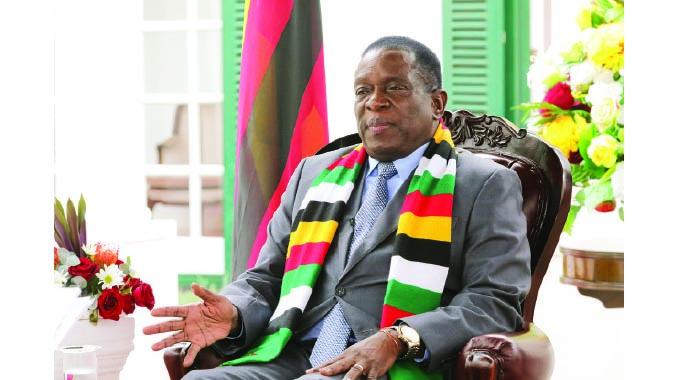
President Emmerson Mnangagwa says every decision taken by his administration is guided by what is in the best interests of Zimbabwe and its citizens, acknowledging that governing is inherently difficult but insisting that leadership requires weighing the consequences of every policy choice.
Speaking during an interview with public media journalists at State House in Harare, Mnangagwa said no country is without challenges, adding that Zimbabwe has the capacity to overcome the obstacles it faces.
Asked whether the pressures of governing sometimes keep him awake at night, the President said he remained unfazed.
"I sleep very well. Very well," he said.
He noted that every major decision taken by a Head of State requires careful consideration.
"All decisions are difficult because when you decide, it must be a balanced decision which considers the effects of that decision," Mnangagwa said.
"You cannot say every decision can be taken easily or very lightly. When you decide, you look at the consequences of whatever decision you take.
"And whatever you do, you say, 'What is best for my country and for the people?' That guides you as you navigate. But as you do so, you don't please everybody. I don't think even God pleases everybody."
The President also defended the Government's policy of banning the export of unprocessed minerals, describing it as part of a long-term strategy to maximise value from Zimbabwe's natural resources through local beneficiation and value addition.
Although he said no specific timelines had been set for establishing local refining capacity across all mineral sectors, Mnangagwa maintained that the policy direction was appropriate.
"I think the policy is correct. We have not set up timelines for making sure everything is beneficiated, but that is the goal to achieve because it requires resources," he said.
"What is important is that we are following a correct path for benefiting the country on the basis that these resources should benefit the country more than those to whom we will sell our resources."
Responding to comparisons with other African countries that have introduced similar export restrictions with varying levels of success, Mnangagwa said Zimbabwe's policies should be shaped by its own circumstances rather than external experiences.
"Each country has its own boundaries. Zimbabwe has its own boundaries. So, we are unique," he said.
"Our issues should be dealt with uniquely as a country. We succeed as a country, fail as a country. We don't need to emulate the failures of other countries or the successes of other countries."
He said Zimbabwe's development strategy should be driven by its available resources, skills and national vision.
The President also addressed the return of Zimbabweans from the diaspora, particularly those coming back from South Africa amid increased deportations and anti-immigrant sentiment.
Mnangagwa said the Government was facilitating the return of citizens by providing transport and welfare assistance to enable them to reach their home areas.
"I have no doubt that each one who comes back knows where they came from before they went to South Africa," he said.
"The first thing is to go back to roots and begin from there as they integrate in society. So there is not a single problem."
He said returnees were being assisted to travel to their chosen destinations across the country and would have access to the same public services available to other Zimbabweans.
"Government is not facing any problem at all. We facilitate their transport, their welfare, we do that. But each one gives us an address: 'I want to go to Chipinge, I want to go to Bindura.' We facilitate, and they go to their homes.
"Whatever facilities we give to people already in the country, they will also enjoy those services we are giving. Every Zimbabwean who is in the diaspora is welcome back home."
On concerns that schools could struggle to accommodate children returning with their families during the academic year, Mnangagwa said he had not received any reports indicating that the education system was under pressure.
"I have not received any complaint from the education system that they are overwhelmed by the children who are coming from across. Until I receive that, then I will see what to do. But for now, no complaint has come," he said.
The President also attributed progress recorded in various sectors of the economy to the resilience, determination and hard work of Zimbabweans, saying ordinary citizens continue to play a central role in the country's development.
Speaking during an interview with public media journalists at State House in Harare, Mnangagwa said no country is without challenges, adding that Zimbabwe has the capacity to overcome the obstacles it faces.
Asked whether the pressures of governing sometimes keep him awake at night, the President said he remained unfazed.
"I sleep very well. Very well," he said.
He noted that every major decision taken by a Head of State requires careful consideration.
"All decisions are difficult because when you decide, it must be a balanced decision which considers the effects of that decision," Mnangagwa said.
"You cannot say every decision can be taken easily or very lightly. When you decide, you look at the consequences of whatever decision you take.
"And whatever you do, you say, 'What is best for my country and for the people?' That guides you as you navigate. But as you do so, you don't please everybody. I don't think even God pleases everybody."
The President also defended the Government's policy of banning the export of unprocessed minerals, describing it as part of a long-term strategy to maximise value from Zimbabwe's natural resources through local beneficiation and value addition.
Although he said no specific timelines had been set for establishing local refining capacity across all mineral sectors, Mnangagwa maintained that the policy direction was appropriate.
"I think the policy is correct. We have not set up timelines for making sure everything is beneficiated, but that is the goal to achieve because it requires resources," he said.
"What is important is that we are following a correct path for benefiting the country on the basis that these resources should benefit the country more than those to whom we will sell our resources."
Responding to comparisons with other African countries that have introduced similar export restrictions with varying levels of success, Mnangagwa said Zimbabwe's policies should be shaped by its own circumstances rather than external experiences.
"Our issues should be dealt with uniquely as a country. We succeed as a country, fail as a country. We don't need to emulate the failures of other countries or the successes of other countries."
He said Zimbabwe's development strategy should be driven by its available resources, skills and national vision.
The President also addressed the return of Zimbabweans from the diaspora, particularly those coming back from South Africa amid increased deportations and anti-immigrant sentiment.
Mnangagwa said the Government was facilitating the return of citizens by providing transport and welfare assistance to enable them to reach their home areas.
"I have no doubt that each one who comes back knows where they came from before they went to South Africa," he said.
"The first thing is to go back to roots and begin from there as they integrate in society. So there is not a single problem."
He said returnees were being assisted to travel to their chosen destinations across the country and would have access to the same public services available to other Zimbabweans.
"Government is not facing any problem at all. We facilitate their transport, their welfare, we do that. But each one gives us an address: 'I want to go to Chipinge, I want to go to Bindura.' We facilitate, and they go to their homes.
"Whatever facilities we give to people already in the country, they will also enjoy those services we are giving. Every Zimbabwean who is in the diaspora is welcome back home."
On concerns that schools could struggle to accommodate children returning with their families during the academic year, Mnangagwa said he had not received any reports indicating that the education system was under pressure.
"I have not received any complaint from the education system that they are overwhelmed by the children who are coming from across. Until I receive that, then I will see what to do. But for now, no complaint has come," he said.
The President also attributed progress recorded in various sectors of the economy to the resilience, determination and hard work of Zimbabweans, saying ordinary citizens continue to play a central role in the country's development.
Source - zbc
Join the discussion
Loading comments…





