News / National
Zimbabwe risks 'life presidency'
26 Jul 2026 at 17:54hrs |
0 Views
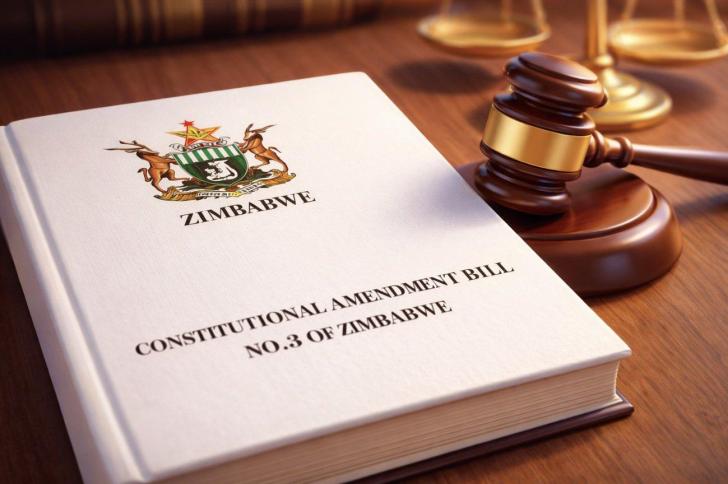
Political analysts have warned that Zimbabwe risks sliding towards a de facto life presidency if Zanu-PF succeeds in pushing for the suspension of general elections until 2037, following the recent enactment of Constitutional Amendment Act No. 3 (CAA3).
President Emmerson Mnangagwa recently assented to CAA3, which postpones the next scheduled general elections from 2028 to 2030, abolishes direct presidential elections by transferring the power to elect the president to Parliament, and amends several key provisions of the 2013 Constitution.
Last week, Zanu-PF held "thank you" rallies to celebrate the constitutional changes, but party leaders in Harare and Masvingo provinces argued that extending elections to 2030 did not go far enough.
Harare provincial chairperson Godwills Masimirembwa said the province would table a resolution at the party's next annual conference seeking to retain Mnangagwa as president until 2037. Masvingo province made a similar proposal.
The push follows earlier calls by some Zanu-PF supporters to extend Mnangagwa's tenure beyond his current constitutional limit. At the time, the president maintained that he was a constitutionalist and would step down when his term expires.
If the proposed extension to 2037 were implemented, Mnangagwa would be 95 years old at the end of his presidency, having served for 20 years since assuming office in 2017.
Zimbabwe's former president Robert Mugabe left office at the age of 93 after ruling for 37 years. He died in 2019 at the age of 95.
Political analyst Vivid Gwede said the latest proposal was neither surprising nor accidental.
"The motivation behind CAA3 has always been to pursue an open-ended rule for Zanu-PF and its leader by evading electoral accountability," Gwede said.
"That opposition to both the process and content of this Act (CAA3) was ignored betrays the arbitrary nature of the process."
Analyst Pride Nkomo said the latest calls demonstrated that there appeared to be no limit to efforts by some Mnangagwa loyalists to keep him in office beyond the constitutional framework.
"Thus, what we see with the recent utterances by Zanu-PF structures in Harare and Masvingo is a clear indication that Zimbabwe is now dangerously being pushed towards an individual life presidency where elections are virtually banned," Nkomo said.
"This is as worrisome as it is untenable."
Opposition leader Jameson Timba said the calls suggested that Constitutional Amendment Act No. 3 was not the final objective but part of a broader constitutional agenda.
"If those calls are genuine, they reinforce concerns that many Zimbabweans expressed during the debate over CAA3—that repeated constitutional amendments are being driven by political expediency rather than the long-term interests of the nation," Timba said.
"Whether they amount to a proposal to abolish elections, extend presidential tenure further, or pursue yet another constitutional amendment will depend on whether they become official government policy or remain the views of provincial party structures."
Timba said the Constitution was intended to provide certainty, predictability and limits on political power.
"Continually revisiting fundamental constitutional provisions for short-term political objectives undermines public confidence in the constitution and weakens constitutional democracy," he said.
"A constitution should be a restraint on political power, not an instrument that is repeatedly reshaped to accommodate it."
Political commentator Reuben Mbofana said the calls to extend Mnangagwa's tenure until 2037 should be treated seriously.
"The rapid escalation from party structures in Harare and Masvingo to push the horizon even further to 2037 serves as a strategic probe," Mbofana said.
"It tests intra-party alignment, gauges opposition and civic resistance, and establishes a new baseline for internal party bargaining ahead of future transition talks."
Mbofana argued that rather than abolishing elections outright, the developments pointed to a gradual consolidation of executive authority.
"Modern authoritarian systems rarely ban elections outright, but alter the rules to ensure predictable outcomes," he said.
"By shifting the presidential selection process to Parliament and restructuring administrative safeguards, the system moves away from competitive direct suffrage toward a managed electoral framework."
President Emmerson Mnangagwa recently assented to CAA3, which postpones the next scheduled general elections from 2028 to 2030, abolishes direct presidential elections by transferring the power to elect the president to Parliament, and amends several key provisions of the 2013 Constitution.
Last week, Zanu-PF held "thank you" rallies to celebrate the constitutional changes, but party leaders in Harare and Masvingo provinces argued that extending elections to 2030 did not go far enough.
Harare provincial chairperson Godwills Masimirembwa said the province would table a resolution at the party's next annual conference seeking to retain Mnangagwa as president until 2037. Masvingo province made a similar proposal.
The push follows earlier calls by some Zanu-PF supporters to extend Mnangagwa's tenure beyond his current constitutional limit. At the time, the president maintained that he was a constitutionalist and would step down when his term expires.
If the proposed extension to 2037 were implemented, Mnangagwa would be 95 years old at the end of his presidency, having served for 20 years since assuming office in 2017.
Zimbabwe's former president Robert Mugabe left office at the age of 93 after ruling for 37 years. He died in 2019 at the age of 95.
Political analyst Vivid Gwede said the latest proposal was neither surprising nor accidental.
"The motivation behind CAA3 has always been to pursue an open-ended rule for Zanu-PF and its leader by evading electoral accountability," Gwede said.
"That opposition to both the process and content of this Act (CAA3) was ignored betrays the arbitrary nature of the process."
Analyst Pride Nkomo said the latest calls demonstrated that there appeared to be no limit to efforts by some Mnangagwa loyalists to keep him in office beyond the constitutional framework.
"Thus, what we see with the recent utterances by Zanu-PF structures in Harare and Masvingo is a clear indication that Zimbabwe is now dangerously being pushed towards an individual life presidency where elections are virtually banned," Nkomo said.
"This is as worrisome as it is untenable."
Opposition leader Jameson Timba said the calls suggested that Constitutional Amendment Act No. 3 was not the final objective but part of a broader constitutional agenda.
"If those calls are genuine, they reinforce concerns that many Zimbabweans expressed during the debate over CAA3—that repeated constitutional amendments are being driven by political expediency rather than the long-term interests of the nation," Timba said.
"Whether they amount to a proposal to abolish elections, extend presidential tenure further, or pursue yet another constitutional amendment will depend on whether they become official government policy or remain the views of provincial party structures."
Timba said the Constitution was intended to provide certainty, predictability and limits on political power.
"Continually revisiting fundamental constitutional provisions for short-term political objectives undermines public confidence in the constitution and weakens constitutional democracy," he said.
"A constitution should be a restraint on political power, not an instrument that is repeatedly reshaped to accommodate it."
Political commentator Reuben Mbofana said the calls to extend Mnangagwa's tenure until 2037 should be treated seriously.
"The rapid escalation from party structures in Harare and Masvingo to push the horizon even further to 2037 serves as a strategic probe," Mbofana said.
"It tests intra-party alignment, gauges opposition and civic resistance, and establishes a new baseline for internal party bargaining ahead of future transition talks."
Mbofana argued that rather than abolishing elections outright, the developments pointed to a gradual consolidation of executive authority.
"Modern authoritarian systems rarely ban elections outright, but alter the rules to ensure predictable outcomes," he said.
"By shifting the presidential selection process to Parliament and restructuring administrative safeguards, the system moves away from competitive direct suffrage toward a managed electoral framework."
Source - The Standard
Join the discussion
Loading comments…





