News / National
Bulawayo-Victoria Falls road crumbles
2 hrs ago |
81 Views
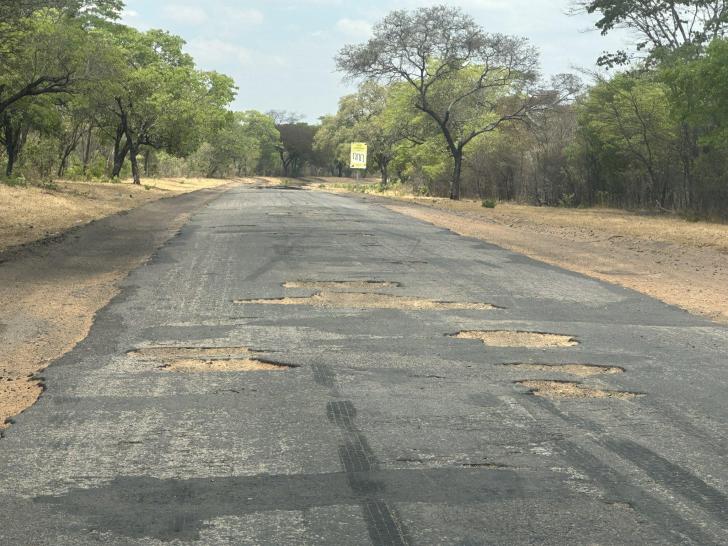
The Government has been urged to prioritise the full rehabilitation of the Bulawayo–Victoria Falls Highway, with concerns that the proposed allocation of 50 kilometres of roadworks falls short of the route's economic and tourism importance.
The concerns follow President Emmerson Mnangagwa's recent State of the Nation Address (SONA), in which he reiterated the Government's guiding philosophy of "leaving no one and no place behind".
Critics argue that the limited allocation for the highway contradicts that commitment, particularly given its role in linking Bulawayo, Zimbabwe's industrial hub, with Victoria Falls, one of the country's leading international tourism destinations.
Of the 170 kilometres of road rehabilitation quantified nationwide in the announced priorities, only 50 kilometres were earmarked for the Bulawayo–Victoria Falls route.
The highway has deteriorated significantly, prompting some motorists and commercial transport operators to travel between the two cities through Botswana.
Although the alternative route is longer and more expensive, travellers reportedly prefer it because it can be quicker than using the direct highway, where poor road conditions pose safety risks and cause delays.
The state of the road has raised concerns about Zimbabwe's ability to provide reliable transport links between two important economic and tourism centres.
The infrastructure challenge is also significant ahead of the 2027 Men's Cricket World Cup, which Zimbabwe will co-host with South Africa and Namibia from October 2 to November 21.
Bulawayo and Victoria Falls are among the designated host cities, raising the prospect of increased movement by international players, supporters and media personnel between the two destinations.
Critics argue that rehabilitating only 50 kilometres of the highway would be inadequate to address the broader transport challenges ahead of the international sporting event.
The announced road allocations have also prompted questions about the geographical distribution of infrastructure spending.
Of the other prioritised highways, Harare–Kanyemba and Harare–Nyamapanda were allocated 30 kilometres each, while Harare–Chirundu received 20 kilometres.
The distribution has fuelled concerns that infrastructure development remains concentrated around routes serving the capital, while key transport corridors in Matabeleland receive limited attention.
Reliable roads are essential for connecting producers to markets, facilitating trade, supporting tourism and improving access to public services.
The Government is therefore being urged to review its infrastructure priorities and commit adequate resources to the full rehabilitation of the Bulawayo–Victoria Falls Highway.
Proponents of the call argue that improving the route would strengthen domestic connectivity, reduce transport costs and enhance Zimbabwe's preparedness to host major international events.
They maintain that delivering on the promise of leaving no one and no place behind requires infrastructure spending that reflects the economic importance and practical needs of communities across the country.
The concerns follow President Emmerson Mnangagwa's recent State of the Nation Address (SONA), in which he reiterated the Government's guiding philosophy of "leaving no one and no place behind".
Critics argue that the limited allocation for the highway contradicts that commitment, particularly given its role in linking Bulawayo, Zimbabwe's industrial hub, with Victoria Falls, one of the country's leading international tourism destinations.
Of the 170 kilometres of road rehabilitation quantified nationwide in the announced priorities, only 50 kilometres were earmarked for the Bulawayo–Victoria Falls route.
The highway has deteriorated significantly, prompting some motorists and commercial transport operators to travel between the two cities through Botswana.
Although the alternative route is longer and more expensive, travellers reportedly prefer it because it can be quicker than using the direct highway, where poor road conditions pose safety risks and cause delays.
The state of the road has raised concerns about Zimbabwe's ability to provide reliable transport links between two important economic and tourism centres.
The infrastructure challenge is also significant ahead of the 2027 Men's Cricket World Cup, which Zimbabwe will co-host with South Africa and Namibia from October 2 to November 21.
Critics argue that rehabilitating only 50 kilometres of the highway would be inadequate to address the broader transport challenges ahead of the international sporting event.
The announced road allocations have also prompted questions about the geographical distribution of infrastructure spending.
Of the other prioritised highways, Harare–Kanyemba and Harare–Nyamapanda were allocated 30 kilometres each, while Harare–Chirundu received 20 kilometres.
The distribution has fuelled concerns that infrastructure development remains concentrated around routes serving the capital, while key transport corridors in Matabeleland receive limited attention.
Reliable roads are essential for connecting producers to markets, facilitating trade, supporting tourism and improving access to public services.
The Government is therefore being urged to review its infrastructure priorities and commit adequate resources to the full rehabilitation of the Bulawayo–Victoria Falls Highway.
Proponents of the call argue that improving the route would strengthen domestic connectivity, reduce transport costs and enhance Zimbabwe's preparedness to host major international events.
They maintain that delivering on the promise of leaving no one and no place behind requires infrastructure spending that reflects the economic importance and practical needs of communities across the country.
Source - The Standard
Join the discussion
Loading comments…





