News / National
Zimbabwe military faces funding crisis as half of pilots quit
01 Nov 2026 at 18:12hrs |
1360 Views
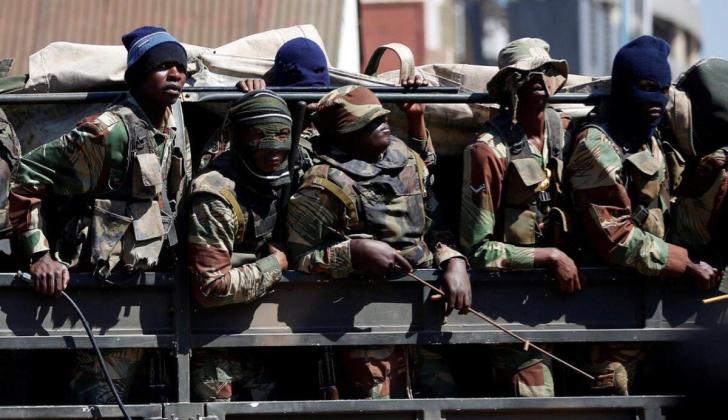
Zimbabwe's defence sector is facing a severe financial crisis, with nearly half of its military pilots reportedly leaving for better-paying opportunities abroad as chronic underfunding, ageing equipment and mounting debts threaten the country's military preparedness.
The Ministry of Defence has revealed that it is operating on less than a fifth of its projected funding requirements, with Treasury allocating a ceiling of just ZiG21.8 billion against a proposed 2027 budget of ZiG116 billion.
The funding shortfall of approximately ZiG94 billion has raised concerns about the Zimbabwe Defence Forces' ability to modernise equipment, maintain operational readiness and retain skilled personnel.
Presenting findings at the 2027 Pre-Budget Seminar, Parliamentary Portfolio Committee on Defence, Home Affairs, Security Services and War Veterans Affairs chairperson Xavier Maoneke warned that the financial constraints were undermining critical military operations.
"At the indicative ceiling of ZiG21.8 billion, critical priorities for 2027 will remain unfunded including ZDF modernisation, vehicle fleet procurement, Research and Development, training, plant and mobile equipment maintenance, uniforms, rations, medical supplies, and national mine clearance operations," Maoneke said.
He revealed that the military had lost approximately 50 percent of its pilots to better-paying employment opportunities, while low morale and obsolete equipment were further weakening operational capacity.
The funding crisis is not new. In 2026, the Defence Ministry requested ZiG77.3 billion but received a Treasury expenditure ceiling of ZiG19.77 billion.
Defence Minister Oppah Muchinguri-Kashiri confirmed the severity of the situation, revealing that even the limited funding approved by Treasury was not being released on schedule.
By September 30, only 56.1 percent of the ministry's 2026 allocation had been disbursed, leaving approximately ZiG8.66 billion unlikely to be released before year-end.
She said the bulk of the funds received had been consumed by employment costs and routine operations, leaving little room for infrastructure development and equipment procurement.
The ministry is also struggling with ZiG1.22 billion in outstanding salary-related payments and more than ZiG9 billion in legacy debt, much of it arising from vehicle hire arrangements.
Muchinguri-Kashiri criticised the continued reliance on hired vehicles, arguing that purchasing them outright would have been more economical.
"Had that money been given to us to purchase, we would not be struggling today. If you hire a car for three years, you would have bought it," she said.
The financial difficulties have also stalled construction of the 149-bed Manyame Referral Hospital, which has remained 97 percent complete for the past two years.
According to the minister, the contractor abandoned the site following payment delays, leaving the facility unfinished and without essential medical equipment.
"We have a 149-bed hospital which is 97 percent complete and has been like that for two years because the contractor has moved off site due to non-payment," she said.
An additional ZiG1.4 billion is required to complete and equip the hospital.
Muchinguri-Kashiri also warned that Zimbabwe was falling behind in modern military technology, particularly drone warfare and electronic defence systems.
Citing the Russia-Ukraine conflict, she said relatively inexpensive drones were increasingly capable of destroying sophisticated military equipment worth millions of dollars.
"In the Russia-Ukraine war, 70 percent of casualties are caused by drones. Terrorists and smugglers now use drones to move drugs, gold and other minerals, yet we lack jamming equipment," she said.
She expressed concern that the military lacked sufficient helicopters and modern surveillance equipment, compromising troop mobility, border security and national mine clearance operations.
The minister also described military barracks and cantonments as outdated compared with facilities in other countries in the region.
To address the crisis, the parliamentary committee has recommended reviving the Defence Procurement Fund, which has reportedly remained uncapitalised since Zimbabwe adopted the multicurrency system in 2009.
It also proposed increased investment in strategic business units under Zimbabwe Defence Industries, including ammunition manufacturing, explosives production, mining investments, military construction and equipment manufacturing.
The committee believes these enterprises could generate additional revenue and reduce the military's dependence on Treasury funding.
Parliamentarians further called for the full implementation of the Military Salary Concept, as directed by President Emmerson Mnangagwa, to improve remuneration and stem the departure of skilled military personnel.
The revelations have placed renewed pressure on Treasury to reconsider defence spending priorities ahead of the 2027 National Budget, amid warnings that continued underfunding could further weaken Zimbabwe's military capabilities and national security preparedness.
Source - New Ziana
Join the discussion
Loading comments…