News / National
Mohadi to retire in 2030
13 mins ago |
29 Views
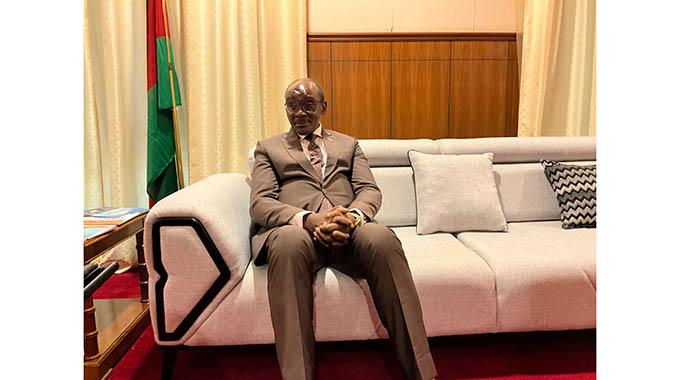
VICE-PRESIDENT Kembo Mohadi has declared that he is still energetic enough to remain in public office until 2030, after which he intends to retire from active political service and spend more time with his family.
Mohadi made the remarks during celebrations marking his 77th birthday, attended by family members and officials from his office.
Born on November 15, 1949, the Vice-President expressed gratitude to those who had gathered to celebrate the occasion, saying their gesture demonstrated the importance of appreciating one another.
He also indicated that, despite his advancing age, he still believed he had the strength and determination to continue serving the country for several more years.
"Thank you very much for the thought. I think it is the thought that really counts. Many people celebrate their birthdays without others coming together to wish them many more years," Mohadi said.
"But thank you very much for coming and I think I am still young enough to serve up to 2030."
The Vice-President went on to suggest that 2030 would mark the end of his public service career.
"After 2030, it is goodbye. I will be celebrating these occasions by myself and my children. They will always be there," he said.
His remarks come amid ongoing political debate over proposals to extend Zimbabwe's presidential and parliamentary terms to 2030.
However, Mohadi did not elaborate on whether his retirement plans were linked to the proposed constitutional changes or whether he was simply outlining his personal intentions.
Beyond discussing his political future, Mohadi used his birthday celebrations to highlight the growing threat of drug and substance abuse among young Zimbabweans.
The Vice-President expressed concern about the devastating effects of substance abuse on families and communities, urging young people to avoid drugs.
His remarks followed his participation in the annual Dr KCD Mohadi Youth Sports Expo held in Maphisa over the weekend.
The sporting event provided an opportunity for the Vice-President to engage with young people and encourage them to pursue productive activities.
Mohadi said drug and substance abuse had become a serious concern requiring continuous intervention from parents, community leaders and public officials.
"I have to speak about it, emphasising that they should not get involved in drug and substance abuse, which is common among young people," he said.
"Now, we elderly people, if ever there was something of that sort, I think God spared us. But our children are very vulnerable to it."
He stressed that young people needed consistent guidance to understand the dangers associated with substance abuse.
Mohadi also shared a personal account of how drug and substance abuse had affected his extended family.
He revealed that his nephew, who had been studying at the Zimbabwe School of Mines, suffered severe mental health consequences that he attributed to substance abuse.
The Vice-President described the experience as a painful example of the damage drugs can cause to young people with promising futures.
He said such experiences reinforced his determination to speak openly about the dangers of substance abuse whenever he interacted with the youth.
"So, it is important that whenever we have an opportunity to interact with the youth or undertake an activity with them, we talk about it," Mohadi said.
"We emphasise it so that they desist from it. It is not good for them. It is not good for the nation."
The Vice-President emphasised that addressing substance abuse required sustained awareness campaigns rather than occasional warnings.
He said sporting activities and youth development programmes could provide valuable opportunities to educate young people about the consequences of drug use.
His comments highlighted the importance he places on youth engagement, particularly through initiatives that promote discipline, healthy lifestyles and constructive participation in society.
As he celebrated his 77th birthday, Mohadi combined reflections on his remaining years in public office with an appeal for greater attention to the challenges facing Zimbabwe's younger generation.
While his declaration that he intends to retire after 2030 provides an indication of his personal political plans, his immediate message centred on protecting young people from the destructive effects of drug and substance abuse.
Source - The Chronicle
Join the discussion
Loading comments…