News / National
RBZ moves to ease ZiG cash shortages
01 Nov 2026 at 18:27hrs |
934 Views
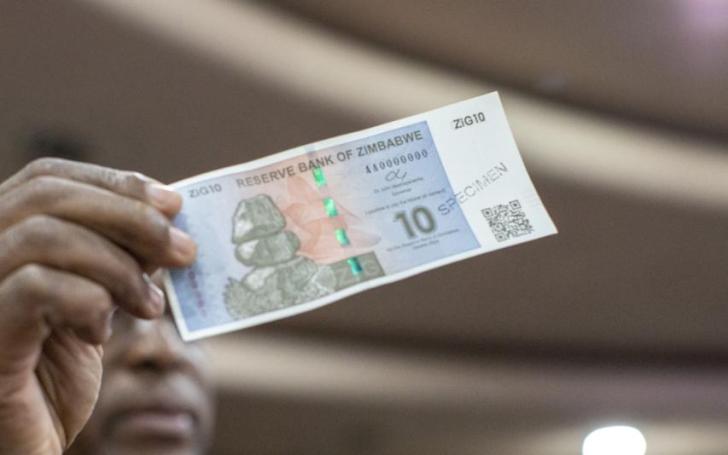
The Reserve Bank of Zimbabwe (RBZ) is introducing a new cash distribution monitoring system aimed at improving access to ZiG currency across the country, particularly in rural and underserved areas where businesses and consumers continue to struggle to obtain physical cash.
The central bank says Zimbabwe has sufficient ZiG notes and coins in circulation to meet demand, but uneven distribution and limited banking infrastructure have created shortages in some parts of the country.
In its latest ZiG Cash Distribution and Availability report, the RBZ identified logistical challenges and the concentration of banking services in major cities as key obstacles to ensuring that cash reaches the public efficiently.
"The central issue is not only how much cash is in circulation, but where it is held and how quickly it reaches the public," the central bank said.
According to the report, Zimbabwe currently has ZiG703.4 million in circulation against a total deposit base of ZiG32 billion, representing a cash-to-deposit ratio of 2.2 percent.
Although this falls slightly below the three percent benchmark considered optimal, the RBZ maintains that existing cash levels are adequate to support economic activity.
However, significant disparities remain in the geographical distribution of banking infrastructure.
Harare accounts for 54.2 percent of the country's 428 banking locations, while Harare and Bulawayo each have representation from 20 banking institutions.
In contrast, Matabeleland South and Mashonaland East have the lowest institutional coverage, with only seven banks represented in each province.
"Public consultations highlighted persistent challenges in cash access, availability and distribution, particularly in remote areas," the RBZ said.
To address the problem, the central bank is developing a Cash Distribution and Availability System (CDAS), designed to monitor cash movements and help financial institutions respond more effectively to shortages.
The system will enable banks to identify underserved areas, improve cash deliveries to branches and automated teller machines (ATMs), and monitor availability more closely.
Under the proposed arrangement, banks will also be encouraged to maintain minimum cash balances at branch level and introduce mechanisms for escalating shortages before they disrupt business operations.
The RBZ believes these measures will reduce excessive cash accumulation at central depots while ensuring that more currency reaches communities where it is needed.
The report reveals that banks currently hold ZiG490.4 million, representing 69.7 percent of the currency in circulation, while the public holds approximately ZiG209.3 million, or 29.8 percent.
Of the total cash supply, ZiG195.1 million, equivalent to 27.7 percent, is already held within bank branch networks and is therefore more readily available for withdrawals.
Another ZiG270.4 million, representing 38.4 percent, remains in central cash depots awaiting distribution to branches as demand arises.
"This indicates substantial cash capacity within the banking system to support continued public access to ZiG cash," the RBZ said.
The central bank expects the new monitoring framework to strengthen cash distribution, improve financial inclusion and support businesses that depend on physical currency for everyday transactions.
The initiative comes amid continued efforts to strengthen confidence in the ZiG currency and ensure that its availability matches the needs of consumers and businesses throughout Zimbabwe.
Source - The Chronicle
Join the discussion
Loading comments…