Opinion / Columnist
Chiwenga and Chamisa camps should unite their fire on Mnangagwa, not each other
30 Jul 2026 at 22:08hrs |
1348 Views
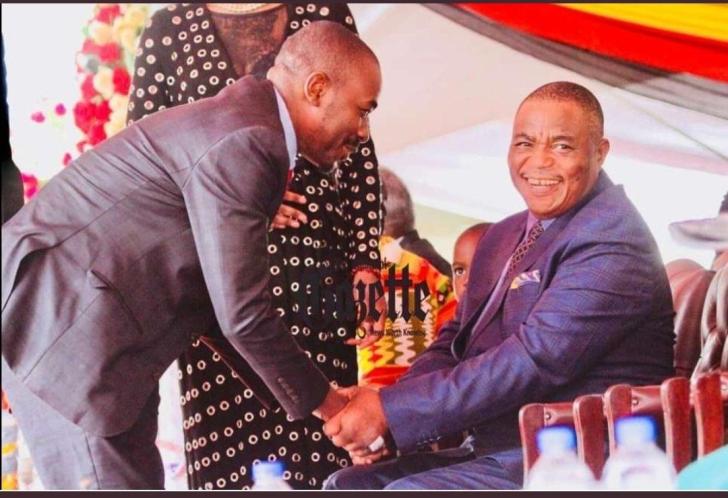
In my view, I struggle to understand why activists aligned with Vice President Constantino Chiwenga and those supporting opposition leader Nelson Chamisa are expending so much energy fighting each other when they ultimately share the same principal political opponent: President Emmerson Mnangagwa.
Chamisa, whatever criticisms may legitimately be levelled against his leadership, remains a significant political figure. At the last general election he attracted more than two million votes, making him a force that cannot simply be wished away.
Likewise, Chiwenga, despite his long association with the very administration he now appears increasingly at odds with, has gained considerable political goodwill among some Zimbabweans because of perceptions that he opposes entrenched corruption and has resisted attempts to extend President Mnangagwa's tenure through Constitutional Amendment No. 3 (CAB3).
History shows that divided opposition often benefits the incumbent. The failure to build strategic alliances has repeatedly allowed those in power to consolidate their position while their opponents remain fragmented.
As debate continues around Agenda 2030 and calls from some Mnangagwa supporters for him to remain in office beyond his current constitutional term, those seeking political change appear more focused on attacking one another than developing a coherent strategy.
President Mnangagwa's political machinery has often been characterised by long-term planning and careful organisation. By contrast, many of his opponents seem trapped in a cycle of emotional reactions and short-term tactical battles, rather than disciplined, strategic thinking.
Political commentators and analysts have every right—and indeed a responsibility—to critique leaders and hold them accountable.
But if you are an active political operator within either the Chiwenga or Chamisa camps, constantly attacking one another sends a different message. It suggests that internal rivalries matter more than achieving the broader political objective you claim to share.
Politics is often compared to chess for a reason. It rewards patience, coalition-building, timing and strategic calculation—not simply winning the loudest argument on social media.
Imagine what could be achieved if even half the energy currently devoted to insulting one another was instead invested in building alliances, developing policy and crafting a credible strategy for change.
That, in my opinion, would pose a far greater political challenge than the infighting we are witnessing today.
Lance Guma is the Founder and Managing Editor at Nehanda Radio and Nehanda TV
Chamisa, whatever criticisms may legitimately be levelled against his leadership, remains a significant political figure. At the last general election he attracted more than two million votes, making him a force that cannot simply be wished away.
Likewise, Chiwenga, despite his long association with the very administration he now appears increasingly at odds with, has gained considerable political goodwill among some Zimbabweans because of perceptions that he opposes entrenched corruption and has resisted attempts to extend President Mnangagwa's tenure through Constitutional Amendment No. 3 (CAB3).
History shows that divided opposition often benefits the incumbent. The failure to build strategic alliances has repeatedly allowed those in power to consolidate their position while their opponents remain fragmented.
As debate continues around Agenda 2030 and calls from some Mnangagwa supporters for him to remain in office beyond his current constitutional term, those seeking political change appear more focused on attacking one another than developing a coherent strategy.
President Mnangagwa's political machinery has often been characterised by long-term planning and careful organisation. By contrast, many of his opponents seem trapped in a cycle of emotional reactions and short-term tactical battles, rather than disciplined, strategic thinking.
But if you are an active political operator within either the Chiwenga or Chamisa camps, constantly attacking one another sends a different message. It suggests that internal rivalries matter more than achieving the broader political objective you claim to share.
Politics is often compared to chess for a reason. It rewards patience, coalition-building, timing and strategic calculation—not simply winning the loudest argument on social media.
Imagine what could be achieved if even half the energy currently devoted to insulting one another was instead invested in building alliances, developing policy and crafting a credible strategy for change.
That, in my opinion, would pose a far greater political challenge than the infighting we are witnessing today.
Lance Guma is the Founder and Managing Editor at Nehanda Radio and Nehanda TV
Source - nehanda
All articles and letters published on Bulawayo24 have been independently written by members of Bulawayo24's community. The views of users published on Bulawayo24 are therefore their own and do not necessarily represent the views of Bulawayo24. Bulawayo24 editors also reserve the right to edit or delete any and all comments received.
Join the discussion
Loading comments…



