Opinion / Columnist
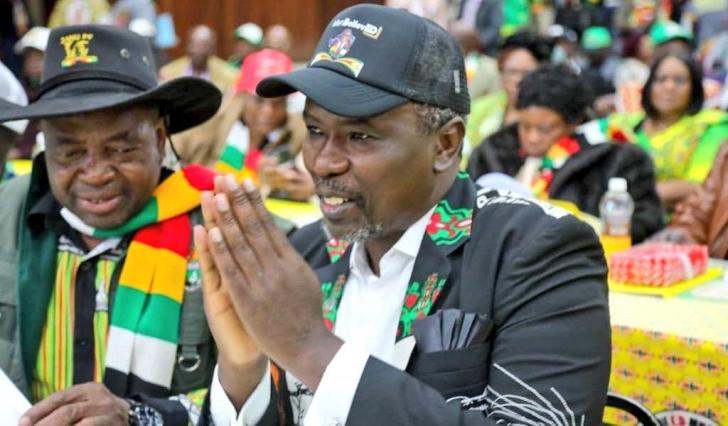
Has CAA3 opened a path to State House for Kudakwashe Tagwirei?
15 Aug 2026 at 18:54hrs |
0 Views
There is a moment in every succession struggle when the future stops being a date on a calendar and becomes a fight over who gets to rewrite the calendar.
Zimbabwe reached that moment in July, when President Emmerson Mnangagwa signed Constitution of Zimbabwe Amendment Act No. 3 into law. By extending presidential and parliamentary terms from five years to seven, the amendment moved the presidential finish line from 2028 to 2030.
More consequentially, it replaced the direct election of the president with a vote by a joint sitting of parliament. What looked on paper like constitutional housekeeping was, in practice, a profound alteration of the succession battlefield.
That matters enormously for Vice President Constantino Chiwenga, because the political settlement born in November 2017 rested on an understanding that was never formally written down but was sufficiently clear to shape the behaviour of an entire ruling party.
Chiwenga, then commander of the Zimbabwe Defence Forces, had helped remove Robert Mugabe and clear the way for Mnangagwa to become president. Chiwenga subsequently became vice-president.
The expectation that accompanied that arrangement was straightforward: Mnangagwa would eventually make way for the general who had helped put him in State House. The year 2028 provided the natural political destination for that expectation.
CAA3 has now demolished it.
For Chiwenga, therefore, the amendment is not merely an inconvenience. It is the political equivalent of arriving at a railway station only to discover that the timetable has been rewritten and the train has already departed.
The vice-president remains a formidable figure. He retains liberation-war credentials, military history and relationships within sections of the security establishment and among war veterans. His continued public appearances, including at national commemorations such as Heroes Day, demonstrate that he has not been politically erased.
Nevertheless, visibility is not the same thing as leverage, and Chiwenga's problem is that the constitutional clock that once appeared to work in his favour has been reset.
Until CAA3, Chiwenga could look towards 2028 and see a political horizon. Even without a formal promise from Mnangagwa, the approaching election created a natural point at which the question of succession would have to be confronted.
Now that horizon has receded to 2030, leaving Chiwenga to spend four additional years operating under a president who has demonstrated that he is willing to change the political architecture rather than surrender control of it.
Consequently, the internal contest has become more defensive for the vice president and more expansive for those seeking alternatives to him.
The military developments make that shift particularly important. Since the succession dispute intensified, Mnangagwa has overseen significant changes within the security establishment.
General Philip Valerio Sibanda retired as ZDF commander and was replaced by General Emmanuel Matatu, while Anselem Sanyatwe, widely regarded as close to Chiwenga, was removed as army commander in 2025. Other senior appointments followed.
None of these changes, considered individually, proves that Mnangagwa is conducting an anti-Chiwenga purge. Military commanders retire, officers are promoted and governments reorganise security structures.
However, Zimbabwe is not a country where military appointments can be understood as simple personnel administration. The army put Mnangagwa in State House in 2017, and everyone inside ZANU PF knows precisely what that means when the question of the next president is being discussed.
The same logic applies to the intelligence services. Changes within the Central Intelligence Organisation under Paul Chikawa have affected senior officials at provincial and district levels at a politically sensitive moment.
Again, such changes can be presented as routine administrative decisions. Yet in a succession struggle, intelligence is political currency.
Whoever controls the information reaching State House knows which provincial chairman is wavering, which commander is unhappy and which faction is organising behind closed doors.
In Zimbabwe's political system, knowledge of those movements can be nearly as valuable as control over the institutions themselves.
Against this background, Kudakwashe Tagwirei's rise becomes much easier to understand. He represents almost everything Chiwenga does not.
He is not a general, has no liberation-war biography and did not command the army in 2017. His influence instead comes from business, money, access and proximity to Mnangagwa. That distinction explains why his growing political role has attracted such intense attention.
Tagwirei, the businessman associated with Sakunda, spent years operating around the political system rather than formally inside its upper ranks. His co-option into the ZANU PF Central Committee changed that calculation because he was no longer merely a businessman with access to power. He had acquired a position within the machinery that produces political power.
His elevation was contested, and that contest is itself revealing. If Tagwirei were simply a wealthy businessman interested in mining, fuel and investment, his presence in the Central Committee would be curious but not necessarily consequential.
Instead, his arrival was resisted by sections of the party, particularly those aligned with the older political and military establishment. That resistance suggested that some within ZANU PF understood exactly what was at stake: the possible conversion of commercial influence into a political succession project.
Tagwirei publicly denies presidential ambitions. Yet Zimbabwean politics has a long history of men insisting that they have no interest in the throne while everyone around them quietly measures the size of their political network.
There is an almost comic quality to this ritual, but the joke conceals an important political truth. In succession struggles, declarations of intent often matter less than the relationships a politician or businessman accumulates.
The more useful question is therefore not whether Tagwirei says he wants State House, but whether the network around him is beginning to make State House a plausible destination.
That network has attracted allegations as rapidly as it has accumulated influence. The United States has sanctioned Tagwirei and Sakunda over allegations involving corruption and privileged access to state resources, while Britain has also imposed sanctions.
Chiwenga's camp has circulated dossiers containing serious allegations concerning Tagwirei's business dealings and alleged state capture. Leaked recordings purporting to show Tagwirei boasting about his political influence have also circulated widely.
Those recordings remain unauthenticated, and the allegations contained in political dossiers are not judicial findings. They should therefore be treated as claims within a factional struggle rather than established facts.
Even so, their political importance cannot simply be dismissed. Political warfare rarely waits for a courtroom. The circulation of dossiers, leaked recordings and corruption allegations demonstrates that Tagwirei has become sufficiently consequential for his opponents to regard his political future as something that must be actively contested.
In other words, the attacks on Tagwirei are themselves evidence of how far he has travelled from being merely a businessman operating close to government.
CAA3 now gives him additional room to manoeuvre. The extension to 2030 provides four more years in which Tagwirei can cultivate provincial relationships, deepen his position within ZANU PF, finance political activity and develop parliamentary alliances.
In a party where access and patronage can determine political survival, time is not simply time. It is an opportunity to build dependencies and turn relationships into structures.
More importantly, however, CAA3 changes the electoral arithmetic. A direct presidential election requires a candidate to persuade millions of citizens. A presidential election through parliament requires something different: party discipline, parliamentary numbers, bargaining and control over the structures that select candidates.
That distinction could prove decisive. A businessman with limited mass appeal but considerable access to political structures might struggle to win a national presidential contest, yet become much more consequential when the decisive votes are cast by parliamentarians operating within a dominant ruling party.
This is where Tagwirei's strengths intersect with the constitutional changes. His financial capacity can help him cultivate political relationships, while his proximity to Mnangagwa gives him access that most potential successors cannot easily replicate.
At the same time, the disruption of Chiwenga's 2028 timetable removes the vice-president's most obvious institutional advantage. The general is no longer waiting at a clearly marked succession gate.
He must now compete in a political environment where Mnangagwa has four additional years to influence the party, government and security structures around him.
Nevertheless, Tagwirei should not mistake a changed battlefield for a guaranteed victory. His weaknesses remain formidable. ZANU PF is still a liberation movement as well as a governing party, and liberation credentials carry enormous symbolic weight.
Chiwenga can point to a military career stretching back to the liberation struggle and to his role in the 2017 intervention. Tagwirei cannot manufacture that history with money, however much money he possesses.
The security establishment presents another obstacle. Mnangagwa can change commanders, but he cannot simply erase the relationships Chiwenga accumulated over decades. Officers retire, but networks often survive them.
The same applies to war veterans and sections of the traditional ZANU PF establishment that may tolerate wealthy businessmen as financiers while resisting their transformation into national political leaders.
Furthermore, Tagwirei is not operating without rivals inside Mnangagwa's own political and business ecosystem.
Paul Tungwarara has entered the Central Committee alongside him, while other wealthy figures such as Wicknell Chivayo and Scott Sakupwanya occupy prominent positions within the broader network surrounding the ruling establishment.
Consequently, the succession struggle is not simply Mnangagwa versus Chiwenga, with Tagwirei waiting patiently in the background. It is a contest among competing political, military and commercial networks, all calculating which relationships will survive once Mnangagwa eventually leaves office.
Then there is Mnangagwa himself, who remains the most important variable in the entire equation. The president has not publicly anointed Tagwirei as his successor, and CAA3 has preserved his freedom to change course.
He can keep Chiwenga close while limiting his influence. He can continue elevating Tagwirei without formally endorsing him. He can promote Tungwarara or another figure. He can even allow rival networks to exhaust one another while retaining the final say over who receives his political blessing.
For that reason, Tagwirei's position is stronger without being secure. He has become a serious contender, but he is not yet the frontrunner. The next ZANU PF congress, the Central Committee, the Politburo, provincial structures and parliamentary caucus will matter enormously. Tagwirei can buy proximity, but he cannot simply purchase legitimacy. He can finance networks, but he cannot assume that those networks will automatically follow him once Mnangagwa is gone.
Nor should anyone write Chiwenga off. He has lost the certainty of 2028, not his political identity. He remains the general who helped create the post-Mugabe order, the first vice president and a symbol of the military and liberation traditions that still shape ZANU PF.
If anything, the loss of a clear succession timetable may make the struggle more intense because Chiwenga now has a powerful incentive to protect what remains of his political base before Mnangagwa's extended tenure changes the balance further.
That is why CAA3 should be understood not as the end of Zimbabwe's succession question but as its most consequential rearrangement so far. Mnangagwa has bought time. Chiwenga has lost the certainty of succession. Tagwirei has gained a route towards the top.
Whether that route ends at State House will depend on whether money can accomplish what money has never quite managed in Zimbabwean politics: turn proximity into legitimacy, influence into command and a businessman into the custodian of a liberation movement's political inheritance.
Between now and 2030, that struggle will be fought not in the elegant language of constitutional amendments but in party offices, military corridors, provincial meetings, parliamentary caucuses, business boardrooms and private conversations where loyalties are tested and alliances are priced.
CAA3 has changed the calendar. It has also changed who benefits from the extra time. For Chiwenga, that may be the beginning of the end of an old bargain. For Tagwirei, it may be the beginning of something far more ambitious.
And for Zimbabwe, the most consequential question is no longer simply who will succeed Mnangagwa. It is whether the man best positioned to inherit the system will be the general who helped create it, the businessman who has helped finance it, or someone neither faction has yet identified.
That uncertainty is not a sign that the succession struggle has been resolved. It is a sign that the real struggle has finally begun.
Zimbabwe reached that moment in July, when President Emmerson Mnangagwa signed Constitution of Zimbabwe Amendment Act No. 3 into law. By extending presidential and parliamentary terms from five years to seven, the amendment moved the presidential finish line from 2028 to 2030.
More consequentially, it replaced the direct election of the president with a vote by a joint sitting of parliament. What looked on paper like constitutional housekeeping was, in practice, a profound alteration of the succession battlefield.
That matters enormously for Vice President Constantino Chiwenga, because the political settlement born in November 2017 rested on an understanding that was never formally written down but was sufficiently clear to shape the behaviour of an entire ruling party.
Chiwenga, then commander of the Zimbabwe Defence Forces, had helped remove Robert Mugabe and clear the way for Mnangagwa to become president. Chiwenga subsequently became vice-president.
The expectation that accompanied that arrangement was straightforward: Mnangagwa would eventually make way for the general who had helped put him in State House. The year 2028 provided the natural political destination for that expectation.
CAA3 has now demolished it.
For Chiwenga, therefore, the amendment is not merely an inconvenience. It is the political equivalent of arriving at a railway station only to discover that the timetable has been rewritten and the train has already departed.
The vice-president remains a formidable figure. He retains liberation-war credentials, military history and relationships within sections of the security establishment and among war veterans. His continued public appearances, including at national commemorations such as Heroes Day, demonstrate that he has not been politically erased.
Nevertheless, visibility is not the same thing as leverage, and Chiwenga's problem is that the constitutional clock that once appeared to work in his favour has been reset.
Until CAA3, Chiwenga could look towards 2028 and see a political horizon. Even without a formal promise from Mnangagwa, the approaching election created a natural point at which the question of succession would have to be confronted.
Now that horizon has receded to 2030, leaving Chiwenga to spend four additional years operating under a president who has demonstrated that he is willing to change the political architecture rather than surrender control of it.
Consequently, the internal contest has become more defensive for the vice president and more expansive for those seeking alternatives to him.
The military developments make that shift particularly important. Since the succession dispute intensified, Mnangagwa has overseen significant changes within the security establishment.
General Philip Valerio Sibanda retired as ZDF commander and was replaced by General Emmanuel Matatu, while Anselem Sanyatwe, widely regarded as close to Chiwenga, was removed as army commander in 2025. Other senior appointments followed.
None of these changes, considered individually, proves that Mnangagwa is conducting an anti-Chiwenga purge. Military commanders retire, officers are promoted and governments reorganise security structures.
However, Zimbabwe is not a country where military appointments can be understood as simple personnel administration. The army put Mnangagwa in State House in 2017, and everyone inside ZANU PF knows precisely what that means when the question of the next president is being discussed.
The same logic applies to the intelligence services. Changes within the Central Intelligence Organisation under Paul Chikawa have affected senior officials at provincial and district levels at a politically sensitive moment.
Again, such changes can be presented as routine administrative decisions. Yet in a succession struggle, intelligence is political currency.
Whoever controls the information reaching State House knows which provincial chairman is wavering, which commander is unhappy and which faction is organising behind closed doors.
In Zimbabwe's political system, knowledge of those movements can be nearly as valuable as control over the institutions themselves.
Against this background, Kudakwashe Tagwirei's rise becomes much easier to understand. He represents almost everything Chiwenga does not.
He is not a general, has no liberation-war biography and did not command the army in 2017. His influence instead comes from business, money, access and proximity to Mnangagwa. That distinction explains why his growing political role has attracted such intense attention.
Tagwirei, the businessman associated with Sakunda, spent years operating around the political system rather than formally inside its upper ranks. His co-option into the ZANU PF Central Committee changed that calculation because he was no longer merely a businessman with access to power. He had acquired a position within the machinery that produces political power.
His elevation was contested, and that contest is itself revealing. If Tagwirei were simply a wealthy businessman interested in mining, fuel and investment, his presence in the Central Committee would be curious but not necessarily consequential.
Instead, his arrival was resisted by sections of the party, particularly those aligned with the older political and military establishment. That resistance suggested that some within ZANU PF understood exactly what was at stake: the possible conversion of commercial influence into a political succession project.
Tagwirei publicly denies presidential ambitions. Yet Zimbabwean politics has a long history of men insisting that they have no interest in the throne while everyone around them quietly measures the size of their political network.
There is an almost comic quality to this ritual, but the joke conceals an important political truth. In succession struggles, declarations of intent often matter less than the relationships a politician or businessman accumulates.
The more useful question is therefore not whether Tagwirei says he wants State House, but whether the network around him is beginning to make State House a plausible destination.
That network has attracted allegations as rapidly as it has accumulated influence. The United States has sanctioned Tagwirei and Sakunda over allegations involving corruption and privileged access to state resources, while Britain has also imposed sanctions.
Chiwenga's camp has circulated dossiers containing serious allegations concerning Tagwirei's business dealings and alleged state capture. Leaked recordings purporting to show Tagwirei boasting about his political influence have also circulated widely.
Those recordings remain unauthenticated, and the allegations contained in political dossiers are not judicial findings. They should therefore be treated as claims within a factional struggle rather than established facts.
Even so, their political importance cannot simply be dismissed. Political warfare rarely waits for a courtroom. The circulation of dossiers, leaked recordings and corruption allegations demonstrates that Tagwirei has become sufficiently consequential for his opponents to regard his political future as something that must be actively contested.
In other words, the attacks on Tagwirei are themselves evidence of how far he has travelled from being merely a businessman operating close to government.
CAA3 now gives him additional room to manoeuvre. The extension to 2030 provides four more years in which Tagwirei can cultivate provincial relationships, deepen his position within ZANU PF, finance political activity and develop parliamentary alliances.
In a party where access and patronage can determine political survival, time is not simply time. It is an opportunity to build dependencies and turn relationships into structures.
More importantly, however, CAA3 changes the electoral arithmetic. A direct presidential election requires a candidate to persuade millions of citizens. A presidential election through parliament requires something different: party discipline, parliamentary numbers, bargaining and control over the structures that select candidates.
That distinction could prove decisive. A businessman with limited mass appeal but considerable access to political structures might struggle to win a national presidential contest, yet become much more consequential when the decisive votes are cast by parliamentarians operating within a dominant ruling party.
This is where Tagwirei's strengths intersect with the constitutional changes. His financial capacity can help him cultivate political relationships, while his proximity to Mnangagwa gives him access that most potential successors cannot easily replicate.
At the same time, the disruption of Chiwenga's 2028 timetable removes the vice-president's most obvious institutional advantage. The general is no longer waiting at a clearly marked succession gate.
He must now compete in a political environment where Mnangagwa has four additional years to influence the party, government and security structures around him.
Nevertheless, Tagwirei should not mistake a changed battlefield for a guaranteed victory. His weaknesses remain formidable. ZANU PF is still a liberation movement as well as a governing party, and liberation credentials carry enormous symbolic weight.
Chiwenga can point to a military career stretching back to the liberation struggle and to his role in the 2017 intervention. Tagwirei cannot manufacture that history with money, however much money he possesses.
The security establishment presents another obstacle. Mnangagwa can change commanders, but he cannot simply erase the relationships Chiwenga accumulated over decades. Officers retire, but networks often survive them.
The same applies to war veterans and sections of the traditional ZANU PF establishment that may tolerate wealthy businessmen as financiers while resisting their transformation into national political leaders.
Furthermore, Tagwirei is not operating without rivals inside Mnangagwa's own political and business ecosystem.
Paul Tungwarara has entered the Central Committee alongside him, while other wealthy figures such as Wicknell Chivayo and Scott Sakupwanya occupy prominent positions within the broader network surrounding the ruling establishment.
Consequently, the succession struggle is not simply Mnangagwa versus Chiwenga, with Tagwirei waiting patiently in the background. It is a contest among competing political, military and commercial networks, all calculating which relationships will survive once Mnangagwa eventually leaves office.
Then there is Mnangagwa himself, who remains the most important variable in the entire equation. The president has not publicly anointed Tagwirei as his successor, and CAA3 has preserved his freedom to change course.
He can keep Chiwenga close while limiting his influence. He can continue elevating Tagwirei without formally endorsing him. He can promote Tungwarara or another figure. He can even allow rival networks to exhaust one another while retaining the final say over who receives his political blessing.
For that reason, Tagwirei's position is stronger without being secure. He has become a serious contender, but he is not yet the frontrunner. The next ZANU PF congress, the Central Committee, the Politburo, provincial structures and parliamentary caucus will matter enormously. Tagwirei can buy proximity, but he cannot simply purchase legitimacy. He can finance networks, but he cannot assume that those networks will automatically follow him once Mnangagwa is gone.
Nor should anyone write Chiwenga off. He has lost the certainty of 2028, not his political identity. He remains the general who helped create the post-Mugabe order, the first vice president and a symbol of the military and liberation traditions that still shape ZANU PF.
If anything, the loss of a clear succession timetable may make the struggle more intense because Chiwenga now has a powerful incentive to protect what remains of his political base before Mnangagwa's extended tenure changes the balance further.
That is why CAA3 should be understood not as the end of Zimbabwe's succession question but as its most consequential rearrangement so far. Mnangagwa has bought time. Chiwenga has lost the certainty of succession. Tagwirei has gained a route towards the top.
Whether that route ends at State House will depend on whether money can accomplish what money has never quite managed in Zimbabwean politics: turn proximity into legitimacy, influence into command and a businessman into the custodian of a liberation movement's political inheritance.
Between now and 2030, that struggle will be fought not in the elegant language of constitutional amendments but in party offices, military corridors, provincial meetings, parliamentary caucuses, business boardrooms and private conversations where loyalties are tested and alliances are priced.
CAA3 has changed the calendar. It has also changed who benefits from the extra time. For Chiwenga, that may be the beginning of the end of an old bargain. For Tagwirei, it may be the beginning of something far more ambitious.
And for Zimbabwe, the most consequential question is no longer simply who will succeed Mnangagwa. It is whether the man best positioned to inherit the system will be the general who helped create it, the businessman who has helped finance it, or someone neither faction has yet identified.
That uncertainty is not a sign that the succession struggle has been resolved. It is a sign that the real struggle has finally begun.
Source - nehanda
All articles and letters published on Bulawayo24 have been independently written by members of Bulawayo24's community. The views of users published on Bulawayo24 are therefore their own and do not necessarily represent the views of Bulawayo24. Bulawayo24 editors also reserve the right to edit or delete any and all comments received.
Join the discussion
Loading comments…





