Opinion / Columnist
From Lacoste vs G40 to Mnangagwa vs Chiwenga
01 Nov 2026 at 18:24hrs |
1291 Views
In November 2017, when armoured personnel carriers rolled down Samora Machel Avenue in Harare to terminate Robert Mugabe's 37-year reign, the military intervention was framed as a swift, surgical strike to remove a corrupt cabal encircling the president. The vicious purge pitting Emmerson Mnangagwa's Lacoste faction against first lady Grace Mugabe's Generation 40 (G40) cabal was painted as an aberration, a desperate power grab by political upstarts who had hijacked presidential authority.
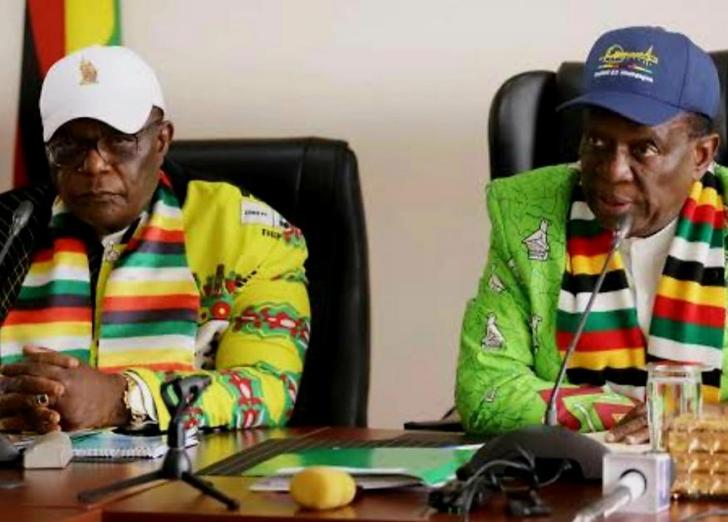
Yet, as delegates converged on Chinhoyi for Zanu PF's National People's Conference in October 2026, the air crackled with a familiar, high-stakes paranoia.
The escalating showdown between Mnangagwa and Vice President Constantino Chiwenga proves that while the actors have swapped roles, the dark art of managing succession in Zanu PF remains unchanged.
The ruling party still mistakes ruthless, short-term tactical manoeuvres for permanent political control.
The ultimate irony of contemporary Zimbabwean politics rests in this high-stakes reversal: Mnangagwa – once the hunted victim of a factional purge who returned from exile backed by military armour – now operates as the supreme incumbent wielding state power to orchestrate his own exit timeline.
Meanwhile, Chiwenga, the former Zimbabwe Defence Forces commander who spearheaded Mugabe's downfall, finds himself fighting from the inside to abort those very plans.
Understanding today's high-stakes duel requires tracing the scars of past factional warfare. Internal combat in Zanu PF is an art form.
The 2004 Tsholotsho conspiracy was an early attempt by Mnangagwa's allies to re-engineer the presidium and block Joice Mujuru's elevation. Mugabe crushed that rebellion, but the impulse to hijack party rules survived.
The decisive realignment struck in 2014, when Mnangagwa forged a tactical alliance with Mugabe and Grace Mugabe to ruthlessly purge Mujuru and her network from the state and party apparatus.
Mujuru's exile created a power vacuum that unleashed a far more dangerous monster.
Younger, ambitious cabinet schemers, led by Jonathan Moyo and Saviour Kasukuwere, coalesced around Grace Mugabe under the G40 banner to slam the door on Mnangagwa's presidential ambitions.
G40's core gamble was simple: proximity to an ailing dictator equalled absolute authority.
They weaponised state media, staged chaotic youth rallies, and engineered party expulsions, culminating in Mnangagwa's dramatic firing as vice president in early November 2017.
G40's fatal miscalculation lay in assuming that executive decrees and a frail president's signature could protect them once the state's ultimate enforcers turned against them.
When Chiwenga launched Operation Restore Legacy, G40's illusory empire dissolved overnight.
Trapped under military encirclement, facing immediate parliamentary impeachment, and abandoned by his central committee, Mugabe resigned in humiliation.
The collapse proved a brutal truth: daily access to the president is worthless without deep institutional roots across the party and security establishment.
Fast forward to October 2026.
The current battleground centres on a high-wire legal chess match over the presidency itself. In July 2026, parliament pushed through Constitution of Zimbabwe Amendment (No. 3) Act, known as CAA3, fundamentally altering the governance architecture by abolishing direct presidential elections in favour of parliamentary election and stretching presidential terms from five to seven years.
At the Chinhoyi conference, Mnangagwa's strategists pounced, driving floor resolutions to align party statutes with CAA3 and pushing the elective congress from 2027 to 2029.
These resolutions represent a naked display of factional force, though converting political resolutions into enforceable constitutional reality remains a complex battlefield.
Chiwenga's pre-emptive counter-strike in Chinhoyi was swift and direct. Appealing to party constitutionalism while introducing the president, the vice president openly warned in advance against bending internal statutes to extend executive tenure.
He covertly weaponised section 328(7) of the national constitution, which expressly forbids an incumbent from benefiting from term extensions passed during their tenure.
Mnangagwa, however, holds the commanding heights of state power. As head of state, he commands patronage, state resources, and key party organs. He has systematically reshuffled the military hierarchy, moving former army chief Philip Valerio Sibanda into the politburo and assigning key commanders like Anselem Sanyatwe to civilian cabinet roles.
Yet, assuming these chess moves have permanently neutralised Chiwenga underestimates the vice president.
Chiwenga retains formidable influence as a liberation-era heavyweight, enjoys quiet sympathy among party traditionalists repelled by constitutional manipulation, and maintains enduring loyalties within the security apparatus.
Three explosive lessons connect the Mugabe-era factional war to today's standoff.
First, administrative access is not total power. G40 proved that orchestrated party endorsements and presidential patronage crumble the moment hard power aligns against them.
Mnangagwa's loyalists risk committing the exact same error if they mistake managed conference choreography for genuine, durable consensus across Zanu PF's warring networks.
Second, purging rivals creates dangerous coalitions.
The purge of Mujuru in 2014 and the hunting of Mnangagwa in 2017 proved that removing a rival solves nothing – it merely creates a vacuum, turns yesterday's allies into tomorrow's targets, and forces threatened factions to unite against the centre.
Isolate Chiwenga too aggressively, and the incumbent risks sparking a formidable alliance among aggrieved party structures and security veterans.
Third, legal engineering offers zero immunity. Rewriting rules to settle personal power struggles sets a deadly precedent that future rivals will inevitably weaponise against its creators.
Mnangagwa cannot assume that passing conference resolutions locks down power permanently, just as Chiwenga cannot assume the military conditions of 2017 can be replayed on demand.
This relentless political intrigue inflicts a brutal cost on ordinary citizens. While the political elite spends its energy on conference ambushes and term-extension manoeuvres, the national economy bleeds out.
Paralysing succession combat scares off long-term investment, freezes economic policymaking, and eviscerates public institutions.
When the country's supreme law is treated as a disposable pawn in a factional knife fight, constitutionalism itself is reduced to a tool of ruling class survival.
The striking parallel between 2017 and 2026 remains Zanu PF's persistent failure to build a transparent, rule-based mechanism for transferring power.
The crucial difference is that Mnangagwa wields full executive control, whereas Mugabe in his final days was a puppet manipulated by rival factions.
The most dangerous delusion gripping today's power brokers is that structural dominance inside a conference hall can replace a genuine power-sharing settlement.
Mnangagwa's tactical victory in forcing through the Chinhoyi resolutions may have extended his immediate grip, but it has backed a dangerous rival into a corner.
A transition engineered through coerced rules settles nothing; it merely compresses the pressure, guaranteeing that when the political explosion finally hits, the fallout will be catastrophic for both party and nation.
Yet, as delegates converged on Chinhoyi for Zanu PF's National People's Conference in October 2026, the air crackled with a familiar, high-stakes paranoia.
The escalating showdown between Mnangagwa and Vice President Constantino Chiwenga proves that while the actors have swapped roles, the dark art of managing succession in Zanu PF remains unchanged.
The ruling party still mistakes ruthless, short-term tactical manoeuvres for permanent political control.
The ultimate irony of contemporary Zimbabwean politics rests in this high-stakes reversal: Mnangagwa – once the hunted victim of a factional purge who returned from exile backed by military armour – now operates as the supreme incumbent wielding state power to orchestrate his own exit timeline.
Meanwhile, Chiwenga, the former Zimbabwe Defence Forces commander who spearheaded Mugabe's downfall, finds himself fighting from the inside to abort those very plans.
Understanding today's high-stakes duel requires tracing the scars of past factional warfare. Internal combat in Zanu PF is an art form.
The 2004 Tsholotsho conspiracy was an early attempt by Mnangagwa's allies to re-engineer the presidium and block Joice Mujuru's elevation. Mugabe crushed that rebellion, but the impulse to hijack party rules survived.
The decisive realignment struck in 2014, when Mnangagwa forged a tactical alliance with Mugabe and Grace Mugabe to ruthlessly purge Mujuru and her network from the state and party apparatus.
Mujuru's exile created a power vacuum that unleashed a far more dangerous monster.
Younger, ambitious cabinet schemers, led by Jonathan Moyo and Saviour Kasukuwere, coalesced around Grace Mugabe under the G40 banner to slam the door on Mnangagwa's presidential ambitions.
G40's core gamble was simple: proximity to an ailing dictator equalled absolute authority.
They weaponised state media, staged chaotic youth rallies, and engineered party expulsions, culminating in Mnangagwa's dramatic firing as vice president in early November 2017.
G40's fatal miscalculation lay in assuming that executive decrees and a frail president's signature could protect them once the state's ultimate enforcers turned against them.
When Chiwenga launched Operation Restore Legacy, G40's illusory empire dissolved overnight.
Trapped under military encirclement, facing immediate parliamentary impeachment, and abandoned by his central committee, Mugabe resigned in humiliation.
The collapse proved a brutal truth: daily access to the president is worthless without deep institutional roots across the party and security establishment.
Fast forward to October 2026.
The current battleground centres on a high-wire legal chess match over the presidency itself. In July 2026, parliament pushed through Constitution of Zimbabwe Amendment (No. 3) Act, known as CAA3, fundamentally altering the governance architecture by abolishing direct presidential elections in favour of parliamentary election and stretching presidential terms from five to seven years.
At the Chinhoyi conference, Mnangagwa's strategists pounced, driving floor resolutions to align party statutes with CAA3 and pushing the elective congress from 2027 to 2029.
These resolutions represent a naked display of factional force, though converting political resolutions into enforceable constitutional reality remains a complex battlefield.
He covertly weaponised section 328(7) of the national constitution, which expressly forbids an incumbent from benefiting from term extensions passed during their tenure.
Mnangagwa, however, holds the commanding heights of state power. As head of state, he commands patronage, state resources, and key party organs. He has systematically reshuffled the military hierarchy, moving former army chief Philip Valerio Sibanda into the politburo and assigning key commanders like Anselem Sanyatwe to civilian cabinet roles.
Yet, assuming these chess moves have permanently neutralised Chiwenga underestimates the vice president.
Chiwenga retains formidable influence as a liberation-era heavyweight, enjoys quiet sympathy among party traditionalists repelled by constitutional manipulation, and maintains enduring loyalties within the security apparatus.
Three explosive lessons connect the Mugabe-era factional war to today's standoff.
First, administrative access is not total power. G40 proved that orchestrated party endorsements and presidential patronage crumble the moment hard power aligns against them.
Mnangagwa's loyalists risk committing the exact same error if they mistake managed conference choreography for genuine, durable consensus across Zanu PF's warring networks.
Second, purging rivals creates dangerous coalitions.
The purge of Mujuru in 2014 and the hunting of Mnangagwa in 2017 proved that removing a rival solves nothing – it merely creates a vacuum, turns yesterday's allies into tomorrow's targets, and forces threatened factions to unite against the centre.
Isolate Chiwenga too aggressively, and the incumbent risks sparking a formidable alliance among aggrieved party structures and security veterans.
Third, legal engineering offers zero immunity. Rewriting rules to settle personal power struggles sets a deadly precedent that future rivals will inevitably weaponise against its creators.
Mnangagwa cannot assume that passing conference resolutions locks down power permanently, just as Chiwenga cannot assume the military conditions of 2017 can be replayed on demand.
This relentless political intrigue inflicts a brutal cost on ordinary citizens. While the political elite spends its energy on conference ambushes and term-extension manoeuvres, the national economy bleeds out.
Paralysing succession combat scares off long-term investment, freezes economic policymaking, and eviscerates public institutions.
When the country's supreme law is treated as a disposable pawn in a factional knife fight, constitutionalism itself is reduced to a tool of ruling class survival.
The striking parallel between 2017 and 2026 remains Zanu PF's persistent failure to build a transparent, rule-based mechanism for transferring power.
The crucial difference is that Mnangagwa wields full executive control, whereas Mugabe in his final days was a puppet manipulated by rival factions.
The most dangerous delusion gripping today's power brokers is that structural dominance inside a conference hall can replace a genuine power-sharing settlement.
Mnangagwa's tactical victory in forcing through the Chinhoyi resolutions may have extended his immediate grip, but it has backed a dangerous rival into a corner.
A transition engineered through coerced rules settles nothing; it merely compresses the pressure, guaranteeing that when the political explosion finally hits, the fallout will be catastrophic for both party and nation.
Source - Gabriel Manyati
All articles and letters published on Bulawayo24 have been independently written by members of Bulawayo24's community. The views of users published on Bulawayo24 are therefore their own and do not necessarily represent the views of Bulawayo24. Bulawayo24 editors also reserve the right to edit or delete any and all comments received.
Join the discussion
Loading comments…