News / National
Mafume says Harare nearing world-class status
07 Jun 2026 at 08:16hrs |
0 Views
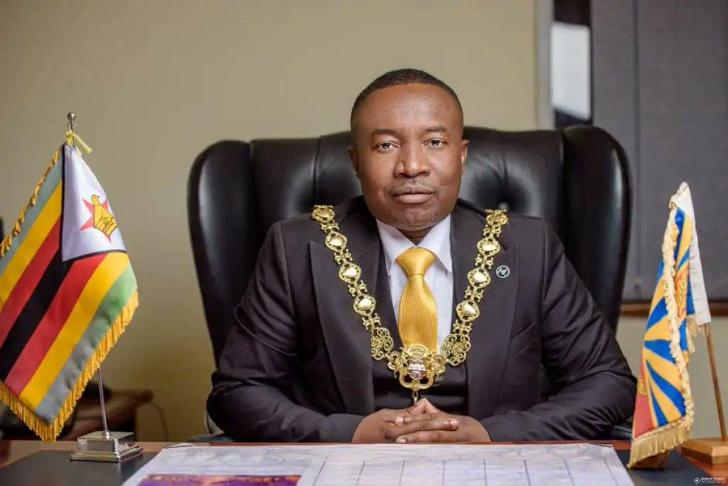
Harare Mayor Jacob Mafume says the capital is steadily transforming into a world-class city, arguing that the remaining major challenges are improving water supply, sewer infrastructure, roads and electricity services.
Mafume's remarks come despite growing criticism over the city's failure to meet a long-standing pledge to attain world-class status by the end of 2025. Residents continue to grapple with poor service delivery, deteriorating roads, water shortages, waste management problems and recurring outbreaks of diseases linked to inadequate sanitation.
Speaking to NewZimbabwe.com, Mafume said the vision of turning Harare into a world-class city was not originally his administration's idea but a target inherited from previous city leaders.
"That was the vision of the then mayors in 2010 which we adopted, but we have the DNA of a world-class city," he said.
The mayor pointed to several developments that he believes demonstrate the city's progress, including the modernisation of infrastructure and construction of landmark buildings.
"We have a perfectly world-class airport, perfectly world-class road junctions being constructed, world-class buildings like Joina City, a perfectly world-class Parliament, so what is left for us is to do the software," Mafume said.
"We have to have world-class water delivery, world-class electricity availability and a world-class road network."
Mafume argued that Harare is significantly better positioned than it was two decades ago and said new residential and commercial developments were helping reshape the city's image.
"We are closer to being world-class than we were 20 years ago and I feel that if you look at the cluster homes that are coming up, new shopping centres coming up, the city is beginning to look and feel like any international city," he said.
Areas such as Madokero, Highlands, Borrowdale Village Walk and Greenfields have emerged as examples of modern urban development, featuring new retail centres, housing projects and improved amenities.
However, critics argue that these developments stand in stark contrast to conditions in many high-density suburbs, where residents continue to face inadequate sanitation, refuse collection challenges and unreliable water supplies.
Several densely populated communities remain vulnerable to outbreaks of diseases such as Cholera and Typhoid fever, problems that public health experts have repeatedly linked to failing infrastructure and poor service delivery.
Mafume acknowledged that not all parts of the city have benefited equally from development but maintained that progress was being made.
"We will panel beat on the areas that are lagging behind, but I am satisfied that we are in the right direction and that we are getting there sooner rather than later," he said.
The mayor's comments are likely to reignite debate over whether visible investments in commercial and residential developments can compensate for persistent shortcomings in essential municipal services, which many residents regard as the true measure of a world-class city.
Mafume's remarks come despite growing criticism over the city's failure to meet a long-standing pledge to attain world-class status by the end of 2025. Residents continue to grapple with poor service delivery, deteriorating roads, water shortages, waste management problems and recurring outbreaks of diseases linked to inadequate sanitation.
Speaking to NewZimbabwe.com, Mafume said the vision of turning Harare into a world-class city was not originally his administration's idea but a target inherited from previous city leaders.
"That was the vision of the then mayors in 2010 which we adopted, but we have the DNA of a world-class city," he said.
The mayor pointed to several developments that he believes demonstrate the city's progress, including the modernisation of infrastructure and construction of landmark buildings.
"We have a perfectly world-class airport, perfectly world-class road junctions being constructed, world-class buildings like Joina City, a perfectly world-class Parliament, so what is left for us is to do the software," Mafume said.
"We have to have world-class water delivery, world-class electricity availability and a world-class road network."
"We are closer to being world-class than we were 20 years ago and I feel that if you look at the cluster homes that are coming up, new shopping centres coming up, the city is beginning to look and feel like any international city," he said.
Areas such as Madokero, Highlands, Borrowdale Village Walk and Greenfields have emerged as examples of modern urban development, featuring new retail centres, housing projects and improved amenities.
However, critics argue that these developments stand in stark contrast to conditions in many high-density suburbs, where residents continue to face inadequate sanitation, refuse collection challenges and unreliable water supplies.
Several densely populated communities remain vulnerable to outbreaks of diseases such as Cholera and Typhoid fever, problems that public health experts have repeatedly linked to failing infrastructure and poor service delivery.
Mafume acknowledged that not all parts of the city have benefited equally from development but maintained that progress was being made.
"We will panel beat on the areas that are lagging behind, but I am satisfied that we are in the right direction and that we are getting there sooner rather than later," he said.
The mayor's comments are likely to reignite debate over whether visible investments in commercial and residential developments can compensate for persistent shortcomings in essential municipal services, which many residents regard as the true measure of a world-class city.
Source - newzimbabwe
Join the discussion
Loading comments…


