News / National
Zimra's new rules on buying pre-owned cars expose a bigger digital problem
19 Jun 2026 at 09:17hrs |
0 Views
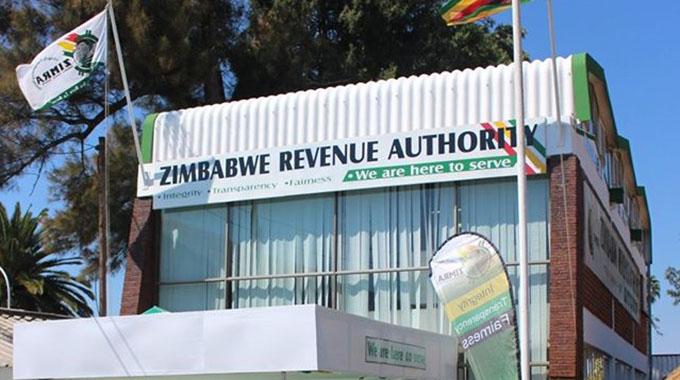
The Zimbabwe Revenue Authority's (ZIMRA) latest directive urging prospective buyers of second-hand vehicles to verify customs clearance details before making payment is intended to protect consumers from a genuine and costly risk. Yet the practical realities of the process reveal a deeper challenge: Zimbabwe's vehicle compliance architecture remains heavily dependent on manual administration in a market that increasingly demands digital solutions.
Under the new verification procedure, prospective buyers are required to submit a package of documents to one of eight regional ZIMRA email addresses for verification before completing a purchase. The documents include an agreement of sale carrying both parties' contact details, the vehicle registration book, copies of identity documents for both buyer and seller, a photograph of the vehicle and, where available, customs clearance documents.
The objective is clear. Zimbabwe's second-hand vehicle market has long been vulnerable to the sale of vehicles that never cleared customs, have outstanding duty obligations or were fraudulently registered. Buyers often discover these problems only after purchase, sometimes when vehicles are seized by authorities.
However, while the problem is real, critics argue that the proposed solution creates practical difficulties for ordinary buyers.
A prospective purchaser seeking to verify a vehicle before payment must first obtain documentation that may not yet exist or may be difficult to access at the pre-sale stage. In many informal vehicle transactions, agreements of sale are only finalised at the point of payment, while sellers may be reluctant to release registration documents, identification copies or customs paperwork before a deal is concluded.
This creates a potential conflict between compliance and commercial reality. Buyers who pause transactions to seek verification may risk losing vehicles to other purchasers willing to proceed without the same checks.
The notice also relies on a decentralised email-based verification system routed through eight regional offices covering different parts of the country.
While practical from an administrative perspective, the process provides no publicly stated turnaround times, tracking mechanism, reference numbers or service-level guarantees. Buyers are required to submit documentation and await responses without certainty regarding processing times.
The arrangement has reignited debate over the extent to which Zimbabwe's customs and vehicle registration systems should be integrated into a public-facing digital platform.
Industry observers note that vehicle customs clearance data already exists within ZIMRA's digital systems, while registration information is maintained through vehicle registry databases. The challenge lies not in collecting the information but in making it accessible in a secure, efficient and user-friendly manner.
Comparable revenue authorities elsewhere on the continent have increasingly adopted online verification systems that allow users to confirm compliance status through web portals and mobile interfaces.
Such systems typically enable prospective buyers to verify a vehicle's customs and registration status by entering a chassis or registration number, receiving near-instant confirmation without requiring document scanning, email submissions or manual intervention.
The current process also raises broader questions about where responsibility for compliance should lie.
Under the present arrangement, the burden falls largely on buyers to verify customs compliance before completing a transaction. Critics argue that a more effective framework would require sellers to provide proof of customs clearance as a prerequisite for ownership transfer, thereby placing disclosure obligations on the party most familiar with the vehicle's history.
Supporters of stronger consumer protections contend that such an approach would reduce information asymmetry, discourage the sale of non-compliant vehicles and improve confidence in the second-hand vehicle market.
For now, ZIMRA's notice represents an effort to protect consumers using existing administrative tools. Yet it also highlights the gap between the scale of Zimbabwe's rapidly growing vehicle market and the systems currently available to support compliance verification.
As vehicle imports continue to grow and second-hand vehicle transactions remain a significant part of the economy, the pressure to modernise customs verification processes is likely to intensify. Whether through online verification portals, integrated vehicle transfer certification systems or automated clearance checks, many observers believe the next phase of reform will need to focus not only on enforcement but also on convenience, speed and accessibility for the public.
The challenge facing policymakers is ensuring that compliance mechanisms protect consumers without creating barriers that make lawful transactions more difficult than they need to be.
Under the new verification procedure, prospective buyers are required to submit a package of documents to one of eight regional ZIMRA email addresses for verification before completing a purchase. The documents include an agreement of sale carrying both parties' contact details, the vehicle registration book, copies of identity documents for both buyer and seller, a photograph of the vehicle and, where available, customs clearance documents.
The objective is clear. Zimbabwe's second-hand vehicle market has long been vulnerable to the sale of vehicles that never cleared customs, have outstanding duty obligations or were fraudulently registered. Buyers often discover these problems only after purchase, sometimes when vehicles are seized by authorities.
However, while the problem is real, critics argue that the proposed solution creates practical difficulties for ordinary buyers.
A prospective purchaser seeking to verify a vehicle before payment must first obtain documentation that may not yet exist or may be difficult to access at the pre-sale stage. In many informal vehicle transactions, agreements of sale are only finalised at the point of payment, while sellers may be reluctant to release registration documents, identification copies or customs paperwork before a deal is concluded.
This creates a potential conflict between compliance and commercial reality. Buyers who pause transactions to seek verification may risk losing vehicles to other purchasers willing to proceed without the same checks.
The notice also relies on a decentralised email-based verification system routed through eight regional offices covering different parts of the country.
While practical from an administrative perspective, the process provides no publicly stated turnaround times, tracking mechanism, reference numbers or service-level guarantees. Buyers are required to submit documentation and await responses without certainty regarding processing times.
The arrangement has reignited debate over the extent to which Zimbabwe's customs and vehicle registration systems should be integrated into a public-facing digital platform.
Industry observers note that vehicle customs clearance data already exists within ZIMRA's digital systems, while registration information is maintained through vehicle registry databases. The challenge lies not in collecting the information but in making it accessible in a secure, efficient and user-friendly manner.
Comparable revenue authorities elsewhere on the continent have increasingly adopted online verification systems that allow users to confirm compliance status through web portals and mobile interfaces.
Such systems typically enable prospective buyers to verify a vehicle's customs and registration status by entering a chassis or registration number, receiving near-instant confirmation without requiring document scanning, email submissions or manual intervention.
The current process also raises broader questions about where responsibility for compliance should lie.
Under the present arrangement, the burden falls largely on buyers to verify customs compliance before completing a transaction. Critics argue that a more effective framework would require sellers to provide proof of customs clearance as a prerequisite for ownership transfer, thereby placing disclosure obligations on the party most familiar with the vehicle's history.
Supporters of stronger consumer protections contend that such an approach would reduce information asymmetry, discourage the sale of non-compliant vehicles and improve confidence in the second-hand vehicle market.
For now, ZIMRA's notice represents an effort to protect consumers using existing administrative tools. Yet it also highlights the gap between the scale of Zimbabwe's rapidly growing vehicle market and the systems currently available to support compliance verification.
As vehicle imports continue to grow and second-hand vehicle transactions remain a significant part of the economy, the pressure to modernise customs verification processes is likely to intensify. Whether through online verification portals, integrated vehicle transfer certification systems or automated clearance checks, many observers believe the next phase of reform will need to focus not only on enforcement but also on convenience, speed and accessibility for the public.
The challenge facing policymakers is ensuring that compliance mechanisms protect consumers without creating barriers that make lawful transactions more difficult than they need to be.
Source - Equity Axis News
Join the discussion
Loading comments…



