News / National
Mhona praises NRZ recapitalisation drive
21 Jun 2026 at 10:46hrs |
0 Views
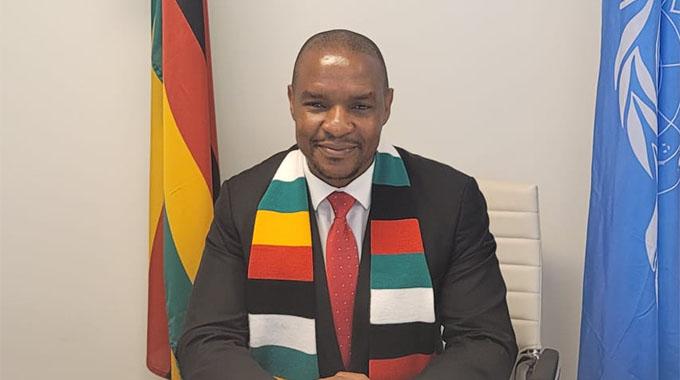
Transport and Infrastructure Development Minister Felix Mhona has praised ongoing efforts to recapitalise the National Railways of Zimbabwe (NRZ), saying the initiatives will strengthen Zimbabwe's transport network and drive long-term economic growth.
Speaking at the Ninth Session of the Line Minister's Public Entities Corporate Governance Oversight Meeting in Bulawayo on Saturday, Mhona said the rail operator's recovery remains critical to improving the country's logistics capacity and reducing pressure on road infrastructure.
The meeting brought together boards and management teams of entities under the Ministry of Transport and Infrastructure Development to assess performance and reinforce corporate governance and accountability.
"NRZ continues to face capacity and financial constraints. In light of these challenges, it is imperative that we sustain and deepen our engagements aimed at supporting the entity's recapitalisation agenda. I wish to acknowledge the commendable efforts being undertaken by NRZ, in collaboration with Mutapa Investment Fund, to mobilise resources and strategic partnerships," Mhona said.
Under the Resource Financed Infrastructure (RFI) model, the Mutapa Investment Fund is spearheading a comprehensive US$400 million rehabilitation and recapitalisation programme for NRZ aimed at restoring the railway operator's operational efficiency and freight-handling capacity.
Of the total investment, US$120 million has been earmarked for track rehabilitation, while US$100 million will be invested in communications infrastructure, information and communication technology systems, and signalling upgrades.
The programme seeks to shift bulk freight transportation from roads to rail, reducing logistics costs and road damage while improving transport efficiency. Loan repayments under the model are expected to be linked directly to cargo volumes moved on revitalised rail corridors.
Priority routes identified for rehabilitation include the Harare–Mutare–Machipanda corridor and the Harare–Bulawayo–Rutenga line, both of which are key trade and freight arteries.
Mhona also highlighted the importance of regional railway projects designed to strengthen cross-border trade and connectivity.
"Equally important, the ministry is actively engaged in promoting and launching new railway greenfield projects with a regional status. The Ponta Techobanine project by Zimbabwe, Mozambique and Botswana is at its infancy and needs support, and the Lion's Den-Kafue rail link project with the Government of Zambia is also crucial for expanding the rail network and promoting the North-South Corridor link via Kafue," he said.
The minister said the planned rail links would enhance Zimbabwe's access to regional markets and provide strategic connections to northern trade routes.
According to Mhona, the projects will improve connectivity to markets in the Democratic Republic of the Congo and Angola through Zambia, strengthening Zimbabwe's position as a regional transport and logistics hub.
The rail revitalisation programme forms part of broader government efforts to modernise transport infrastructure, facilitate trade and improve the movement of goods across Southern Africa.
Speaking at the Ninth Session of the Line Minister's Public Entities Corporate Governance Oversight Meeting in Bulawayo on Saturday, Mhona said the rail operator's recovery remains critical to improving the country's logistics capacity and reducing pressure on road infrastructure.
The meeting brought together boards and management teams of entities under the Ministry of Transport and Infrastructure Development to assess performance and reinforce corporate governance and accountability.
"NRZ continues to face capacity and financial constraints. In light of these challenges, it is imperative that we sustain and deepen our engagements aimed at supporting the entity's recapitalisation agenda. I wish to acknowledge the commendable efforts being undertaken by NRZ, in collaboration with Mutapa Investment Fund, to mobilise resources and strategic partnerships," Mhona said.
Under the Resource Financed Infrastructure (RFI) model, the Mutapa Investment Fund is spearheading a comprehensive US$400 million rehabilitation and recapitalisation programme for NRZ aimed at restoring the railway operator's operational efficiency and freight-handling capacity.
Of the total investment, US$120 million has been earmarked for track rehabilitation, while US$100 million will be invested in communications infrastructure, information and communication technology systems, and signalling upgrades.
Priority routes identified for rehabilitation include the Harare–Mutare–Machipanda corridor and the Harare–Bulawayo–Rutenga line, both of which are key trade and freight arteries.
Mhona also highlighted the importance of regional railway projects designed to strengthen cross-border trade and connectivity.
"Equally important, the ministry is actively engaged in promoting and launching new railway greenfield projects with a regional status. The Ponta Techobanine project by Zimbabwe, Mozambique and Botswana is at its infancy and needs support, and the Lion's Den-Kafue rail link project with the Government of Zambia is also crucial for expanding the rail network and promoting the North-South Corridor link via Kafue," he said.
The minister said the planned rail links would enhance Zimbabwe's access to regional markets and provide strategic connections to northern trade routes.
According to Mhona, the projects will improve connectivity to markets in the Democratic Republic of the Congo and Angola through Zambia, strengthening Zimbabwe's position as a regional transport and logistics hub.
The rail revitalisation programme forms part of broader government efforts to modernise transport infrastructure, facilitate trade and improve the movement of goods across Southern Africa.
Source - Sunday News
Join the discussion
Loading comments…





