News / National
Hichilema shut courts on final day for presidential election challenge
25 Aug 2026 at 17:51hrs |
0 Views
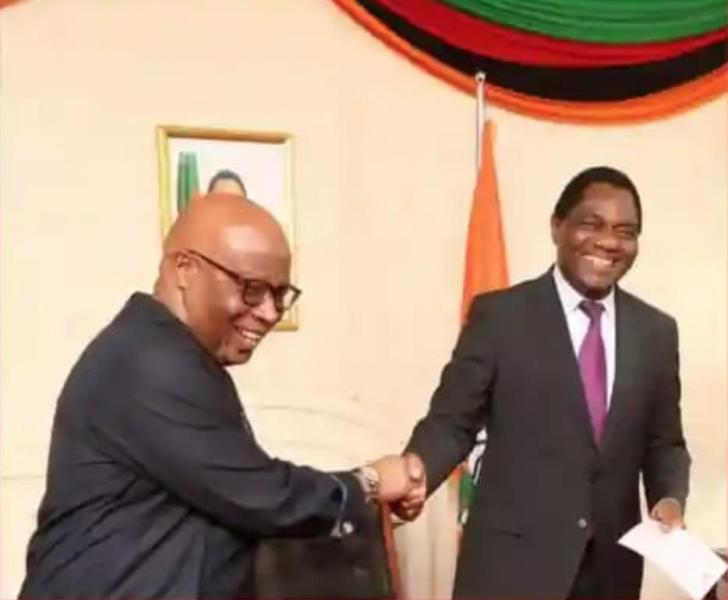
Zambia's High Court in Lusaka and several other courts across the country were closed and barricaded as "crime scenes" on Monday, disrupting judicial proceedings on the final day for filing a presidential election petition.
The unprecedented shutdown has raised concerns over access to justice and the ability of opposition parties to challenge the results of the August 13 presidential election within the constitutionally prescribed period.
The judiciary's chief administrator, Nalishebo Imataa, instructed court staff not to report for duty on Monday, citing an unspecified security threat.
"For security reasons, all members of staff are advised not to report for work today. Guidance will be issued in due course, once the situation is contained," Imataa said in a memorandum dated August 24.
The directive resulted in the closure of the High Court and other lower courts, with several matters reportedly adjourned.
The timing of the shutdown has attracted particular concern because Monday was the deadline for filing a petition challenging the presidential election outcome.
Former Law Society of Zambia president Linda Kasonde described the development as unprecedented and warned that it could have serious consequences for Zambia's democracy.
"What is happening in Zambia is completely unprecedented. Today, we have witnessed our entire judiciary being shut down, purportedly due to a security threat," Kasonde said.
"Today also happens to be the final day for filing a presidential election petition to challenge the results of the 13th August 2026 presidential election. Today may be the last day of our democracy."
Mundubile prepares election challenge
The court closures came as opposition leader Brian Mundubile prepared to challenge the re-election of President Hakainde Hichilema.
The Electoral Commission of Zambia declared Hichilema the winner on August 18 after he secured 60 percent of the vote, compared with Mundubile's 38 percent, giving the incumbent another five-year term.
Mundubile has rejected the outcome and said his campaign had documented a series of alleged irregularities.
"Our campaign has documented serious irregularities, inconsistencies and circumstances surrounding the conduct, counting, transmission and declaration of results," he said in a statement issued from an undisclosed location.
Mundubile had previously said he was under protection because of threats.
The opposition leader's National Reconciliation Party for Unity and Prosperity has rejected allegations linking it to militia activity.
Post-election tensions
Although polling day was largely peaceful, tensions increased after the election, with about 11 people, including senior opposition figures, arrested during a government operation described by authorities as a crackdown on alleged "militia activity".
The opposition has denied involvement in militias.
The election process was also disrupted during the counting phase after the electoral commission reported attacks on polling officials and the theft of ballot papers, resulting in a temporary suspension of vote counting.
The developments have attracted international concern.
United Nations High Commissioner for Human Rights Volker Türk expressed concern over reports of arrests of opposition members and called on Zambian authorities to uphold due process.
The European Union Election Observation Mission also raised concerns about aspects of the results-tabulation process.
"Observers reported extended breaks during the results tabulation process in almost half of observations, as the returning officers seemed to wait and receive instructions from… headquarters before announcing results," the mission said.
Questions over access to justice
The closure of courts has now added another layer of uncertainty to an already tense post-election environment.
The key concern is whether the security-related closure could prevent or delay the opposition from exercising its constitutional right to challenge the election results within the prescribed timeframe.
The authorities have not publicly provided detailed information explaining the nature of the alleged security threat or why court premises were designated as crime scenes.
The circumstances surrounding the closures, including whether the courts would reopen in time to accommodate election-related filings, remained unclear.
The development is likely to intensify scrutiny of Zambia's post-election environment as Mundubile and his supporters seek legal avenues to challenge Hichilema's victory.
The unprecedented shutdown has raised concerns over access to justice and the ability of opposition parties to challenge the results of the August 13 presidential election within the constitutionally prescribed period.
The judiciary's chief administrator, Nalishebo Imataa, instructed court staff not to report for duty on Monday, citing an unspecified security threat.
"For security reasons, all members of staff are advised not to report for work today. Guidance will be issued in due course, once the situation is contained," Imataa said in a memorandum dated August 24.
The directive resulted in the closure of the High Court and other lower courts, with several matters reportedly adjourned.
The timing of the shutdown has attracted particular concern because Monday was the deadline for filing a petition challenging the presidential election outcome.
Former Law Society of Zambia president Linda Kasonde described the development as unprecedented and warned that it could have serious consequences for Zambia's democracy.
"What is happening in Zambia is completely unprecedented. Today, we have witnessed our entire judiciary being shut down, purportedly due to a security threat," Kasonde said.
"Today also happens to be the final day for filing a presidential election petition to challenge the results of the 13th August 2026 presidential election. Today may be the last day of our democracy."
Mundubile prepares election challenge
The court closures came as opposition leader Brian Mundubile prepared to challenge the re-election of President Hakainde Hichilema.
The Electoral Commission of Zambia declared Hichilema the winner on August 18 after he secured 60 percent of the vote, compared with Mundubile's 38 percent, giving the incumbent another five-year term.
Mundubile has rejected the outcome and said his campaign had documented a series of alleged irregularities.
"Our campaign has documented serious irregularities, inconsistencies and circumstances surrounding the conduct, counting, transmission and declaration of results," he said in a statement issued from an undisclosed location.
Mundubile had previously said he was under protection because of threats.
Post-election tensions
Although polling day was largely peaceful, tensions increased after the election, with about 11 people, including senior opposition figures, arrested during a government operation described by authorities as a crackdown on alleged "militia activity".
The opposition has denied involvement in militias.
The election process was also disrupted during the counting phase after the electoral commission reported attacks on polling officials and the theft of ballot papers, resulting in a temporary suspension of vote counting.
The developments have attracted international concern.
United Nations High Commissioner for Human Rights Volker Türk expressed concern over reports of arrests of opposition members and called on Zambian authorities to uphold due process.
The European Union Election Observation Mission also raised concerns about aspects of the results-tabulation process.
"Observers reported extended breaks during the results tabulation process in almost half of observations, as the returning officers seemed to wait and receive instructions from… headquarters before announcing results," the mission said.
Questions over access to justice
The closure of courts has now added another layer of uncertainty to an already tense post-election environment.
The key concern is whether the security-related closure could prevent or delay the opposition from exercising its constitutional right to challenge the election results within the prescribed timeframe.
The authorities have not publicly provided detailed information explaining the nature of the alleged security threat or why court premises were designated as crime scenes.
The circumstances surrounding the closures, including whether the courts would reopen in time to accommodate election-related filings, remained unclear.
The development is likely to intensify scrutiny of Zambia's post-election environment as Mundubile and his supporters seek legal avenues to challenge Hichilema's victory.
Source - online
Join the discussion
Loading comments…



