News / National
Gukurahundi victims silenced
25 Oct 2026 at 19:55hrs |
1229 Views
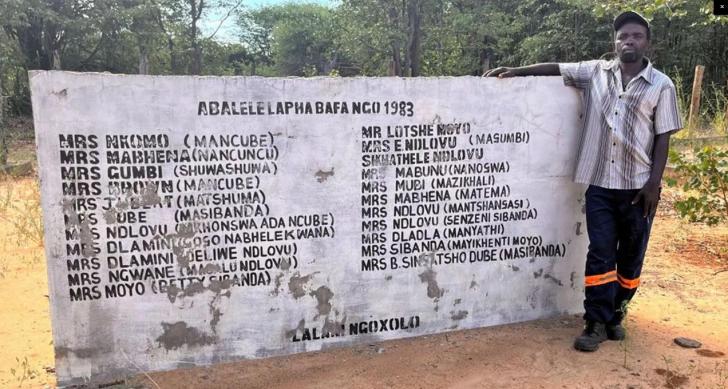
Gukurahundi survivors from the Midlands Province are facing uncertainty over where they can submit their testimonies, as the government-led outreach programme remains restricted to Matabeleland North and Matabeleland South.
National Council of Chiefs president Chief Lucas Mtshane Khumalo said survivors from areas such as Silobela could only participate in the current hearings if the atrocities they or their relatives experienced occurred within the two designated provinces.
"If a person is from Silobela, which is in the Midlands, they cannot participate if the incident happened there because this programme does not extend to the Midlands," Chief Khumalo told Southern Eye.
He said survivors whose experiences occurred in areas such as Nkayi, Bubi, Tsholotsho and Plumtree could approach traditional leaders in those localities to give their accounts.
The clarification follows reports that some survivors from Chief Malisa's area in the Midlands had approached Chief Nkalakatha in Matabeleland to present their testimonies, raising questions about jurisdiction under the programme.
The programme's guidelines require chiefs to engage primarily with people living within their jurisdictions, although exceptions and referrals may be considered in certain circumstances.
The geographical restrictions have raised concerns about the exclusion of survivors from parts of the Midlands, including Silobela, Zhombe and Lower Gweru, where Gukurahundi-related violence was also reported during the 1980s.
Survivors from these areas have long called for their experiences to be recognised as part of Zimbabwe's national reconciliation process.
Chief Khumalo said the hearings resumed in September and were expected to conclude next month, placing pressure on traditional leaders to complete the exercise while addressing outstanding cases.
President Emmerson Mnangagwa officially launched the Gukurahundi community engagement programme in July 2024, but the collection of testimonies only began on June 26, 2025.
The initial six-month period ended in December 2025 before all planned engagements had been completed. Traditional leaders subsequently sought an extension, citing unfinished work and financial constraints.
In August, Chief Khumalo told Southern Eye that funding challenges had prevented the hearings from being completed and that the process needed to resume.
Gukurahundi remains one of the darkest chapters in Zimbabwe's post-independence history. Between 1983 and 1987, operations by the North Korean-trained Fifth Brigade resulted in widespread killings, torture, disappearances and other abuses, particularly in Matabeleland and parts of the Midlands.
A 1997 report by the Catholic Commission for Justice and Peace in Zimbabwe and the Legal Resources Foundation, Breaking the Silence, Building True Peace, estimated that approximately 20,000 people were killed.
The violence formally ended following the signing of the Unity Accord between then Prime Minister Robert Mugabe and PF Zapu leader Joshua Nkomo on December 22, 1987.
However, survivors and families continue to seek answers about missing relatives, official acknowledgement of their suffering and meaningful redress.
The current outreach programme has faced scrutiny over its structure, transparency, independence and capacity to deliver accountability.
Government figures released in July showed that the programme had received 25,407 online submissions, 25,862 physical submissions and 25,479 audio testimonies, of which 12,956 had been transcribed.
National Council of Chiefs president Chief Lucas Mtshane Khumalo said survivors from areas such as Silobela could only participate in the current hearings if the atrocities they or their relatives experienced occurred within the two designated provinces.
"If a person is from Silobela, which is in the Midlands, they cannot participate if the incident happened there because this programme does not extend to the Midlands," Chief Khumalo told Southern Eye.
He said survivors whose experiences occurred in areas such as Nkayi, Bubi, Tsholotsho and Plumtree could approach traditional leaders in those localities to give their accounts.
The clarification follows reports that some survivors from Chief Malisa's area in the Midlands had approached Chief Nkalakatha in Matabeleland to present their testimonies, raising questions about jurisdiction under the programme.
The programme's guidelines require chiefs to engage primarily with people living within their jurisdictions, although exceptions and referrals may be considered in certain circumstances.
The geographical restrictions have raised concerns about the exclusion of survivors from parts of the Midlands, including Silobela, Zhombe and Lower Gweru, where Gukurahundi-related violence was also reported during the 1980s.
Survivors from these areas have long called for their experiences to be recognised as part of Zimbabwe's national reconciliation process.
Chief Khumalo said the hearings resumed in September and were expected to conclude next month, placing pressure on traditional leaders to complete the exercise while addressing outstanding cases.
The initial six-month period ended in December 2025 before all planned engagements had been completed. Traditional leaders subsequently sought an extension, citing unfinished work and financial constraints.
In August, Chief Khumalo told Southern Eye that funding challenges had prevented the hearings from being completed and that the process needed to resume.
Gukurahundi remains one of the darkest chapters in Zimbabwe's post-independence history. Between 1983 and 1987, operations by the North Korean-trained Fifth Brigade resulted in widespread killings, torture, disappearances and other abuses, particularly in Matabeleland and parts of the Midlands.
A 1997 report by the Catholic Commission for Justice and Peace in Zimbabwe and the Legal Resources Foundation, Breaking the Silence, Building True Peace, estimated that approximately 20,000 people were killed.
The violence formally ended following the signing of the Unity Accord between then Prime Minister Robert Mugabe and PF Zapu leader Joshua Nkomo on December 22, 1987.
However, survivors and families continue to seek answers about missing relatives, official acknowledgement of their suffering and meaningful redress.
The current outreach programme has faced scrutiny over its structure, transparency, independence and capacity to deliver accountability.
Government figures released in July showed that the programme had received 25,407 online submissions, 25,862 physical submissions and 25,479 audio testimonies, of which 12,956 had been transcribed.
Source - The Standard
Join the discussion
Loading comments…