News / National
Zimbabwe has lost US$42bn to sanctions
25 Oct 2026 at 19:47hrs |
996 Views
Zimbabwe's ambition to achieve upper middle-income economy status by 2030 continues to face challenges linked to restricted access to international financing and investment, with economic commentators arguing that sanctions have increased the cost of doing business and constrained industrial growth.
The Government maintains that the removal of Western sanctions would support its development agenda, which includes major infrastructure projects, mining expansion, agricultural modernisation and increased domestic manufacturing under the National Development Strategy 2 (NDS2).
Among the flagship projects are the rehabilitation of the Harare-Masvingo-Beitbridge highway, the modernisation of Beitbridge Border Post, the construction of the new Parliament building and Trabablas Interchange, the refurbishment of Robert Gabriel Mugabe International Airport, Lake Gwayi-Shangani and the expansion of Hwange Thermal Power Station.
The projects are intended to improve transport links, water security and electricity generation while supporting economic activity and regional trade.
However, economic commentator and businessman Morris Mpala said sanctions had imposed significant costs on Zimbabwe's economy, particularly by limiting access to affordable, long-term financing.
Mpala cited estimates suggesting Zimbabwe had lost more than US$42 billion in revenue over 18 years, alongside an estimated US$21 billion reduction in gross domestic product and US$12 billion in loans from international financial institutions.
He argued that restricted access to financing from institutions such as the International Monetary Fund, the World Bank and the African Development Bank had made it more difficult for businesses to secure funding for expansion and modernisation.
Mpala also said sanctions-related risks had disrupted supply chains, increased the cost of imported machinery, spare parts and technology, and reduced the competitiveness of locally manufactured goods.
He added that the perceived risk associated with doing business in Zimbabwe had increased transaction costs and discouraged some potential foreign investors.
Economic analyst George Nhepera said the effects attributed to sanctions were wide-ranging, including reduced access to international markets, higher borrowing costs and pressure on economic growth.
He also argued that these challenges had constrained industrialisation and formal job creation.
Executive director of Citizens Against Economic Sanctions Martin Zharare said the measures continued to affect Zimbabwe's access to international finance, pointing to the Zimbabwe Democracy and Economic Recovery Act (ZDERA), which was enacted by the United States Congress in 2001.
"The Act is still in force. It has never been removed. It is still there," Zharare said.
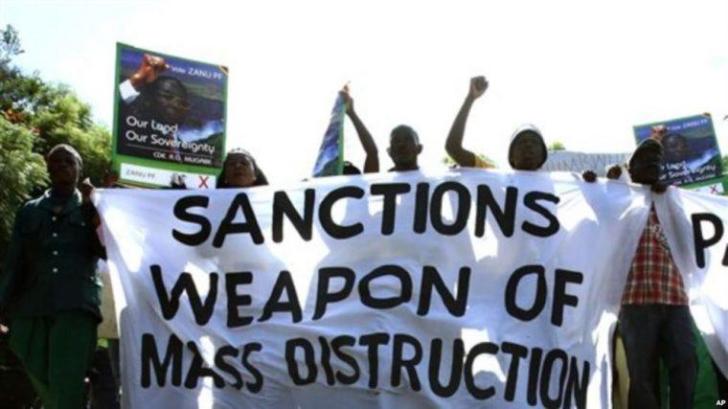
The Government has repeatedly called for the removal of sanctions, while the Southern African Development Community has designated October 25 as Anti-Sanctions Day, when member states express their opposition to the measures imposed on Zimbabwe.
Despite the dispute over sanctions, Zimbabwe continues to pursue domestic strategies aimed at strengthening economic resilience. Nhepera identified the diversification of trading partners as one such approach, with the country increasing its engagement with markets including China, India and the United Arab Emirates, alongside countries in Eastern Europe.
He urged Zimbabwe to strengthen diplomatic and economic relations with wealthy nations to broaden investment opportunities and access to markets.
The Government's Vision 2030 agenda places emphasis on expanding energy generation, modernising agriculture, increasing mineral value addition and strengthening manufacturing. Its success will depend on investment, infrastructure delivery, productivity and the ability of businesses to compete in domestic and international markets.
While the Government and the cited commentators identify sanctions as a significant obstacle, Zimbabwe's economic performance and progress towards its 2030 target will also be shaped by domestic production, access to capital, policy conditions and the implementation of development projects.
The Government maintains that the removal of Western sanctions would support its development agenda, which includes major infrastructure projects, mining expansion, agricultural modernisation and increased domestic manufacturing under the National Development Strategy 2 (NDS2).
Among the flagship projects are the rehabilitation of the Harare-Masvingo-Beitbridge highway, the modernisation of Beitbridge Border Post, the construction of the new Parliament building and Trabablas Interchange, the refurbishment of Robert Gabriel Mugabe International Airport, Lake Gwayi-Shangani and the expansion of Hwange Thermal Power Station.
The projects are intended to improve transport links, water security and electricity generation while supporting economic activity and regional trade.
However, economic commentator and businessman Morris Mpala said sanctions had imposed significant costs on Zimbabwe's economy, particularly by limiting access to affordable, long-term financing.
Mpala cited estimates suggesting Zimbabwe had lost more than US$42 billion in revenue over 18 years, alongside an estimated US$21 billion reduction in gross domestic product and US$12 billion in loans from international financial institutions.
He argued that restricted access to financing from institutions such as the International Monetary Fund, the World Bank and the African Development Bank had made it more difficult for businesses to secure funding for expansion and modernisation.
Mpala also said sanctions-related risks had disrupted supply chains, increased the cost of imported machinery, spare parts and technology, and reduced the competitiveness of locally manufactured goods.
He added that the perceived risk associated with doing business in Zimbabwe had increased transaction costs and discouraged some potential foreign investors.
He also argued that these challenges had constrained industrialisation and formal job creation.
Executive director of Citizens Against Economic Sanctions Martin Zharare said the measures continued to affect Zimbabwe's access to international finance, pointing to the Zimbabwe Democracy and Economic Recovery Act (ZDERA), which was enacted by the United States Congress in 2001.
"The Act is still in force. It has never been removed. It is still there," Zharare said.
The Government has repeatedly called for the removal of sanctions, while the Southern African Development Community has designated October 25 as Anti-Sanctions Day, when member states express their opposition to the measures imposed on Zimbabwe.
Despite the dispute over sanctions, Zimbabwe continues to pursue domestic strategies aimed at strengthening economic resilience. Nhepera identified the diversification of trading partners as one such approach, with the country increasing its engagement with markets including China, India and the United Arab Emirates, alongside countries in Eastern Europe.
He urged Zimbabwe to strengthen diplomatic and economic relations with wealthy nations to broaden investment opportunities and access to markets.
The Government's Vision 2030 agenda places emphasis on expanding energy generation, modernising agriculture, increasing mineral value addition and strengthening manufacturing. Its success will depend on investment, infrastructure delivery, productivity and the ability of businesses to compete in domestic and international markets.
While the Government and the cited commentators identify sanctions as a significant obstacle, Zimbabwe's economic performance and progress towards its 2030 target will also be shaped by domestic production, access to capital, policy conditions and the implementation of development projects.
Source - The Sunday Mail
Join the discussion
Loading comments…