News / National
Nature and wildlife tourism cluster offers Gonarezhou hope, as baobabs remain under siege
08 Sep 2026 at 17:18hrs |
436 Views
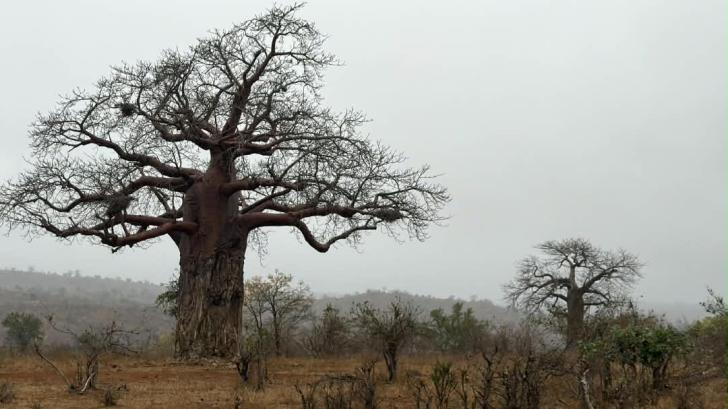
GONAREZHOU NATIONAL PARK – The iconic silhouette of the baobab tree (Adansonia digitata) is becoming increasingly rare across Gonarezhou National Park, as Zimbabwe’s booming elephant population continues to push, strip and fell the ancient giants.
On a media tour led by park guide Owen Hanyani, journalists witnessed the stark reality: massive baobabs scarred by tusks, some uprooted entirely, scattered across the dry Save‑Runde ecosystem. “The elephants are under pressure for food and water, and baobabs store both,” Hanyani said, pointing to a fallen tree. “But these trees are not just food. They are pharmacies, supermarkets, homes and heritage sites. If we lose them, we lose an entire system.”
Baobabs are keystone species in Gonarezhou. Their water‑rich trunks sustain elephants during harsh dry seasons, but intense debarking and uprooting is threatening regeneration. Conservationists warn that without intervention, localised extinction of mature baobabs is possible in high elephant‑density zones.
The threat extends beyond the trees. Birds nest in the sprawling branches, small mammals and reptiles shelter in hollows, and bees colonise cavities to produce wild honey. Communities rely on baobab fruit for nutrition and commercial products, while leaves, bark and seeds are used in traditional medicine. In many rural areas, baobabs serve as cultural meeting points and repositories of Indigenous Knowledge Systems (IKS).
Hanyani said solutions must blend conservation science, IKS and tourism. “Our elders knew which trees to harvest from, how much bark to take, and when to leave a tree to recover. That knowledge must come back,” he said.
Proposed interventions include community guardianship programmes to monitor and sustainably harvest baobab products, rotational use of water points to reduce elephant pressure, and Baobab Heritage Trails — a new tourism product where visitors walk with guides, learn about baobab uses and fund conservation.
“Tourism must stop being just about the Big Five. When a tourist learns that this tree feeds people, heals people and houses wildlife, they become part of saving it,” Hanyani said.
The initiative falls under the gastronomy and culinary tourism cluster and the nature and wildlife tourism (eco‑tourism and conservation tourism) cluster of Zimbabwe’s national 13‑cluster strategy. Gastronomy tourism leverages indigenous foods such as baobab fruit powder, juice and oil, while conservation tourism tells the story of coexistence between elephants and baobabs. Together, they create high‑value, low‑impact products that generate income while funding protection.
As climate change intensifies and human‑wildlife conflict grows, Gonarezhou’s baobabs have become a test case. Can Zimbabwe protect its elephants without losing its trees? Can tourism revenue sustain that balance?
For Hanyani, the answer lies in the baobab itself. “The baobab stores water for the dry season. If we use IKS and tourism the same way, we store a future for both people and elephants.”
This debate feeds into wider national conversations around eco‑tourism innovation and elephant‑habitat management.
On a media tour led by park guide Owen Hanyani, journalists witnessed the stark reality: massive baobabs scarred by tusks, some uprooted entirely, scattered across the dry Save‑Runde ecosystem. “The elephants are under pressure for food and water, and baobabs store both,” Hanyani said, pointing to a fallen tree. “But these trees are not just food. They are pharmacies, supermarkets, homes and heritage sites. If we lose them, we lose an entire system.”
Baobabs are keystone species in Gonarezhou. Their water‑rich trunks sustain elephants during harsh dry seasons, but intense debarking and uprooting is threatening regeneration. Conservationists warn that without intervention, localised extinction of mature baobabs is possible in high elephant‑density zones.
The threat extends beyond the trees. Birds nest in the sprawling branches, small mammals and reptiles shelter in hollows, and bees colonise cavities to produce wild honey. Communities rely on baobab fruit for nutrition and commercial products, while leaves, bark and seeds are used in traditional medicine. In many rural areas, baobabs serve as cultural meeting points and repositories of Indigenous Knowledge Systems (IKS).
Hanyani said solutions must blend conservation science, IKS and tourism. “Our elders knew which trees to harvest from, how much bark to take, and when to leave a tree to recover. That knowledge must come back,” he said.
“Tourism must stop being just about the Big Five. When a tourist learns that this tree feeds people, heals people and houses wildlife, they become part of saving it,” Hanyani said.
The initiative falls under the gastronomy and culinary tourism cluster and the nature and wildlife tourism (eco‑tourism and conservation tourism) cluster of Zimbabwe’s national 13‑cluster strategy. Gastronomy tourism leverages indigenous foods such as baobab fruit powder, juice and oil, while conservation tourism tells the story of coexistence between elephants and baobabs. Together, they create high‑value, low‑impact products that generate income while funding protection.
As climate change intensifies and human‑wildlife conflict grows, Gonarezhou’s baobabs have become a test case. Can Zimbabwe protect its elephants without losing its trees? Can tourism revenue sustain that balance?
For Hanyani, the answer lies in the baobab itself. “The baobab stores water for the dry season. If we use IKS and tourism the same way, we store a future for both people and elephants.”
This debate feeds into wider national conversations around eco‑tourism innovation and elephant‑habitat management.
Source - Byo24news
Join the discussion
Loading comments…





