News / National
Zimra blitz threatens market listings
28 Jun 2026 at 20:50hrs |
256 Views
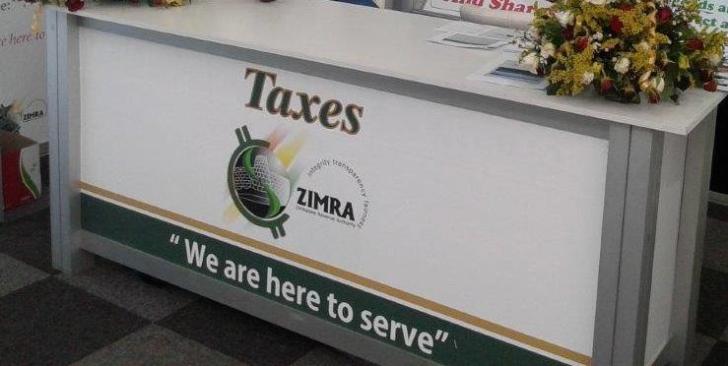
THE Zimbabwe Revenue Authority's (ZIMRA) increasingly aggressive tax enforcement measures could undermine the country's capital markets by discouraging companies from listing on local stock exchanges, business leaders and market observers have warned.
The concerns come amid growing criticism from the business community over what executives describe as an increasingly punitive tax environment that is making participation in the formal economy less attractive.
In recent months, companies have raised concerns over intensified tax audits, retrospective tax assessments and ZIMRA's "pay now, argue later" approach, arguing that the measures are straining cash flows, increasing compliance costs and diverting resources away from productive investment.
ZIMRA is targeting the registration of up to 100,000 new taxpayers this year as it pursues a revenue collection target exceeding US$9 billion.
However, national statistics indicate that only 23.9 percent of Zimbabwe's 204,798 operational establishments were formally registered as of June 2025, leaving a relatively small formal sector responsible for the bulk of the country's tax revenue.
With only 51 companies currently listed on the Zimbabwe Stock Exchange (ZSE) and the Victoria Falls Stock Exchange (VFEX), analysts warn that aggressive tax enforcement could discourage prospective listings, including on the soon-to-be-launched Zimbabwe Entrepreneurship Exchange (ZEEX).
Speaking during the Zimbabwe National Chamber of Commerce (ZNCC) annual congress, the chamber's chief executive officer, Christopher Mugaga, said taxation remained one of the biggest obstacles facing formal businesses.
"If you talk to an average businessperson in the room, one of the headwinds to doing business remains the tax environment, which is harsh," Mugaga said.
"When we talk to our members, for every five members, three will tell you they are tired of tax audits."
Mugaga said consultations with companies that had the potential to list on Zimbabwe's stock exchanges revealed widespread reluctance to enter the public market.
"We went on to ask companies which have potential to list, either on the Zimbabwe Stock Exchange or the Victoria Falls Stock Exchange, and one of the reasons why companies are not even there is because they are scared to list on the exchange," he said.
"They feel that by disclosing more information about their operations and profitability, they may attract increased tax scrutiny."
He warned that this reluctance could deprive Zimbabwe's capital markets of new listings and much-needed investment at a time when businesses require greater access to long-term funding.
TN CyberTech Investment Holdings chief executive officer Tawanda Nyambirai said the issue extended beyond the level of taxation itself to the cumulative burden imposed on compliant businesses.
"The issue is tax layering. We have a shrinking formal sector subjected to VAT, corporate taxes, numerous levies, and licensing fees across different sectors," Nyambirai said.
"When you look at the cumulative effect of these obligations, you can conclude that we have a tax problem."
He argued that businesses operating within the formal economy were effectively being penalised for complying with tax regulations while a much larger informal sector remained outside the tax net.
"The formal sector appears to be punished for compliance because it can pay tax; it is then overtaxed," Nyambirai said.
"The problem is not only taxation itself, but the layering of taxes on a shrinking base of compliant businesses."
Business leaders attending the congress said Zimbabwe needed to broaden its tax base, simplify compliance requirements and establish a more predictable regulatory environment if it hoped to attract investment and encourage more companies to list on local exchanges.
The concerns come as the Zimbabwe Stock Exchange continues to experience a wave of delistings.
Telecommunications giant Econet Wireless Zimbabwe delisted from the ZSE in March, while TSL Limited and First Mutual Properties have also announced plans to exit the exchange.
Earlier this year, the World Bank also warned that Zimbabwe's increasingly complex regulatory environment was constraining private sector growth, citing a rise in business regulations and new taxes introduced in recent years.
Responding to the concerns, ZIMRA Domestic Taxes Commissioner Misheck Govha defended the authority's approach, insisting that the revenue authority remained committed to supporting businesses.
"Let me then say, as ZIMRA, we are really supportive of the business, and we have done a lot in terms of making sure that we have a digital platform that is acceptable, or digital platforms that are acceptable to all—that is the small, the informal, or the SMEs budget sector," Govha said.
As Zimbabwe seeks to deepen its capital markets through the ZSE, VFEX and the planned ZEEX, industry leaders say striking the right balance between effective tax collection and creating a business-friendly environment will be critical to attracting new listings, mobilising investment and expanding the formal economy.
The concerns come amid growing criticism from the business community over what executives describe as an increasingly punitive tax environment that is making participation in the formal economy less attractive.
In recent months, companies have raised concerns over intensified tax audits, retrospective tax assessments and ZIMRA's "pay now, argue later" approach, arguing that the measures are straining cash flows, increasing compliance costs and diverting resources away from productive investment.
ZIMRA is targeting the registration of up to 100,000 new taxpayers this year as it pursues a revenue collection target exceeding US$9 billion.
However, national statistics indicate that only 23.9 percent of Zimbabwe's 204,798 operational establishments were formally registered as of June 2025, leaving a relatively small formal sector responsible for the bulk of the country's tax revenue.
With only 51 companies currently listed on the Zimbabwe Stock Exchange (ZSE) and the Victoria Falls Stock Exchange (VFEX), analysts warn that aggressive tax enforcement could discourage prospective listings, including on the soon-to-be-launched Zimbabwe Entrepreneurship Exchange (ZEEX).
Speaking during the Zimbabwe National Chamber of Commerce (ZNCC) annual congress, the chamber's chief executive officer, Christopher Mugaga, said taxation remained one of the biggest obstacles facing formal businesses.
"If you talk to an average businessperson in the room, one of the headwinds to doing business remains the tax environment, which is harsh," Mugaga said.
"When we talk to our members, for every five members, three will tell you they are tired of tax audits."
Mugaga said consultations with companies that had the potential to list on Zimbabwe's stock exchanges revealed widespread reluctance to enter the public market.
"We went on to ask companies which have potential to list, either on the Zimbabwe Stock Exchange or the Victoria Falls Stock Exchange, and one of the reasons why companies are not even there is because they are scared to list on the exchange," he said.
"They feel that by disclosing more information about their operations and profitability, they may attract increased tax scrutiny."
He warned that this reluctance could deprive Zimbabwe's capital markets of new listings and much-needed investment at a time when businesses require greater access to long-term funding.
"The issue is tax layering. We have a shrinking formal sector subjected to VAT, corporate taxes, numerous levies, and licensing fees across different sectors," Nyambirai said.
"When you look at the cumulative effect of these obligations, you can conclude that we have a tax problem."
He argued that businesses operating within the formal economy were effectively being penalised for complying with tax regulations while a much larger informal sector remained outside the tax net.
"The formal sector appears to be punished for compliance because it can pay tax; it is then overtaxed," Nyambirai said.
"The problem is not only taxation itself, but the layering of taxes on a shrinking base of compliant businesses."
Business leaders attending the congress said Zimbabwe needed to broaden its tax base, simplify compliance requirements and establish a more predictable regulatory environment if it hoped to attract investment and encourage more companies to list on local exchanges.
The concerns come as the Zimbabwe Stock Exchange continues to experience a wave of delistings.
Telecommunications giant Econet Wireless Zimbabwe delisted from the ZSE in March, while TSL Limited and First Mutual Properties have also announced plans to exit the exchange.
Earlier this year, the World Bank also warned that Zimbabwe's increasingly complex regulatory environment was constraining private sector growth, citing a rise in business regulations and new taxes introduced in recent years.
Responding to the concerns, ZIMRA Domestic Taxes Commissioner Misheck Govha defended the authority's approach, insisting that the revenue authority remained committed to supporting businesses.
"Let me then say, as ZIMRA, we are really supportive of the business, and we have done a lot in terms of making sure that we have a digital platform that is acceptable, or digital platforms that are acceptable to all—that is the small, the informal, or the SMEs budget sector," Govha said.
As Zimbabwe seeks to deepen its capital markets through the ZSE, VFEX and the planned ZEEX, industry leaders say striking the right balance between effective tax collection and creating a business-friendly environment will be critical to attracting new listings, mobilising investment and expanding the formal economy.
Source - The Standard
Join the discussion
Loading comments…





