News / National
vMining boom fails to fill Zimbabwe State coffers
15 Sep 2026 at 18:46hrs |
0 Views
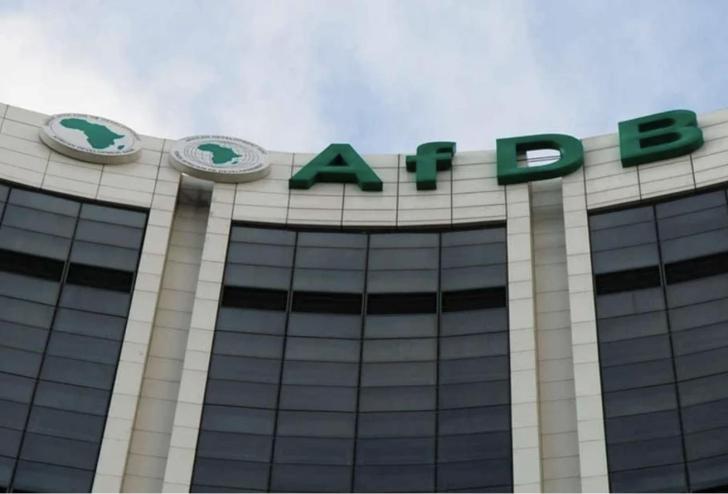
ZIMBABWE'S civil service wage bill consumed 54% of total Government revenue in 2025, leaving Treasury with limited fiscal space to fund infrastructure and other development priorities, the African Development Bank (AfDB) has said.
The finding is contained in the bank's 2026 Country Focus Report on Zimbabwe, which warns that the heavy wage burden is contributing to a spending structure dominated by recurrent expenditure at a time when the country urgently needs greater investment in productive sectors.
"A large civil service wage bill absorbing 54% of total revenue," the AfDB said.
The bank said the structure of Government spending was increasingly crowding out development expenditure.
"Spending composition remains skewed toward recurrent outlays that crowd out development spending," it said.
The warning comes as Zimbabwe faces a substantial development financing gap. The AfDB estimates that the country will require an additional US$3.76 billion annually by 2030, equivalent to 13.4% of gross domestic product, to meet its investment requirements.
The financing will be needed for infrastructure, energy, education and other productivity-enhancing sectors.
The large wage bill is therefore creating a difficult fiscal trade-off for Government as it seeks to maintain public services while freeing resources to stimulate economic growth and finance development.
According to the report, total public expenditure was estimated at 16.4% of GDP in 2025, while capital expenditure accounted for only 2.2% of GDP.
"Public expenditures, estimated at 16.4% of GDP, remain elevated, with capital spending limited to 2.2% of GDP, underscoring constraints on development expenditure," the bank said.
Debt-service obligations have added to the pressure on the fiscus.
The AfDB said debt service rose to 0.5% of GDP last year after Government assumed US$3.66 billion in former Reserve Bank of Zimbabwe liabilities.
"Spending pressures were amplified by higher debt service obligations," the report said.
With access to external financing largely constrained, Government has increasingly relied on domestic borrowing to meet its financing requirements.
"With external financing constrained, the deficit was financed mainly through domestic borrowing via Treasury Bills, bonds, and central bank overdrafts," the AfDB said.
Despite these pressures, Zimbabwe's overall fiscal deficit improved, narrowing from 1.3% of GDP in 2024 to 0.5% in 2025.
The AfDB said the improvement demonstrated that fiscal adjustment had taken place, but warned that the composition of expenditure remained a major concern.
"Zimbabwe's deficit remains well below the Southern Africa average of 4.4% of GDP, indicating stronger fiscal adjustment, although spending composition remains skewed toward recurrent outlays that crowd out development spending," it said.
The bank is therefore urging Government to focus not only on reducing the fiscal deficit but also on changing how public resources are allocated.
"Further fiscal consolidation — through improved expenditure efficiency, wage bill containment, and a gradual rebalancing toward capital and social spending — would reduce reliance on domestic financing, limit quasi-fiscal pressures, and protect priority investments," the AfDB said.
The recommendation comes as Government faces the challenge of creating additional fiscal space without placing further pressure on taxpayers.
The AfDB said improvements in public financial management (PFM) could unlock additional resources without necessarily requiring higher tax rates.
"Closing Zimbabwe's PFM efficiency gap offers one of the most immediate avenues for expanding effective fiscal space without raising tax rates," the report said.
Zimbabwe's public investment efficiency score of 0.571 is below the Africa-wide average of about 0.59, suggesting that better management and allocation of existing resources could deliver greater economic returns.
The AfDB said Zimbabwe's financing challenge was structural, reflecting high investment requirements, constrained fiscal space, elevated sovereign risk and limited access to long-term financing.
The report effectively puts the spotlight on the quality of Government expenditure, warning that containing the deficit alone will not be sufficient unless more public resources are redirected towards capital investment and other areas capable of driving long-term economic growth.
The finding is contained in the bank's 2026 Country Focus Report on Zimbabwe, which warns that the heavy wage burden is contributing to a spending structure dominated by recurrent expenditure at a time when the country urgently needs greater investment in productive sectors.
"A large civil service wage bill absorbing 54% of total revenue," the AfDB said.
The bank said the structure of Government spending was increasingly crowding out development expenditure.
"Spending composition remains skewed toward recurrent outlays that crowd out development spending," it said.
The warning comes as Zimbabwe faces a substantial development financing gap. The AfDB estimates that the country will require an additional US$3.76 billion annually by 2030, equivalent to 13.4% of gross domestic product, to meet its investment requirements.
The financing will be needed for infrastructure, energy, education and other productivity-enhancing sectors.
The large wage bill is therefore creating a difficult fiscal trade-off for Government as it seeks to maintain public services while freeing resources to stimulate economic growth and finance development.
According to the report, total public expenditure was estimated at 16.4% of GDP in 2025, while capital expenditure accounted for only 2.2% of GDP.
"Public expenditures, estimated at 16.4% of GDP, remain elevated, with capital spending limited to 2.2% of GDP, underscoring constraints on development expenditure," the bank said.
Debt-service obligations have added to the pressure on the fiscus.
The AfDB said debt service rose to 0.5% of GDP last year after Government assumed US$3.66 billion in former Reserve Bank of Zimbabwe liabilities.
"Spending pressures were amplified by higher debt service obligations," the report said.
With access to external financing largely constrained, Government has increasingly relied on domestic borrowing to meet its financing requirements.
"With external financing constrained, the deficit was financed mainly through domestic borrowing via Treasury Bills, bonds, and central bank overdrafts," the AfDB said.
Despite these pressures, Zimbabwe's overall fiscal deficit improved, narrowing from 1.3% of GDP in 2024 to 0.5% in 2025.
The AfDB said the improvement demonstrated that fiscal adjustment had taken place, but warned that the composition of expenditure remained a major concern.
"Zimbabwe's deficit remains well below the Southern Africa average of 4.4% of GDP, indicating stronger fiscal adjustment, although spending composition remains skewed toward recurrent outlays that crowd out development spending," it said.
The bank is therefore urging Government to focus not only on reducing the fiscal deficit but also on changing how public resources are allocated.
"Further fiscal consolidation — through improved expenditure efficiency, wage bill containment, and a gradual rebalancing toward capital and social spending — would reduce reliance on domestic financing, limit quasi-fiscal pressures, and protect priority investments," the AfDB said.
The recommendation comes as Government faces the challenge of creating additional fiscal space without placing further pressure on taxpayers.
The AfDB said improvements in public financial management (PFM) could unlock additional resources without necessarily requiring higher tax rates.
"Closing Zimbabwe's PFM efficiency gap offers one of the most immediate avenues for expanding effective fiscal space without raising tax rates," the report said.
Zimbabwe's public investment efficiency score of 0.571 is below the Africa-wide average of about 0.59, suggesting that better management and allocation of existing resources could deliver greater economic returns.
The AfDB said Zimbabwe's financing challenge was structural, reflecting high investment requirements, constrained fiscal space, elevated sovereign risk and limited access to long-term financing.
The report effectively puts the spotlight on the quality of Government expenditure, warning that containing the deficit alone will not be sufficient unless more public resources are redirected towards capital investment and other areas capable of driving long-term economic growth.
Source - The Independent
Join the discussion
Loading comments…


