News / National
Mahiya rejects 'Zvigananda' label for wealthy businesspeople
9 mins ago |
25 Views
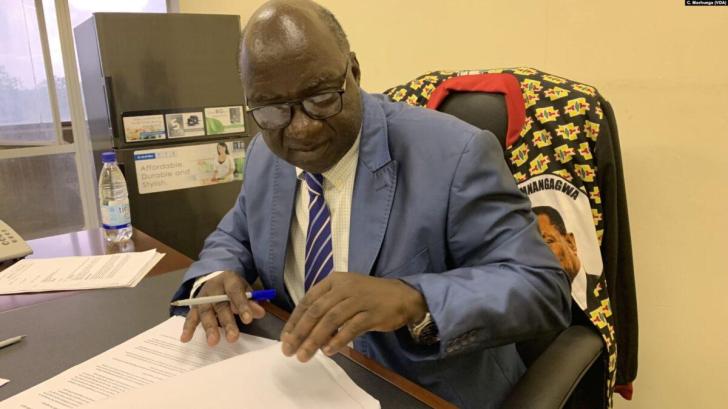
ZANU PF Secretary for War Veterans Douglas Mahiya has called on Zimbabweans to abandon the slogan "Pasi neZvigananda", arguing that the term is increasingly being used to vilify successful local businesspeople whose investments are important to the country's economic development.
Speaking at the ruling party's Mashonaland West Provincial Coordinating Committee (PCC) meeting in Chinhoyi on Saturday, Mahiya said the expression belonged to a different political and historical era.
His remarks come amid growing debate over the relationship between political power and business interests, particularly following Vice President Constantino Chiwenga's criticism of wealthy individuals allegedly exploiting their connections to senior Government officials to secure lucrative State contracts.
Chiwenga has repeatedly raised concerns about politically connected businesspeople accused of benefiting disproportionately from public procurement arrangements.
The term Zvigananda, traditionally associated with wealthy individuals perceived as exploiting their economic influence, has become prominent in discussions about corruption, State contracts and the concentration of wealth.
However, Mahiya argued that its historical meaning should not be indiscriminately applied to Zimbabwean entrepreneurs and professionals contributing to economic development.
He explained that during the liberation struggle, the expression was used to describe wealthy individuals who allegedly financed Ian Smith's Rhodesian administration and supported efforts to undermine liberation fighters.
Mahiya said applying the same description to contemporary Zimbabwean investors ignored the role of private enterprise in creating employment, expanding industries and generating Government revenue.
"Why turn on our own people who are putting money into factories, creating jobs, paying taxes and uplifting communities?" he asked delegates.
His comments come as businesspeople associated with ZANU PF, including Kudakwashe Tagwirei and Paul Tungwarara, face criticism from some political opponents over their perceived proximity to Government.
Critics have questioned the influence of politically connected business figures and the transparency of certain State-linked commercial arrangements.
Mahiya, however, maintained that wealth creation should not automatically attract political hostility.
He argued that entrepreneurs and investors were essential to Zimbabwe's economic transformation, particularly as the country pursues its Vision 2030 objective of attaining upper-middle-income status.
According to Mahiya, achieving that goal requires sustained private investment, industrial expansion, employment creation and the development of a financially secure middle class.
He urged Zimbabweans to distinguish between legitimate business success and conduct that may warrant investigation or accountability.
"Let us celebrate those building this economy. A strong middle class is not the enemy of progress. It is the engine of it," Mahiya said.
His intervention highlights differing emphases within Zimbabwe's political discourse over the role of wealthy businesspeople in national development.
While Chiwenga's criticism has focused on alleged abuse of political connections and public procurement systems, Mahiya's remarks emphasised the economic contributions of entrepreneurs and investors.
The debate also raises broader questions about how Zimbabwe can encourage domestic investment while ensuring transparency, fair competition and accountability in the allocation of public resources.
Mahiya insisted that successful Zimbabwean businesspeople should be recognised for their contributions rather than condemned simply because of their wealth.
He maintained that the country's economic ambitions would be difficult to achieve without a thriving private sector capable of supporting industrial growth and expanding employment opportunities.
His remarks signal a call for a change in political language surrounding wealthy Zimbabweans, even as concerns about corruption and the influence of politically connected businesses remain part of the national debate.
Source - NewZimbabwe
Join the discussion
Loading comments…





