Opinion / Columnist
Zimbabweans keep blaming the wrong people for economic decay
12 Jun 2026 at 15:51hrs |
729 Views
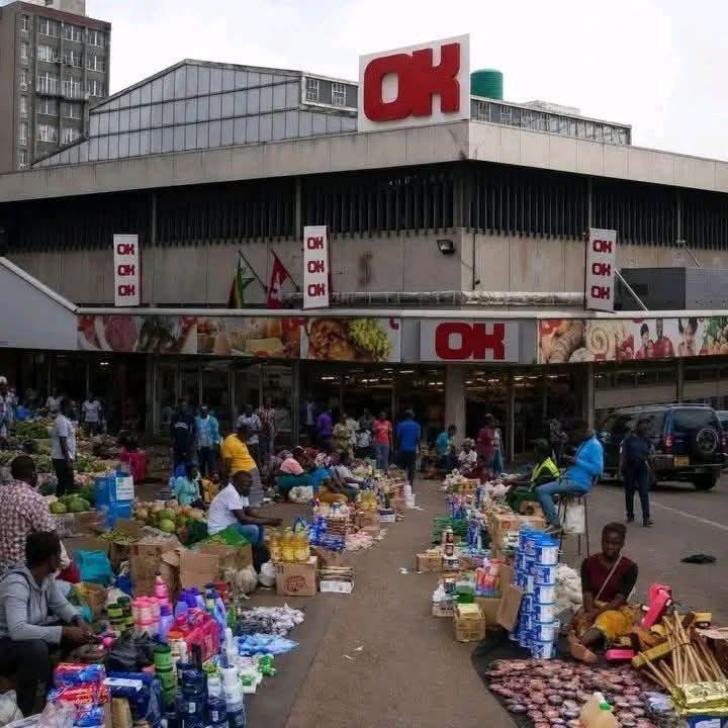
There is a comfortable consensus forming in our economic conversations. The vendor on the pavement is the problem. The tuckshop on the corner is the problem. The hawker selling cheap imported wares is the problem. The argument is repeated by economists, ministers, columnists, and city fathers. And the question that always follows is the same: how do we formalise them? But there is a paradox hiding in that question that almost no one stops to examine. How do you formalise something that is already formal? The vendor is already inside the system, already contributing to the fiscus in more ways than they are ever credited for. It is a tidy story, then, but it is also wrong, and we have spent years trying to fix the one part of the chain that was never broken.
Let me begin with what is true, because honesty has to start there. Informality in Zimbabwe is now structural rather than peripheral. Roadside vending reflects distress rather than triumph. Cheap, often counterfeit imports are hollowing out what remains of our formal commerce. None of that is in dispute. The dispute is about who put us here, and who is being asked to carry the blame for it.
The Dollarisation Question
Consider the claim that dollarisation has done deeper, more irreversible damage than hyperinflation. The timeline does not support it. Deindustrialisation began in 1991 with ESAP, when manufacturing fell from 22.8 percent of GDP in 1990 to 17.1 percent by 1998. That is eighteen years before the US dollar arrived. And when it did arrive, it interrupted the collapse rather than deepening it: manufacturing swung from negative 17.1 percent in 2008 to positive 10.2 percent in 2009, and inflation dropped from billions of percent to single digits. The dollar did not kill our industry. It removed the smokescreen hiding a corpse.
What Really Killed Our Industry
What actually killed it was plant that was never retooled. To see how much that mattered, set Zimbabwe beside the nations that chose differently. In 1987 we were not far behind Malaysia in industrial terms, and ahead of much of South-East Asia in schooling. Singapore, South Korea, China and Malaysia then treated industrial upgrading almost as a national religion, reinvesting in machinery, in skills, and above all in research and development. South Korea today spends more than five percent of its economy on research and development; China and Singapore over two percent; even Malaysia around one percent. Zimbabwe's spending has languished at a fraction of one percent, much of it donor-funded. That is the most significant difference between us and them, and it has nothing to do with the dollar. While they retooled, we ran our inherited plant into the ground and called the breakdown a crisis of currency. DIMAF, the 2010 retooling facility, captures the pattern: Old Mutual put in 27 million dollars, Government defaulted on its share, and the terms were so tight that dying firms could not draw on it. By the 2010s, 63 percent of surveyed industries were operating below half capacity.
Other forces compounded this, and saying so strengthens rather than weakens the argument. Land reform collapsed agricultural productivity. The sanctions argument shaped our access to credit. Commodity swings, skills flight, power cuts and decaying infrastructure all played their part. Dollarisation itself entrenched import dependence and stripped us of monetary tools. But these forces compounded the governance failure; they did not cause the loans to go unpaid or the billions to go missing. And of all the causes, governance is the one entirely within our own hands. We cannot legislate away a commodity cycle. We can choose to account for three billion dollars.
Tracing the Real Pipeline
Now to the sharper charge, the vendor as the disease itself. The vendor is never the leaking point, and the easiest way to see it is to trace the pipeline a product travels before it reaches a stall. It starts in a foreign factory the vendor never commissioned. It passes a first gate, the inspection that Bureau Veritas has been paid for a decade to carry out before the goods even ship. It hits a second gate at the border, where under-invoicing and bribed clearance let it through; the Anti-Corruption Commission alone logged over 150 corruption cases at Beitbridge in four years. It passes a third gate, the licensed clearing agents, where insider breaches of the customs system itself have been documented. Then it reaches the importer-wholesaler, where the money actually escapes the country, because when that stock sells they take hard currency and send it back out to restock abroad. Only after all of that does it reach the vendor, who buys stock that has already cleared, or already evaded, every gate behind them, marks it up by a thin margin, and recirculates that margin here.
Pause on the phrase "breaching the customs system," because it deserves more scrutiny than it usually gets. A national system is not breached from within by accident. It is breached because it was built, or left, porous enough to be breached. And the asymmetry tells the whole story. The state can name and prosecute a clearing agent to the cent. Hold that against the three billion dollars of Command Agriculture money the Auditor-General could not account for, including close to a billion the Treasury paid directly to suppliers with no transaction detail recorded. We prosecute the small version to the cent and file the large version as an unexplained line in a report. And none of this is hidden. ZIMRA and the Ministry of Finance hold the records of who imports what, in what volume. The importer is named in a database. The vendor is anonymous on a pavement. Yet it is the anonymous one we blame, and the named one we leave alone.
Not Scandals, but Directors' Drawings
And none of this is new, nor did it begin with the dollar. As far back as 1988, the Willowgate scandal saw senior officials loot Willowvale Motor Industries, the state-owned vehicle assembler. The plant could build over four thousand cars a year but managed only fourteen hundred for lack of foreign currency. Faced with an industrial asset crippled by a forex shortage, the elite did not fix the constraint. They monetised the scarcity for themselves.
The pattern scaled. The 2007/08 Farm Mechanisation Programme procured roughly 200 million dollars of equipment, real tractors and combine harvesters, as loans to farmers. When the beneficiary list surfaced years later, it was a roll-call of the powerful: generals, judges, ministers, and presidential relatives. They did not repay. The debt was quietly converted from loan to grant and loaded onto the taxpayer through the Debt Assumption Act of 2015. The assets were real; only the repayment was fictional. Then Command Agriculture, launched in 2016, ran roughly three billion dollars of unappropriated expenditure with an 85 percent default rate, financed for years outside the budget through an oil-trading company handed the contract without an open tender.
Look at them all together, across decades and political eras, and what emerges is something closer to directors' drawings than to public finance. The State was treated, by those with the keys, as a closely-held company they happened to run. What was called a loan was understood, by everyone involved, as something more like a withdrawal. The repayment was theatre. The default rates were not failures of recovery; they were the unspoken terms of the arrangement. Willowgate, DIMAF, Farm Mechanisation, Command Agriculture. Each touched the productive base. Each was drained from the top and the bill passed down. This is not a series of scandals. It is a habit of withdrawal, almost as old as the country itself.
The Circle That Closes on the Vendor
And here is where it comes back to the vendor. When the directors withdraw and refuse to repay, the debt does not disappear; it is socialised. It joins the sovereign debt, which by 2021 had climbed to nearly 14 billion US dollars. That debt has to be serviced out of the tax base. But the tax base is shrinking, precisely because productivity collapsed and the economy informalised in the first place. The unpaid debt therefore lands on a smaller and smaller pool of taxpayers. It is not only the vendor who carries it; the few formal corporates that remain are squeezed too. But the corporate has a voice. It can sit across the table from the Ministry and negotiate concessions and rebates. The vendor has no such table and no such voice. So the burden slides toward the voiceless and lands on the ordinary trader through the bluntest instrument of all, a transaction tax he can neither negotiate down nor escape.
Then there is the signal we send beyond our borders. When a country's own elite default on 85 percent of state-guaranteed loans, when three billion dollars escapes the Auditor-General's reach, every international creditor and investor reads it correctly. It tells them that in Zimbabwe the politically connected do not repay, that contracts are not enforced upward, that public money leaves no audit trail. That is the true country risk, and it is why credit is rationed, why investors stay away, and why the productive economy cannot find the patient capital it needs to rebuild. The vendor did not send that signal.
The Vendor Already Pays
And here is what the blame ignores entirely. The vendor is already a contributor to the national purse, not a freeloader at its gate. The two percent transaction tax is borne by whoever makes the payment, so every time a trader restocks through a wholesaler by mobile money or swipe, the vendor pays it, many times over, on goods as basic as bread and mealie-meal. That tax is now among the top three revenue streams in the entire country. The informal trader who remits no PAYE is, through the simple act of buying and transacting, helping to fund the State every day. They are already inside the system, already paying. The only worthwhile question is how to make that contribution grow, and it grows by putting local, productive goods through their hands, not by clearing them off the street.
Doing Our National Arithmetic
Permit me a moment of reflection. Many of us grew up with Simon Chimbetu's "Newspaper." In it a man sings of what his life might have been if only he had gone to school. Had he been educated, he says, he could have read the newspaper for himself, read the degrees on a thermometer for himself, worked out his arithmetic for himself. But poverty kept him from the classroom, and so all of it stayed beyond his reach.
Now turn that around and hold it against ourselves. Zimbabwe is an educated nation. We have held one of the highest literacy rates on the continent since independence, and literacy includes numeracy, the doing of arithmetic. The man in the song would have given anything to stand where we stand. He could not do his sums because he was never taught. We were taught, and we still are not doing ours. Instead, we reach for fixes, one after another, and they fail, one after another. A food-hamper scheme to paper over a production collapse. A mechanisation programme that mechanised patronage. A command agriculture that commanded three billion dollars into the dark. A two percent tax that, whatever its stated purpose, functions to plug the very holes the unpaid loans tore open. Each was a fix; each failed; and each failure became the reason for the next fix. We have become a nation operating on fixes that fail, because a fix is always easier than arithmetic.
So ask the question that should sober all of us. If we carry on like this, deflecting, blaming the vendor for the contraband, blaming the dollar for a deindustrialisation that began long before it arrived, reaching for the next fix instead of the honest sum, where will this nation stand in forty years? An educated people who can read their own balance sheet and choose not to are not victims of circumstance. They are the authors of their own decline. What I am asking for is an intellectual discussion worthy of an educated nation, not another fix, and not a hunt for the easiest face to blame.
From Leak to Circulation
Here is what makes all of this more than a complaint. The pipeline stays exactly the same whether the leak exists or not. The only thing that changes is who supplies the stall. Replace the importer-wholesaler at the top with a local producer and the restock dollar never leaves the country. Same vendor, same stall, same last mile, but now every dollar in the chain recirculates instead of escaping. The vendor was never the variable. The supply behind them is.
So we cannot formalise our way out of a production problem. Agreed. But we cannot produce our way out without a distribution network either, and that two-million-strong vendor network is the best last-mile retail this country has. It is already built. Point it at local, traceable goods and the same stall that once moved imports starts moving Zimbabwean produce. That needs the policy and vision the discussion keeps calling for, only pointed in the right direction: incentivise the vendor, do not evict them. License them on terms they can meet. Bring them in by giving them something worth paying tax for, a stake, a supply chain, and above all an audit trail the whole country can trust, which is the one thing our public finances have never had. None of this is automatic. Production can only fill the stall if it is made competitive first, which means confronting power costs, finance, skills, and standards that are actually enforced. And the support itself must be designed against the failure this essay has traced, targeted, time-bound, and tied to delivery, so that help expires if the production does not materialise.
The vendors did not deindustrialise this country. They did not breach the customs system. They did not default on the retooling funds. They did not lose three billion dollars. They did not send the signal that scared away our creditors. What they did was survive a chain of failures that were not theirs to fix, using the only tool the economy left them, a stall and a will to work. That is not a problem to be cleared off the street. That is a partner worth backing. We will not rebuild this country by picking on the people at the bottom of a chain that broke at every link above them. We will rebuild it by fixing the chain, by accounting for what was spent, by doing our arithmetic at last, and by trusting the people who held the economy together with their own hands when everything else gave way.
------------
Derrick Wini Dari writes in his own capacity.
Let me begin with what is true, because honesty has to start there. Informality in Zimbabwe is now structural rather than peripheral. Roadside vending reflects distress rather than triumph. Cheap, often counterfeit imports are hollowing out what remains of our formal commerce. None of that is in dispute. The dispute is about who put us here, and who is being asked to carry the blame for it.
The Dollarisation Question
Consider the claim that dollarisation has done deeper, more irreversible damage than hyperinflation. The timeline does not support it. Deindustrialisation began in 1991 with ESAP, when manufacturing fell from 22.8 percent of GDP in 1990 to 17.1 percent by 1998. That is eighteen years before the US dollar arrived. And when it did arrive, it interrupted the collapse rather than deepening it: manufacturing swung from negative 17.1 percent in 2008 to positive 10.2 percent in 2009, and inflation dropped from billions of percent to single digits. The dollar did not kill our industry. It removed the smokescreen hiding a corpse.
What Really Killed Our Industry
What actually killed it was plant that was never retooled. To see how much that mattered, set Zimbabwe beside the nations that chose differently. In 1987 we were not far behind Malaysia in industrial terms, and ahead of much of South-East Asia in schooling. Singapore, South Korea, China and Malaysia then treated industrial upgrading almost as a national religion, reinvesting in machinery, in skills, and above all in research and development. South Korea today spends more than five percent of its economy on research and development; China and Singapore over two percent; even Malaysia around one percent. Zimbabwe's spending has languished at a fraction of one percent, much of it donor-funded. That is the most significant difference between us and them, and it has nothing to do with the dollar. While they retooled, we ran our inherited plant into the ground and called the breakdown a crisis of currency. DIMAF, the 2010 retooling facility, captures the pattern: Old Mutual put in 27 million dollars, Government defaulted on its share, and the terms were so tight that dying firms could not draw on it. By the 2010s, 63 percent of surveyed industries were operating below half capacity.
Other forces compounded this, and saying so strengthens rather than weakens the argument. Land reform collapsed agricultural productivity. The sanctions argument shaped our access to credit. Commodity swings, skills flight, power cuts and decaying infrastructure all played their part. Dollarisation itself entrenched import dependence and stripped us of monetary tools. But these forces compounded the governance failure; they did not cause the loans to go unpaid or the billions to go missing. And of all the causes, governance is the one entirely within our own hands. We cannot legislate away a commodity cycle. We can choose to account for three billion dollars.
Tracing the Real Pipeline
Now to the sharper charge, the vendor as the disease itself. The vendor is never the leaking point, and the easiest way to see it is to trace the pipeline a product travels before it reaches a stall. It starts in a foreign factory the vendor never commissioned. It passes a first gate, the inspection that Bureau Veritas has been paid for a decade to carry out before the goods even ship. It hits a second gate at the border, where under-invoicing and bribed clearance let it through; the Anti-Corruption Commission alone logged over 150 corruption cases at Beitbridge in four years. It passes a third gate, the licensed clearing agents, where insider breaches of the customs system itself have been documented. Then it reaches the importer-wholesaler, where the money actually escapes the country, because when that stock sells they take hard currency and send it back out to restock abroad. Only after all of that does it reach the vendor, who buys stock that has already cleared, or already evaded, every gate behind them, marks it up by a thin margin, and recirculates that margin here.
Pause on the phrase "breaching the customs system," because it deserves more scrutiny than it usually gets. A national system is not breached from within by accident. It is breached because it was built, or left, porous enough to be breached. And the asymmetry tells the whole story. The state can name and prosecute a clearing agent to the cent. Hold that against the three billion dollars of Command Agriculture money the Auditor-General could not account for, including close to a billion the Treasury paid directly to suppliers with no transaction detail recorded. We prosecute the small version to the cent and file the large version as an unexplained line in a report. And none of this is hidden. ZIMRA and the Ministry of Finance hold the records of who imports what, in what volume. The importer is named in a database. The vendor is anonymous on a pavement. Yet it is the anonymous one we blame, and the named one we leave alone.
Not Scandals, but Directors' Drawings
And none of this is new, nor did it begin with the dollar. As far back as 1988, the Willowgate scandal saw senior officials loot Willowvale Motor Industries, the state-owned vehicle assembler. The plant could build over four thousand cars a year but managed only fourteen hundred for lack of foreign currency. Faced with an industrial asset crippled by a forex shortage, the elite did not fix the constraint. They monetised the scarcity for themselves.
The pattern scaled. The 2007/08 Farm Mechanisation Programme procured roughly 200 million dollars of equipment, real tractors and combine harvesters, as loans to farmers. When the beneficiary list surfaced years later, it was a roll-call of the powerful: generals, judges, ministers, and presidential relatives. They did not repay. The debt was quietly converted from loan to grant and loaded onto the taxpayer through the Debt Assumption Act of 2015. The assets were real; only the repayment was fictional. Then Command Agriculture, launched in 2016, ran roughly three billion dollars of unappropriated expenditure with an 85 percent default rate, financed for years outside the budget through an oil-trading company handed the contract without an open tender.
Look at them all together, across decades and political eras, and what emerges is something closer to directors' drawings than to public finance. The State was treated, by those with the keys, as a closely-held company they happened to run. What was called a loan was understood, by everyone involved, as something more like a withdrawal. The repayment was theatre. The default rates were not failures of recovery; they were the unspoken terms of the arrangement. Willowgate, DIMAF, Farm Mechanisation, Command Agriculture. Each touched the productive base. Each was drained from the top and the bill passed down. This is not a series of scandals. It is a habit of withdrawal, almost as old as the country itself.
The Circle That Closes on the Vendor
And here is where it comes back to the vendor. When the directors withdraw and refuse to repay, the debt does not disappear; it is socialised. It joins the sovereign debt, which by 2021 had climbed to nearly 14 billion US dollars. That debt has to be serviced out of the tax base. But the tax base is shrinking, precisely because productivity collapsed and the economy informalised in the first place. The unpaid debt therefore lands on a smaller and smaller pool of taxpayers. It is not only the vendor who carries it; the few formal corporates that remain are squeezed too. But the corporate has a voice. It can sit across the table from the Ministry and negotiate concessions and rebates. The vendor has no such table and no such voice. So the burden slides toward the voiceless and lands on the ordinary trader through the bluntest instrument of all, a transaction tax he can neither negotiate down nor escape.
Then there is the signal we send beyond our borders. When a country's own elite default on 85 percent of state-guaranteed loans, when three billion dollars escapes the Auditor-General's reach, every international creditor and investor reads it correctly. It tells them that in Zimbabwe the politically connected do not repay, that contracts are not enforced upward, that public money leaves no audit trail. That is the true country risk, and it is why credit is rationed, why investors stay away, and why the productive economy cannot find the patient capital it needs to rebuild. The vendor did not send that signal.
The Vendor Already Pays
And here is what the blame ignores entirely. The vendor is already a contributor to the national purse, not a freeloader at its gate. The two percent transaction tax is borne by whoever makes the payment, so every time a trader restocks through a wholesaler by mobile money or swipe, the vendor pays it, many times over, on goods as basic as bread and mealie-meal. That tax is now among the top three revenue streams in the entire country. The informal trader who remits no PAYE is, through the simple act of buying and transacting, helping to fund the State every day. They are already inside the system, already paying. The only worthwhile question is how to make that contribution grow, and it grows by putting local, productive goods through their hands, not by clearing them off the street.
Doing Our National Arithmetic
Permit me a moment of reflection. Many of us grew up with Simon Chimbetu's "Newspaper." In it a man sings of what his life might have been if only he had gone to school. Had he been educated, he says, he could have read the newspaper for himself, read the degrees on a thermometer for himself, worked out his arithmetic for himself. But poverty kept him from the classroom, and so all of it stayed beyond his reach.
Now turn that around and hold it against ourselves. Zimbabwe is an educated nation. We have held one of the highest literacy rates on the continent since independence, and literacy includes numeracy, the doing of arithmetic. The man in the song would have given anything to stand where we stand. He could not do his sums because he was never taught. We were taught, and we still are not doing ours. Instead, we reach for fixes, one after another, and they fail, one after another. A food-hamper scheme to paper over a production collapse. A mechanisation programme that mechanised patronage. A command agriculture that commanded three billion dollars into the dark. A two percent tax that, whatever its stated purpose, functions to plug the very holes the unpaid loans tore open. Each was a fix; each failed; and each failure became the reason for the next fix. We have become a nation operating on fixes that fail, because a fix is always easier than arithmetic.
So ask the question that should sober all of us. If we carry on like this, deflecting, blaming the vendor for the contraband, blaming the dollar for a deindustrialisation that began long before it arrived, reaching for the next fix instead of the honest sum, where will this nation stand in forty years? An educated people who can read their own balance sheet and choose not to are not victims of circumstance. They are the authors of their own decline. What I am asking for is an intellectual discussion worthy of an educated nation, not another fix, and not a hunt for the easiest face to blame.
From Leak to Circulation
Here is what makes all of this more than a complaint. The pipeline stays exactly the same whether the leak exists or not. The only thing that changes is who supplies the stall. Replace the importer-wholesaler at the top with a local producer and the restock dollar never leaves the country. Same vendor, same stall, same last mile, but now every dollar in the chain recirculates instead of escaping. The vendor was never the variable. The supply behind them is.
So we cannot formalise our way out of a production problem. Agreed. But we cannot produce our way out without a distribution network either, and that two-million-strong vendor network is the best last-mile retail this country has. It is already built. Point it at local, traceable goods and the same stall that once moved imports starts moving Zimbabwean produce. That needs the policy and vision the discussion keeps calling for, only pointed in the right direction: incentivise the vendor, do not evict them. License them on terms they can meet. Bring them in by giving them something worth paying tax for, a stake, a supply chain, and above all an audit trail the whole country can trust, which is the one thing our public finances have never had. None of this is automatic. Production can only fill the stall if it is made competitive first, which means confronting power costs, finance, skills, and standards that are actually enforced. And the support itself must be designed against the failure this essay has traced, targeted, time-bound, and tied to delivery, so that help expires if the production does not materialise.
The vendors did not deindustrialise this country. They did not breach the customs system. They did not default on the retooling funds. They did not lose three billion dollars. They did not send the signal that scared away our creditors. What they did was survive a chain of failures that were not theirs to fix, using the only tool the economy left them, a stall and a will to work. That is not a problem to be cleared off the street. That is a partner worth backing. We will not rebuild this country by picking on the people at the bottom of a chain that broke at every link above them. We will rebuild it by fixing the chain, by accounting for what was spent, by doing our arithmetic at last, and by trusting the people who held the economy together with their own hands when everything else gave way.
------------
Derrick Wini Dari writes in his own capacity.
Source - x.com
All articles and letters published on Bulawayo24 have been independently written by members of Bulawayo24's community. The views of users published on Bulawayo24 are therefore their own and do not necessarily represent the views of Bulawayo24. Bulawayo24 editors also reserve the right to edit or delete any and all comments received.
Join the discussion
Loading comments…




