News / Education
Zibalongwe community appeals for support as secondary school project records major progress
17 Aug 2026 at 09:19hrs |
0 Views
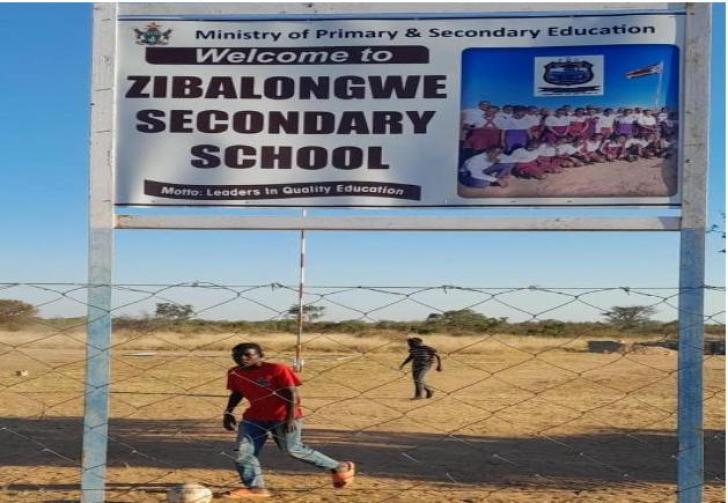
IBALONGWE COMMUNITY SECONDARY SCHOOL PROJECT(ZSP) PICTORIAL PROGRESS REPORT ON SCHOOL DEVELOPMENT
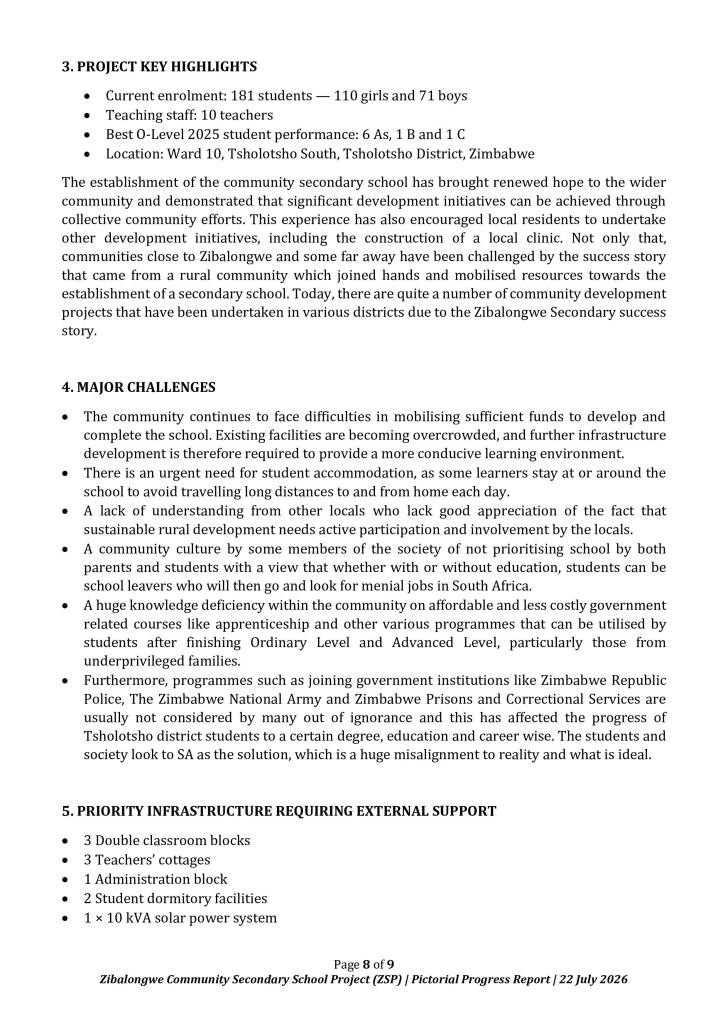
The Zibalongwe community in Tsholotsho South has published a 2026 pictorial progress report showcasing significant developments at Zibalongwe Secondary School, while appealing for additional external support to complete outstanding infrastructure.
According to the report, the school's establishment has been driven by strong community mobilisation supported by several partners. The first classroom block was built largely through local contributions, with roofing materials, window frames and door frames donated by the Australian Embassy under its Direct Aid Programme. "The first classroom block was constructed largely through contributions from the local community. Additional support was received… from the Australian Embassy in Zimbabwe (DAP Programme) in 2018," the report states.
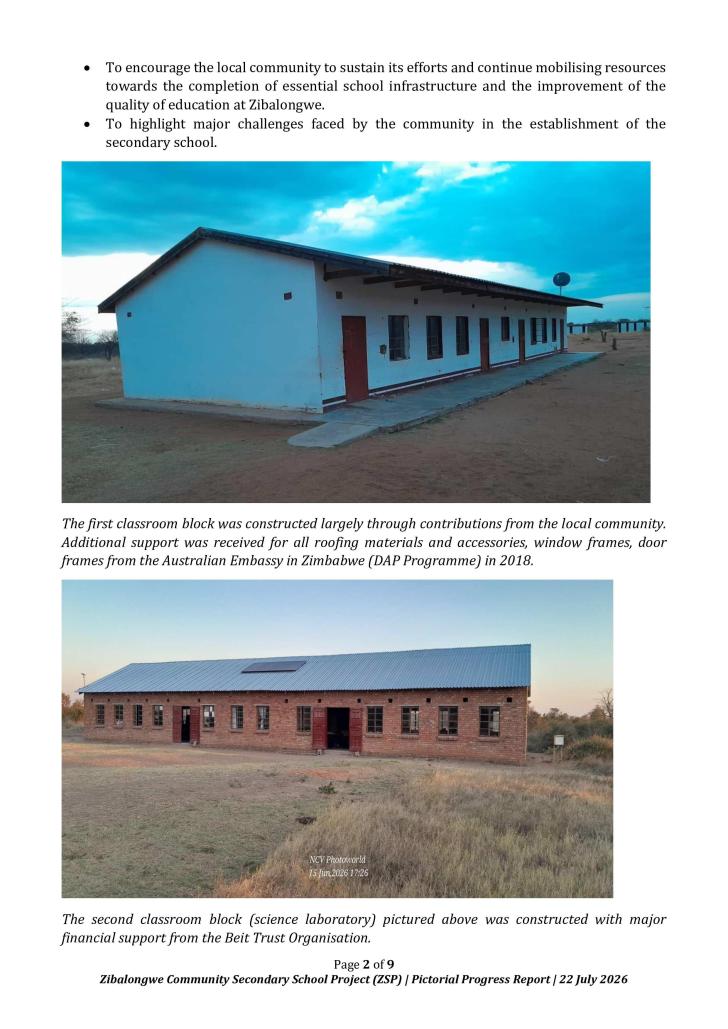
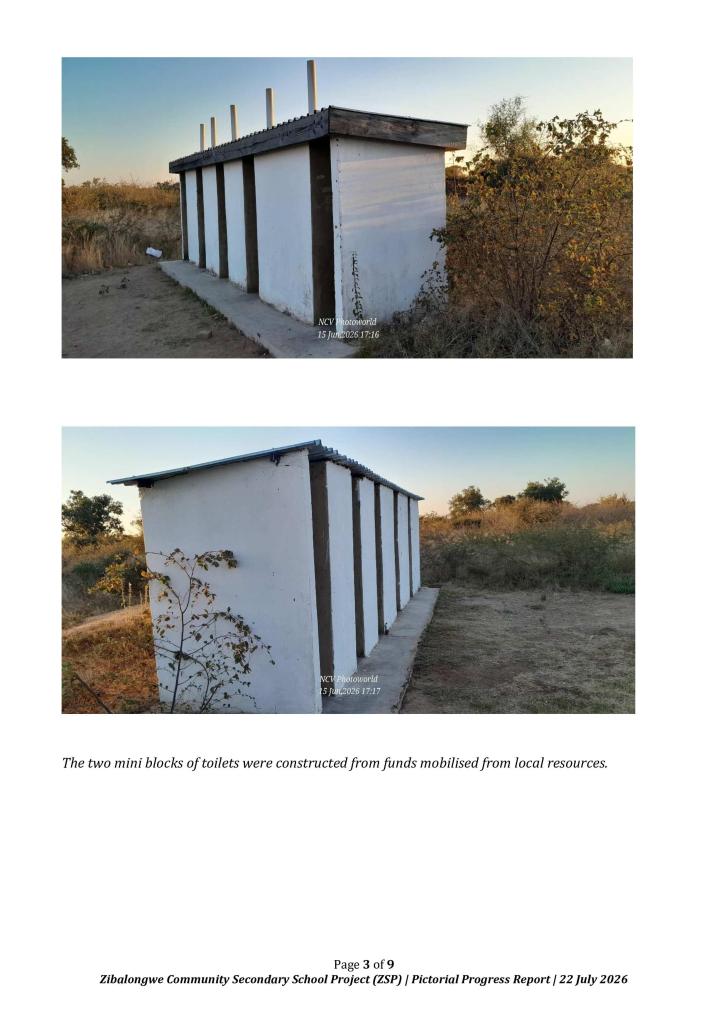
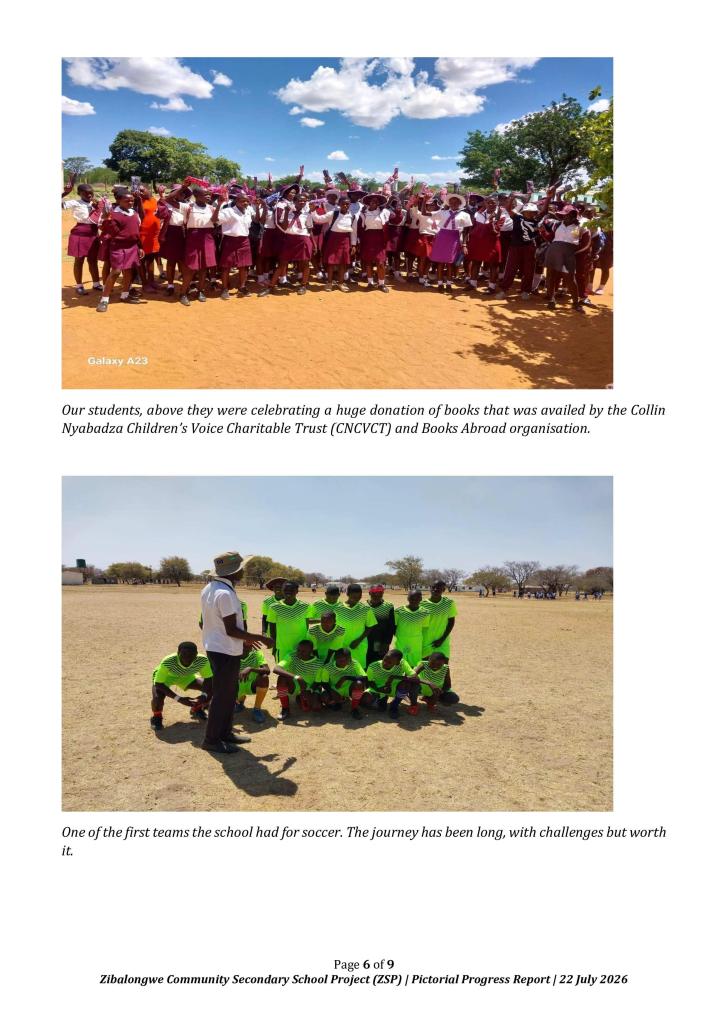
A second classroom block, now functioning as a science laboratory, was funded by the Beit Trust. The community also constructed two mini toilet blocks using locally mobilised resources. "The two mini blocks of toilets were constructed from funds mobilised from local resources," the report notes.
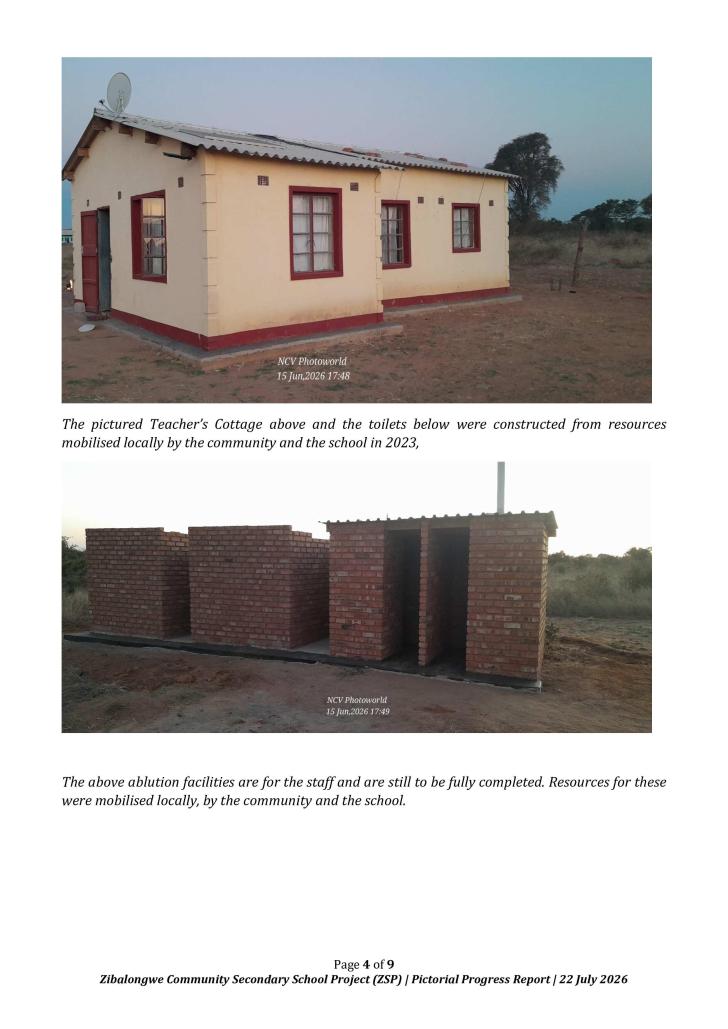
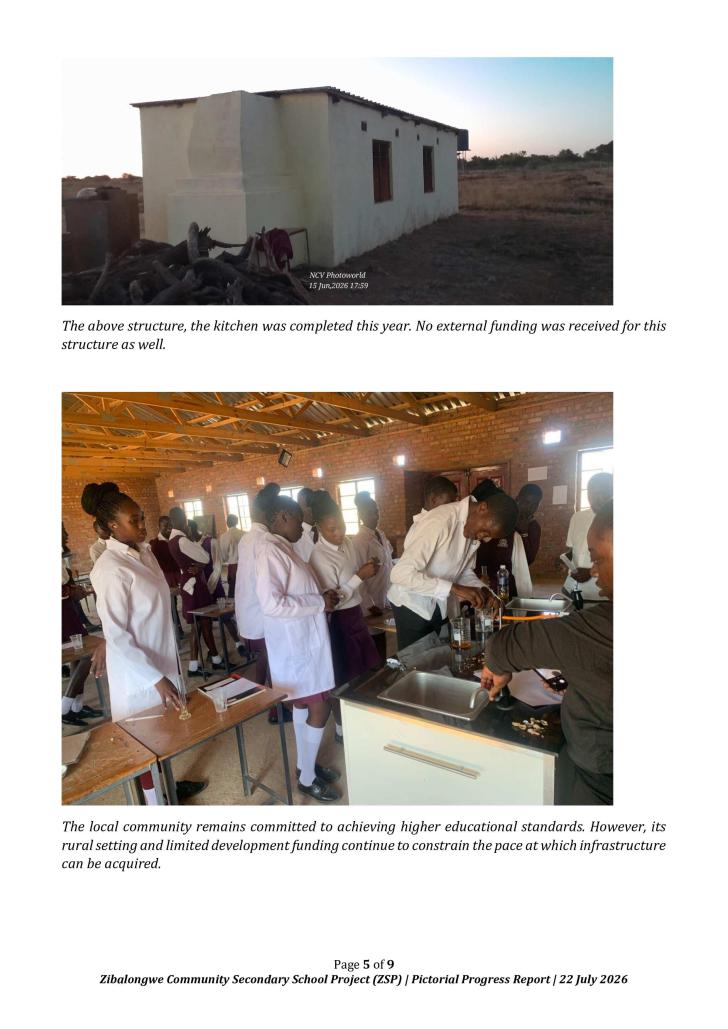
In 2023, villagers built a teacher's cottage and staff ablution facilities, which are still awaiting completion. A kitchen structure was finalised this year without external funding. "The above structure, the kitchen was completed this year. No external funding was received for this structure as well," the report says.
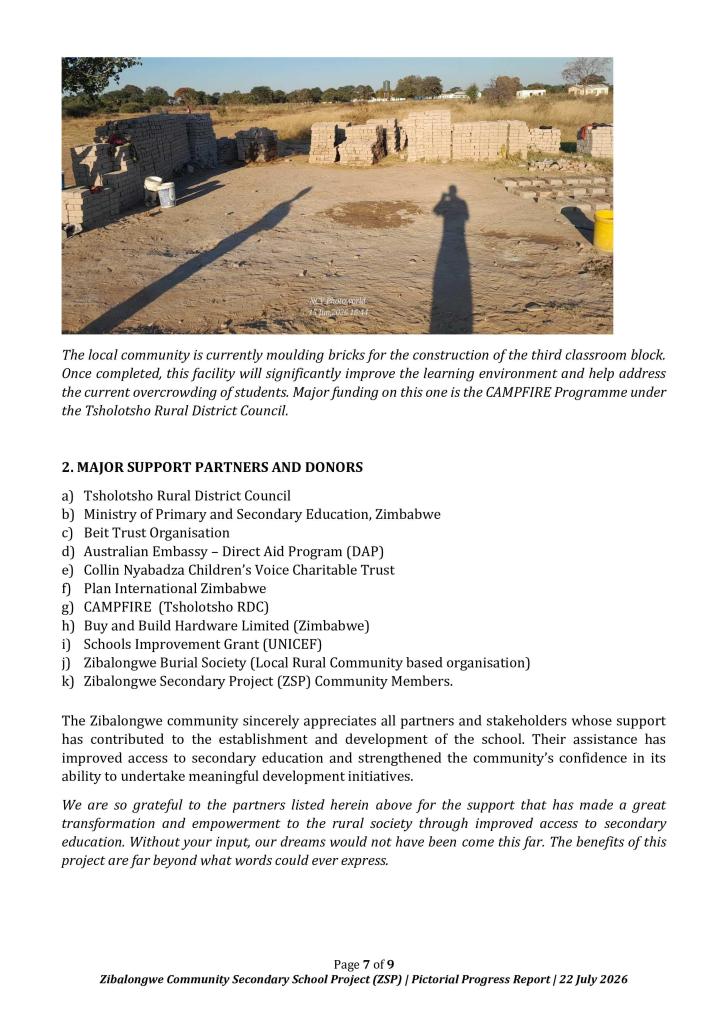
The school has also benefited from book donations from the Collin Nyabadza Children's Voice Charitable Trust and Books Abroad, celebrated by students. The community is currently moulding bricks for a third classroom block, with major funding coming from the CAMPFIRE Programme under Tsholotsho Rural District Council. "The local community is currently moulding bricks for the construction of the third classroom block… Major funding on this one is the CAMPFIRE Programme," the report confirms.
The report lists several partners who have supported the project, including the Ministry of Primary and Secondary Education, Beit Trust, Plan International Zimbabwe, Buy and Build Hardware, UNICEF's Schools Improvement Grant, and local organisations such as the Zibalongwe Burial Society.
Zibalongwe Secondary School currently enrols 181 students - 110 girls and 71 boys - and has 10 teachers. The school recorded strong academic performance in 2025, with its best O‑Level student achieving 6 As, 1 B and 1 C.
Despite progress, the report highlights several challenges. Existing facilities are overcrowded, and the community struggles to mobilise sufficient funds for expansion. There is an urgent need for student accommodation, as some learners stay near the school to avoid long daily walks. The report also cites limited awareness of post‑school opportunities such as apprenticeships, vocational programmes and recruitment into government institutions. "A huge knowledge deficiency within the community on affordable and less costly government related courses… has affected the progress of Tsholotsho district students," it says.
The school's priority needs include three double classroom blocks, three teachers' cottages, an administration block, two student dormitories, and a 10 kVA solar power system.
The report concludes by thanking all partners and appealing for further assistance to help the rural community complete essential infrastructure. "Without your input, our dreams would not have been come this far. The benefits of this project are far beyond what words could ever express," the community says.
This development update contributes to wider discussions around rural education infrastructure and community‑driven development.
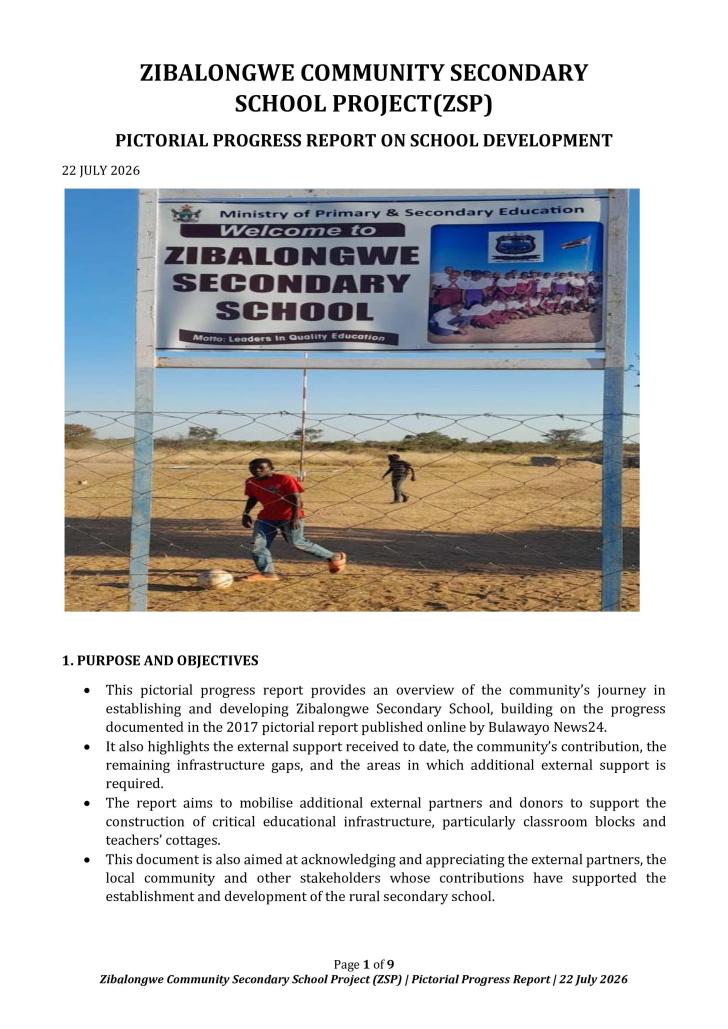
According to the report, the school's establishment has been driven by strong community mobilisation supported by several partners. The first classroom block was built largely through local contributions, with roofing materials, window frames and door frames donated by the Australian Embassy under its Direct Aid Programme. "The first classroom block was constructed largely through contributions from the local community. Additional support was received… from the Australian Embassy in Zimbabwe (DAP Programme) in 2018," the report states.
A second classroom block, now functioning as a science laboratory, was funded by the Beit Trust. The community also constructed two mini toilet blocks using locally mobilised resources. "The two mini blocks of toilets were constructed from funds mobilised from local resources," the report notes.
In 2023, villagers built a teacher's cottage and staff ablution facilities, which are still awaiting completion. A kitchen structure was finalised this year without external funding. "The above structure, the kitchen was completed this year. No external funding was received for this structure as well," the report says.
The school has also benefited from book donations from the Collin Nyabadza Children's Voice Charitable Trust and Books Abroad, celebrated by students. The community is currently moulding bricks for a third classroom block, with major funding coming from the CAMPFIRE Programme under Tsholotsho Rural District Council. "The local community is currently moulding bricks for the construction of the third classroom block… Major funding on this one is the CAMPFIRE Programme," the report confirms.
Zibalongwe Secondary School currently enrols 181 students - 110 girls and 71 boys - and has 10 teachers. The school recorded strong academic performance in 2025, with its best O‑Level student achieving 6 As, 1 B and 1 C.
Despite progress, the report highlights several challenges. Existing facilities are overcrowded, and the community struggles to mobilise sufficient funds for expansion. There is an urgent need for student accommodation, as some learners stay near the school to avoid long daily walks. The report also cites limited awareness of post‑school opportunities such as apprenticeships, vocational programmes and recruitment into government institutions. "A huge knowledge deficiency within the community on affordable and less costly government related courses… has affected the progress of Tsholotsho district students," it says.
The school's priority needs include three double classroom blocks, three teachers' cottages, an administration block, two student dormitories, and a 10 kVA solar power system.
The report concludes by thanking all partners and appealing for further assistance to help the rural community complete essential infrastructure. "Without your input, our dreams would not have been come this far. The benefits of this project are far beyond what words could ever express," the community says.
This development update contributes to wider discussions around rural education infrastructure and community‑driven development.
Source - Byo24News
Join the discussion
Loading comments…


