Opinion / Columnist
Ash, Bonfire and Bureaucracy: A Night at Beitbridge
17 Aug 2026 at 08:01hrs |
0 Views
A personal commentary on crossing home from South Africa into Zimbabwe
There is a particular kind of tiredness that settles into the bones of a traveller at Beitbridge - not the ordinary fatigue of a long journey, but something heavier, sharpened by uncertainty and the peculiar indignities of the border post. I felt it again on the evening of the 29th of July, standing in a queue that did not move, watching the clock lose its meaning.
I arrived at one of Southern Africa's busiest inland crossings with a few hours to spare before my passport's validity would have become a problem. Time, I thought, was on my side. Beitbridge had other plans.
For close to three hours that evening, the South African side's immigration computers had no network. No explanation was offered beyond the shrug that has become the border's unofficial language. Behind the glass walls, the chairs where officers should have sat processing documents stood empty, lit but lifeless. Travellers stood - tired, impatient, dishevelled from the tortuous haul out of South Africa - waiting for machines somewhere to remember how to talk to each other. Around me were people who had left Zimbabwe for a hundred different reasons folded into a handful of categories: cross-border trading, employment, or simply the pursuit of a functioning economy. Behind us lay a country wrestling with soaring unemployment and a market that has, in large part, gone informal - survived on rather than lived in. Ahead lay the same country, home nonetheless, pulling us back the way home always does, complicated and unrefusable.
Somewhere in that shuffling, waiting crowd, humanity kept doing what it does at its most inconvenient moments - it went missing, briefly, and then found itself again in small tragedies. Two women had stepped away when the coach stopped for a recess break. One had a baby strapped to her back. Both were left behind when the coach pulled off without them, their seats sitting empty for the rest of the journey - a small, unremarked cruelty of a system moving too fast for the people inside it to be counted properly.
The toll on suspicion
And the system, it turned out, had other appetites too. Double T Coach to Mutare, on this particular day, was charging travellers extra - R100 here, R100 there - described plainly by those paying it as money meant to smooth the way past a thorough search by Zimbabwean immigration officials, a toll on suspicion itself. For those without passports, babies included, the price of having breached the paperwork of nationhood was steeper still: R500 in total, split as R200 on the South African side and R300 on the Zimbabwean side. It is a peculiar arithmetic, this one - a fee for existing without the correct stamp, extracted in two currencies of the same indignity.
None of these extra charges in rand are ever properly explained at boarding, back at the Bossman cross-border bus terminus. There, a teeming troop of rank marshals is quick and almost gladly obliging - smoothing over whatever a traveller's issue might be, insufficient funds, banned goods, the wrong cross-border documents or none at all, all in pursuit of the day's quota. Once the bus is loaded and moving, the script changes. Stories abound of travellers surrendering passports, shoes, and all manner of valuables to bus crews until unexplained, previously unmentioned bills are somehow settled.
Is the Zimbabwean government aware of these border shenanigans by bus crews? Is it, perhaps, its own quiet way of raising revenue? I would like to think it has simply become the new normal - that somewhere, in a plush office, a man in a jacket and tie is having his own slice of the cake.
Two decades of crossing
In two decades of crossing this border, I have come to expect the ache of it, the way the body learns to brace before the mind does. But I have also come to notice its strange, dark comedy - the moments that puncture the tension and remind you that people, even exhausted and irritated people, still find each other funny.
My first sojourn outside Zimbabwe, two decades ago, saw me spend a night in a haulage truck parked on no man's land between South Africa and my homeland. The driver was a loving brother-in-law - may his soul rest in peace - who remained a dear friend to me even long after he and my cousin sister had gone their separate ways. That night, baboons and monkeys tore at the tarpaulin and wound down the truck windows in search of food, their audacity to be so close to humanity leaving me gobsmacked. I had no real money in my pockets. I had no passport. I had only a dream of making something of my life in South Africa, and only God knew how that would happen.
The other time I crossed this border without a passport, a formidable South African police officer grabbed me by the belt and personally chaperoned me out through the gates into South Africa. To an untrained eye, it looked very much like I was in serious trouble - pot-bellied servicemen in blue fanning out across the crossing with me manhandled between them, my worn-out takkies barely kissing the ground. Then, with a twinkle in her eye, she slipped a R200 note from my pocket and bid me farewell. "Bring me chocolate on your way back," she said. I disappeared into the night like a ghost. I never saw her again.
The joke atop the bridge
Atop Beitbridge itself, today, a cluster of young soldiers stood checking the passports of returnees, rifles slung, faces bored until one of them found something to laugh at. He turned to a young man with dreadlocks and needled him in Shona - why kunaka chiso kunge munhukadzi - why is your face pretty like a woman's, it's gayish - and the uniformed group broke into laughter. Nearby, a knot of women giggled along, amused rather than offended, the joke landing the way casual cruelty often does at a border post: absorbed, shrugged off, filed away as just another texture of the crossing. It was a small moment, but it said something larger about the terrain we return to - one still comfortable mocking softness in men, still finding humour in the policing of how a person is allowed to look.
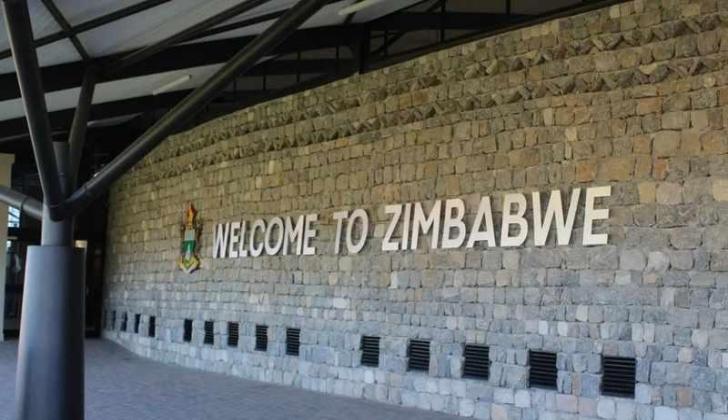
Then there was the officer who took my passport. He turned it over slowly, checking it not under fluorescent light but against the orange flicker of a bonfire and the thin beam of a handheld torch, as though the document and the moment belonged to another century entirely. Beside him, a pan balanced over the coals - corn and peanuts roasting slowly, unhurried by the queue building behind me. The sweet smell of it drifted upward into the cold night air, curling around the gargantuan steel and concrete of Beitbridge itself, that structure so vast and so indifferent, built to move nations of people and yet somehow still lit, in places, by firelight and torch.
The image that stays
That contradiction is Beitbridge in a single image - a modern border post reduced, after dark, to bonfire and handheld torch; a nation's gateway run partly on generators and partly on improvisation. It is where the formal and the informal meet and shake hands, where a broken network can hold three hours of lives hostage, where extortion wears the polite disguise of a "service fee," and where, somehow, amid all of it, the smell of roasting corn can still make you feel, faintly, that you are nearly home.
Coming back into Zimbabwe is never a clean, simple relief. It is queued, taxed, mocked, delayed and occasionally almost lost - like the two women whose seats sat empty for the rest of the journey, or like the barefoot young man once frog-marched through a South African gate with nothing but a dream in his pocket. And yet it remains a homecoming, stubborn and complicated, carrying with it both the ache of what the country has become and the quiet, undeniable pull of what still makes it home.
Josiah Mucharowana is a Zimbabwean-trained journalist who has a new love for plumbing. He writes just about anything.
There is a particular kind of tiredness that settles into the bones of a traveller at Beitbridge - not the ordinary fatigue of a long journey, but something heavier, sharpened by uncertainty and the peculiar indignities of the border post. I felt it again on the evening of the 29th of July, standing in a queue that did not move, watching the clock lose its meaning.
I arrived at one of Southern Africa's busiest inland crossings with a few hours to spare before my passport's validity would have become a problem. Time, I thought, was on my side. Beitbridge had other plans.
For close to three hours that evening, the South African side's immigration computers had no network. No explanation was offered beyond the shrug that has become the border's unofficial language. Behind the glass walls, the chairs where officers should have sat processing documents stood empty, lit but lifeless. Travellers stood - tired, impatient, dishevelled from the tortuous haul out of South Africa - waiting for machines somewhere to remember how to talk to each other. Around me were people who had left Zimbabwe for a hundred different reasons folded into a handful of categories: cross-border trading, employment, or simply the pursuit of a functioning economy. Behind us lay a country wrestling with soaring unemployment and a market that has, in large part, gone informal - survived on rather than lived in. Ahead lay the same country, home nonetheless, pulling us back the way home always does, complicated and unrefusable.
Somewhere in that shuffling, waiting crowd, humanity kept doing what it does at its most inconvenient moments - it went missing, briefly, and then found itself again in small tragedies. Two women had stepped away when the coach stopped for a recess break. One had a baby strapped to her back. Both were left behind when the coach pulled off without them, their seats sitting empty for the rest of the journey - a small, unremarked cruelty of a system moving too fast for the people inside it to be counted properly.
The toll on suspicion
And the system, it turned out, had other appetites too. Double T Coach to Mutare, on this particular day, was charging travellers extra - R100 here, R100 there - described plainly by those paying it as money meant to smooth the way past a thorough search by Zimbabwean immigration officials, a toll on suspicion itself. For those without passports, babies included, the price of having breached the paperwork of nationhood was steeper still: R500 in total, split as R200 on the South African side and R300 on the Zimbabwean side. It is a peculiar arithmetic, this one - a fee for existing without the correct stamp, extracted in two currencies of the same indignity.
None of these extra charges in rand are ever properly explained at boarding, back at the Bossman cross-border bus terminus. There, a teeming troop of rank marshals is quick and almost gladly obliging - smoothing over whatever a traveller's issue might be, insufficient funds, banned goods, the wrong cross-border documents or none at all, all in pursuit of the day's quota. Once the bus is loaded and moving, the script changes. Stories abound of travellers surrendering passports, shoes, and all manner of valuables to bus crews until unexplained, previously unmentioned bills are somehow settled.
Is the Zimbabwean government aware of these border shenanigans by bus crews? Is it, perhaps, its own quiet way of raising revenue? I would like to think it has simply become the new normal - that somewhere, in a plush office, a man in a jacket and tie is having his own slice of the cake.
Two decades of crossing
In two decades of crossing this border, I have come to expect the ache of it, the way the body learns to brace before the mind does. But I have also come to notice its strange, dark comedy - the moments that puncture the tension and remind you that people, even exhausted and irritated people, still find each other funny.
My first sojourn outside Zimbabwe, two decades ago, saw me spend a night in a haulage truck parked on no man's land between South Africa and my homeland. The driver was a loving brother-in-law - may his soul rest in peace - who remained a dear friend to me even long after he and my cousin sister had gone their separate ways. That night, baboons and monkeys tore at the tarpaulin and wound down the truck windows in search of food, their audacity to be so close to humanity leaving me gobsmacked. I had no real money in my pockets. I had no passport. I had only a dream of making something of my life in South Africa, and only God knew how that would happen.
The other time I crossed this border without a passport, a formidable South African police officer grabbed me by the belt and personally chaperoned me out through the gates into South Africa. To an untrained eye, it looked very much like I was in serious trouble - pot-bellied servicemen in blue fanning out across the crossing with me manhandled between them, my worn-out takkies barely kissing the ground. Then, with a twinkle in her eye, she slipped a R200 note from my pocket and bid me farewell. "Bring me chocolate on your way back," she said. I disappeared into the night like a ghost. I never saw her again.
The joke atop the bridge
Atop Beitbridge itself, today, a cluster of young soldiers stood checking the passports of returnees, rifles slung, faces bored until one of them found something to laugh at. He turned to a young man with dreadlocks and needled him in Shona - why kunaka chiso kunge munhukadzi - why is your face pretty like a woman's, it's gayish - and the uniformed group broke into laughter. Nearby, a knot of women giggled along, amused rather than offended, the joke landing the way casual cruelty often does at a border post: absorbed, shrugged off, filed away as just another texture of the crossing. It was a small moment, but it said something larger about the terrain we return to - one still comfortable mocking softness in men, still finding humour in the policing of how a person is allowed to look.
Then there was the officer who took my passport. He turned it over slowly, checking it not under fluorescent light but against the orange flicker of a bonfire and the thin beam of a handheld torch, as though the document and the moment belonged to another century entirely. Beside him, a pan balanced over the coals - corn and peanuts roasting slowly, unhurried by the queue building behind me. The sweet smell of it drifted upward into the cold night air, curling around the gargantuan steel and concrete of Beitbridge itself, that structure so vast and so indifferent, built to move nations of people and yet somehow still lit, in places, by firelight and torch.
The image that stays
That contradiction is Beitbridge in a single image - a modern border post reduced, after dark, to bonfire and handheld torch; a nation's gateway run partly on generators and partly on improvisation. It is where the formal and the informal meet and shake hands, where a broken network can hold three hours of lives hostage, where extortion wears the polite disguise of a "service fee," and where, somehow, amid all of it, the smell of roasting corn can still make you feel, faintly, that you are nearly home.
Coming back into Zimbabwe is never a clean, simple relief. It is queued, taxed, mocked, delayed and occasionally almost lost - like the two women whose seats sat empty for the rest of the journey, or like the barefoot young man once frog-marched through a South African gate with nothing but a dream in his pocket. And yet it remains a homecoming, stubborn and complicated, carrying with it both the ache of what the country has become and the quiet, undeniable pull of what still makes it home.
Josiah Mucharowana is a Zimbabwean-trained journalist who has a new love for plumbing. He writes just about anything.
Source - Josiah Mucharowana
All articles and letters published on Bulawayo24 have been independently written by members of Bulawayo24's community. The views of users published on Bulawayo24 are therefore their own and do not necessarily represent the views of Bulawayo24. Bulawayo24 editors also reserve the right to edit or delete any and all comments received.
Join the discussion
Loading comments…





