Opinion / Columnist
Monomutapa celebrations are a recipe for disaster
10 Sep 2026 at 19:16hrs |
1397 Views
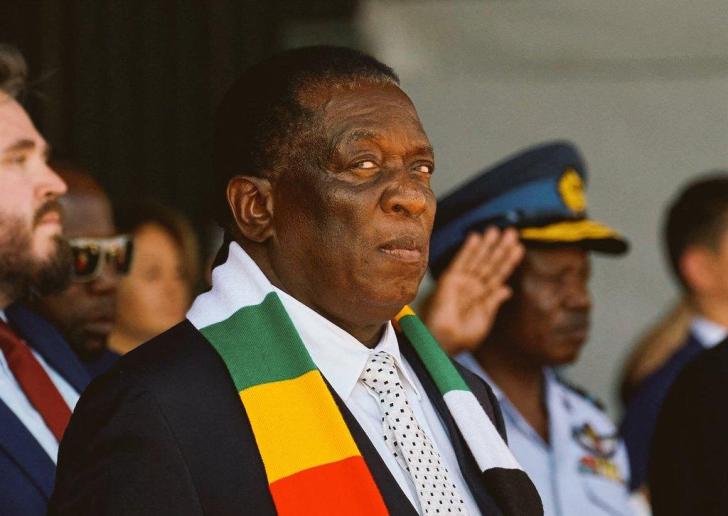
In a few days time on the 15th of September Zimbabwe is set to celebrate the Monomutapa Day a day which coincides with Emerson Mnangagwa's birthday.
It is a common cause that most black Africans born 80 years ago were not registered at birth, most would only get a birth certificate at the time they were about to attend school, or on the day they got christianed or had to get a pass to give them some form of identification and be employable. 80 years back or so no mother or father could read and write let alone remember the day and date the child was born. My late mother, MHSRIP, for example she told me she was born in 1944 a year before the end of the Second World War but her birth certificate said she was born in 1948. She only got registered when she had to attend school. Then it was the priest, the birth registration clerk or school head who would tell you or your parents the day and date you were born and put a stamp to it.
Having experienced such a travesty my mother made sure she kept all her records from the day she was admitted at Wedza clinic to the day and time she gave birth to me. She wanted me to be sure of who I was and how old I was. But what puzzles me the most is how I evaded the English chirstian naming beside having been baptised at Gumbonzwanda Methodist Church at the age of two. Mother also kept all those records, she was a excellent record keeper despite her humble educational background.
I have since primary school to this day struggled with my name and surname. I had both my first name and surname mispelt and mispronounced for as long as I can remember. In Grade one teachers would place name tags around our necks. They become the second necklaces most of us wore, the first being the ritualistic ones for protection against epidemics, pandemics and witchcraft. My name and surname however would be written as Ruedzo Mtizwa despite the fact that my mother had brought my birth certificate to school. I had no choice but accept it because I couldn't read or write. On my books I had the same misspellings and I lived with it. And only when I transferred to another school did the spelling of my first name or surname change to the correct one. It was only later on when I could read and write that I could have the guts to correct my teachers whenever they didn't spell, pronounce or write my name and surname correctly. Mind you all this flippancy was being carried out by educated teachers.
These were my primary school name challenges but when I enrolled for Secondary school at Ascot Secondary school in Gweru in 1980, I faced a different challenge which the consequences I still live with to this day. The first challenge was that my classmates thought that my names were too African and they couldn't even understand the meaning of my first name. African names are not just names, they have meaning, or describe an event that might have occurred at birth. Please if you speak my language tell me what my name means?
So one of my classmates James Mangurenje decided to play around with my first name and he came up with RUDZ and everyone in the my class started calling by that name. I liked it. Before that I had given myself the name Octavious but it didn't stick. People close to me call me Rudz. I even went on to register my Engineering Companies under that name. My name owes didn't end with the endorsement of Rudz.
In 1980 Zimbabwe became an independent state and the Prime Minister then Robert Mugabe a teacher by profession took it upon himself to educate the nation. It was to become a mammoth task given that there were no qualified teachers to meet the new demands and infrastructure that is schools accommodation and transport. Mugabe had to depend on expatriates and temporary teachers. I was to become one after my A'level and ended up Teaching Geography at Manunure High School in KweKwe. Kennedy Nagoli who was to become Zimbabwe soccer star was one of my pupils,. Five years later I bumped into one of my students who was excited to see me and she couldn't wait to announce the good news to me, that everyone I had introduced to Geography in form one had passed the subject at O'level. I had only taught them for two terms before I Joined Bata Shoe Company for my Electrical Technician Apprenticeship. I thanked her for sharing the good news. I cherish it to this day.
The expatriates teachers come with a new challenge for me. They couldn't pronounce any of my names and they were told not to worry about the names on the birth certificate but to call me Rudz. They pronounced Ruyedzo as Rayezo and Mutizwa as Matizwa and that's was after several failed attempts. Rudz will not go away and I bet there are people out there who are finding out for the first time today that my real first name is Ruyedzo.
The above was just an illustration to show that a name like Monomutapa or Mwenemutapa couldn't have been easy for the Arab and Portuguese slave traders to pronounce and break their jaws in the process and let alone spell it correctly.
The most interesting thing is that the Arabs and the Portuguese didn't establish settlements, they raided sparsely populated areas for slaves and picked native gold which had no value to the African.
Due to their small numbers the locals couldn't resist the armed slave traders. Slavery didn't occur because Africans were cowards who couldn't fight back but it was a product of people living in small family groups who were hunters and gatherers. They didn't need armies because there was nothing to fight for. Land was in abundance and gold had no value to the African. Above all they had the Commandments given to them by their Gods. The original Ten Commandments are housed at Svikiro re Hwiriti to this day.
How can one create a kingdom in the vast landscapes of Guruhuswa with a nomadic people. A kingdom is a complex institution which requires good administration and infrastructure. There are no records and infrastructure evidence to show for it.
The history that we read today was only written in the 19th century and to many an African its cast in stone. You don't dare challenge it. Most historians were discouraged from taking Mathematics as a subject. If they had a mathematical mind set they should have managed to estimate the population of Guruhuswa between 11-14th century a period said to be the peak of the Monomutapa empire. Given that in 1980 Zimbabwe's population was just 7 million. They should have realized that no kingdom could have survived or existed in the 11th century.
Our challenge is the monumental syndrome or the big man syndrome. We want to be identified with big things even if they are of no direct benefit to us.
Who funds our PhD programs and under whose supervision are they?
Guruhuswa society was matriarch and I suppose when these Arabs and Portuguese heard and saw how our ancestors respect their Mwenewazvos' they thought they were in the Kingdom of Mwenewazvo and ended up calling it Mwenemutapa empire. Or people saluting each other with "Mutape" and came up with Mutapa. In the same way today my white friends call me Rayezo Matizwa or just Rudz.
We cannot be seen celebrating a lie which was used to justify the enslavement of our ancestors. We cannot be seen to be entangled in the realms of historic fallacy just because that's is what is written in black ink and therefore it can't be erased. There was never a Monomutapa Kingdom. What does Monomutapa mean or Munhumutapa mean?
Ask yourself why did it take two centuries for the white settlers who had traveled over 10 000km from Europe to reach the the interior of Guruhuswa?
We should have the guts to challenge and denounce the imaginary history which inevitably stultified and demonized our minds. Our intangible heritage which is the software for Africa's restoration and economic development cannot be canceled under our watch.
Let Emerson Mnangagwa have his cake and eat it.
The Svikiro re Hwiriti Monument also known as Great Zimbabwe and its soapstone sculptures are from the ice age not the Monomutapa era nonsense. Read more in my book The Visitation.
It is a common cause that most black Africans born 80 years ago were not registered at birth, most would only get a birth certificate at the time they were about to attend school, or on the day they got christianed or had to get a pass to give them some form of identification and be employable. 80 years back or so no mother or father could read and write let alone remember the day and date the child was born. My late mother, MHSRIP, for example she told me she was born in 1944 a year before the end of the Second World War but her birth certificate said she was born in 1948. She only got registered when she had to attend school. Then it was the priest, the birth registration clerk or school head who would tell you or your parents the day and date you were born and put a stamp to it.
Having experienced such a travesty my mother made sure she kept all her records from the day she was admitted at Wedza clinic to the day and time she gave birth to me. She wanted me to be sure of who I was and how old I was. But what puzzles me the most is how I evaded the English chirstian naming beside having been baptised at Gumbonzwanda Methodist Church at the age of two. Mother also kept all those records, she was a excellent record keeper despite her humble educational background.
I have since primary school to this day struggled with my name and surname. I had both my first name and surname mispelt and mispronounced for as long as I can remember. In Grade one teachers would place name tags around our necks. They become the second necklaces most of us wore, the first being the ritualistic ones for protection against epidemics, pandemics and witchcraft. My name and surname however would be written as Ruedzo Mtizwa despite the fact that my mother had brought my birth certificate to school. I had no choice but accept it because I couldn't read or write. On my books I had the same misspellings and I lived with it. And only when I transferred to another school did the spelling of my first name or surname change to the correct one. It was only later on when I could read and write that I could have the guts to correct my teachers whenever they didn't spell, pronounce or write my name and surname correctly. Mind you all this flippancy was being carried out by educated teachers.
These were my primary school name challenges but when I enrolled for Secondary school at Ascot Secondary school in Gweru in 1980, I faced a different challenge which the consequences I still live with to this day. The first challenge was that my classmates thought that my names were too African and they couldn't even understand the meaning of my first name. African names are not just names, they have meaning, or describe an event that might have occurred at birth. Please if you speak my language tell me what my name means?
So one of my classmates James Mangurenje decided to play around with my first name and he came up with RUDZ and everyone in the my class started calling by that name. I liked it. Before that I had given myself the name Octavious but it didn't stick. People close to me call me Rudz. I even went on to register my Engineering Companies under that name. My name owes didn't end with the endorsement of Rudz.
In 1980 Zimbabwe became an independent state and the Prime Minister then Robert Mugabe a teacher by profession took it upon himself to educate the nation. It was to become a mammoth task given that there were no qualified teachers to meet the new demands and infrastructure that is schools accommodation and transport. Mugabe had to depend on expatriates and temporary teachers. I was to become one after my A'level and ended up Teaching Geography at Manunure High School in KweKwe. Kennedy Nagoli who was to become Zimbabwe soccer star was one of my pupils,. Five years later I bumped into one of my students who was excited to see me and she couldn't wait to announce the good news to me, that everyone I had introduced to Geography in form one had passed the subject at O'level. I had only taught them for two terms before I Joined Bata Shoe Company for my Electrical Technician Apprenticeship. I thanked her for sharing the good news. I cherish it to this day.
The expatriates teachers come with a new challenge for me. They couldn't pronounce any of my names and they were told not to worry about the names on the birth certificate but to call me Rudz. They pronounced Ruyedzo as Rayezo and Mutizwa as Matizwa and that's was after several failed attempts. Rudz will not go away and I bet there are people out there who are finding out for the first time today that my real first name is Ruyedzo.
The above was just an illustration to show that a name like Monomutapa or Mwenemutapa couldn't have been easy for the Arab and Portuguese slave traders to pronounce and break their jaws in the process and let alone spell it correctly.
The most interesting thing is that the Arabs and the Portuguese didn't establish settlements, they raided sparsely populated areas for slaves and picked native gold which had no value to the African.
Due to their small numbers the locals couldn't resist the armed slave traders. Slavery didn't occur because Africans were cowards who couldn't fight back but it was a product of people living in small family groups who were hunters and gatherers. They didn't need armies because there was nothing to fight for. Land was in abundance and gold had no value to the African. Above all they had the Commandments given to them by their Gods. The original Ten Commandments are housed at Svikiro re Hwiriti to this day.
How can one create a kingdom in the vast landscapes of Guruhuswa with a nomadic people. A kingdom is a complex institution which requires good administration and infrastructure. There are no records and infrastructure evidence to show for it.
The history that we read today was only written in the 19th century and to many an African its cast in stone. You don't dare challenge it. Most historians were discouraged from taking Mathematics as a subject. If they had a mathematical mind set they should have managed to estimate the population of Guruhuswa between 11-14th century a period said to be the peak of the Monomutapa empire. Given that in 1980 Zimbabwe's population was just 7 million. They should have realized that no kingdom could have survived or existed in the 11th century.
Our challenge is the monumental syndrome or the big man syndrome. We want to be identified with big things even if they are of no direct benefit to us.
Who funds our PhD programs and under whose supervision are they?
Guruhuswa society was matriarch and I suppose when these Arabs and Portuguese heard and saw how our ancestors respect their Mwenewazvos' they thought they were in the Kingdom of Mwenewazvo and ended up calling it Mwenemutapa empire. Or people saluting each other with "Mutape" and came up with Mutapa. In the same way today my white friends call me Rayezo Matizwa or just Rudz.
We cannot be seen celebrating a lie which was used to justify the enslavement of our ancestors. We cannot be seen to be entangled in the realms of historic fallacy just because that's is what is written in black ink and therefore it can't be erased. There was never a Monomutapa Kingdom. What does Monomutapa mean or Munhumutapa mean?
Ask yourself why did it take two centuries for the white settlers who had traveled over 10 000km from Europe to reach the the interior of Guruhuswa?
We should have the guts to challenge and denounce the imaginary history which inevitably stultified and demonized our minds. Our intangible heritage which is the software for Africa's restoration and economic development cannot be canceled under our watch.
Let Emerson Mnangagwa have his cake and eat it.
The Svikiro re Hwiriti Monument also known as Great Zimbabwe and its soapstone sculptures are from the ice age not the Monomutapa era nonsense. Read more in my book The Visitation.
Source - www.facebook.com
All articles and letters published on Bulawayo24 have been independently written by members of Bulawayo24's community. The views of users published on Bulawayo24 are therefore their own and do not necessarily represent the views of Bulawayo24. Bulawayo24 editors also reserve the right to edit or delete any and all comments received.
Join the discussion
Loading comments…


