News / National
Mabvuku Interchange construction to be complete by September
21 Apr 2026 at 19:43hrs |
0 Views
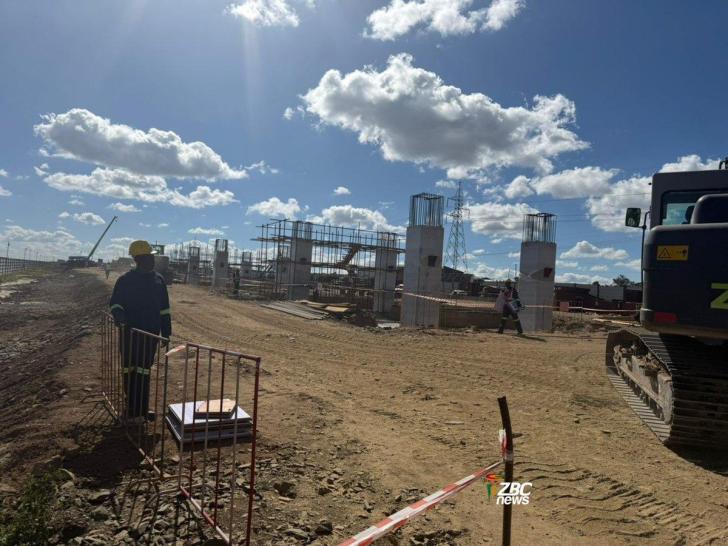
The construction of the Mabvuku Interchange is progressing steadily and remains on schedule for completion by September this year, as Government intensifies efforts to modernise Zimbabwe's road infrastructure and ease congestion along key transport corridors.
The project, located along the busy Harare–Mutare Highway, is designed to improve traffic flow, reduce congestion and enhance road safety on one of the country's most important regional routes.
In an interview, Deputy Director of Construction in the Ministry of Transport and Infrastructural Development, Engineer Virginia Mawere, said the interchange will separate traffic streams through an elevated overpass system, with controlled access underneath.
"The scope of work entails an overpass which is going to raise the Harare–Mutare Road, with traffic lights regulating vehicles coming in and out of Mabvuku underneath," she said. "What we want to achieve is improved safety, reduced travel times and enhanced trade along this regional corridor."
She said the Mabvuku project forms part of the broader Greater Harare Interchanges Programme aimed at addressing congestion hotspots across the capital.
Other ongoing works include the Delport Trumpet interchange, upgrades along a 19-kilometre stretch of Delport Road linking Airport Road and Seke Road, as well as additional interchange developments planned for Seke Road and Masasa.
"We are implementing the Greater Harare Interchanges Project to address capacity challenges at key nodes," said Engineer Mawere.
She added that integrating young engineers into major infrastructure developments was helping to build technical capacity within the sector.
"To be afforded the opportunity to participate in such a major national project is truly an honour," she said.
The Mabvuku Interchange is among several flagship road projects, including the Trabablas Interchange and the Harare–Kanyemba Highway, which Government says are central to modernising transport infrastructure and supporting long-term economic growth.
President Emmerson Mnangagwa recently expressed satisfaction with progress on the project, reaffirming Government's commitment to accelerating infrastructure development as part of Zimbabwe's economic transformation agenda towards Vision 2030.
The project, located along the busy Harare–Mutare Highway, is designed to improve traffic flow, reduce congestion and enhance road safety on one of the country's most important regional routes.
In an interview, Deputy Director of Construction in the Ministry of Transport and Infrastructural Development, Engineer Virginia Mawere, said the interchange will separate traffic streams through an elevated overpass system, with controlled access underneath.
"The scope of work entails an overpass which is going to raise the Harare–Mutare Road, with traffic lights regulating vehicles coming in and out of Mabvuku underneath," she said. "What we want to achieve is improved safety, reduced travel times and enhanced trade along this regional corridor."
She said the Mabvuku project forms part of the broader Greater Harare Interchanges Programme aimed at addressing congestion hotspots across the capital.
"We are implementing the Greater Harare Interchanges Project to address capacity challenges at key nodes," said Engineer Mawere.
She added that integrating young engineers into major infrastructure developments was helping to build technical capacity within the sector.
"To be afforded the opportunity to participate in such a major national project is truly an honour," she said.
The Mabvuku Interchange is among several flagship road projects, including the Trabablas Interchange and the Harare–Kanyemba Highway, which Government says are central to modernising transport infrastructure and supporting long-term economic growth.
President Emmerson Mnangagwa recently expressed satisfaction with progress on the project, reaffirming Government's commitment to accelerating infrastructure development as part of Zimbabwe's economic transformation agenda towards Vision 2030.
Source - The Herald
Join the discussion
Loading comments…



