News / National
Harare on brink of deadly cholera outbreak
02 May 2026 at 20:05hrs |
0 Views
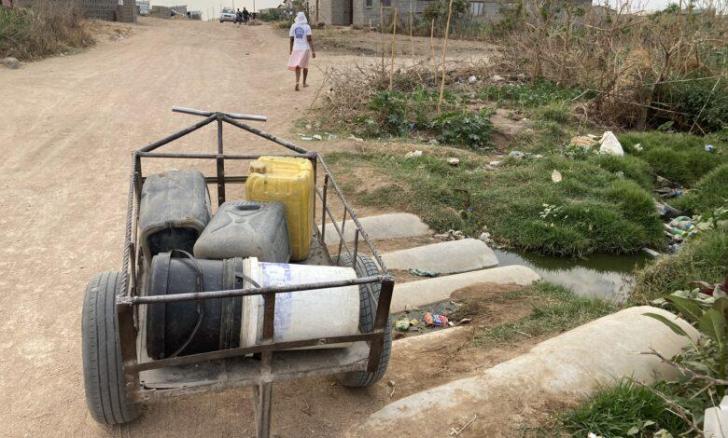
Harare is facing an escalating public health emergency with Mayor Jacob Mafume warning that the capital could soon experience a cholera outbreak if urgent repairs to its failing sewer infrastructure are not accelerated.
Speaking in an interview with the Zimbabwe Independent, Mafume said the city's sanitation system is deteriorating at a dangerous pace, with raw sewage increasingly spilling into residential areas and contaminating the urban environment.
"What we need to do is just to begin working. We don't have time. People are suffering," Mafume said. "With sewage, very soon we will have cholera and so forth."
The warning comes amid growing concern over the state of Harare's ageing water and sanitation infrastructure, which engineers say is operating beyond capacity due to decades of underinvestment and rapid population growth.
The capital's sewer network, much of which dates back several decades, has suffered frequent pipe bursts and system failures, leading to widespread contamination risks in densely populated suburbs.
Zimbabwe has previously endured catastrophic cholera outbreaks, most notably between 2008 and 2009, when thousands of lives were lost during one of the country's worst public health crises.
Health experts warn that current conditions - including unreliable water supply, poor sanitation and overflowing sewage systems - mirror some of the risk factors that triggered past outbreaks.
The city is seeking to rehabilitate its sewer system through a public-private partnership (PPP), a financing model seen as essential given the scale of required investment.
However, Mafume accused the Zimbabwe Investment and Development Agency (ZIDA) of delaying approval processes, stalling urgent infrastructure upgrades.
"You need another PPP for sewer. The challenge we are having is that ZIDA is delaying the processes," he said.
ZIDA, established as a one-stop investment facilitation body, has faced increasing criticism from local authorities and investors over bureaucratic delays and slow approval timelines.
The agency did not respond to questions on the matter.
Public health specialists warn that continued delays could significantly increase the risk of waterborne disease outbreaks, particularly in high-density suburbs where sanitation systems are already overwhelmed.
At the same time, the economic implications are widening. Poor sanitation infrastructure increases operating costs for businesses, disrupts productivity, and undermines investor confidence in the capital.
As council systems deteriorate, residents in suburbs such as Kuwadzana, Glen View, Budiriro and Highfield are increasingly turning to self-organised borehole syndicates to secure water access.
These informal "borehole clubs" see groups of households pooling resources to drill and maintain shared water sources, highlighting the deepening collapse of municipal service delivery.
Mafume said the city cannot afford prolonged administrative delays, stressing that infrastructure renewal must begin immediately to prevent a repeat of past health disasters.
"At some point, as a country, we need to decide that work has to be done," he said.
With sewage leaks worsening and water systems under strain, Harare's warning signals are becoming increasingly difficult to ignore - raising fears that without swift intervention, the city could once again face a major public health emergency.
Speaking in an interview with the Zimbabwe Independent, Mafume said the city's sanitation system is deteriorating at a dangerous pace, with raw sewage increasingly spilling into residential areas and contaminating the urban environment.
"What we need to do is just to begin working. We don't have time. People are suffering," Mafume said. "With sewage, very soon we will have cholera and so forth."
The warning comes amid growing concern over the state of Harare's ageing water and sanitation infrastructure, which engineers say is operating beyond capacity due to decades of underinvestment and rapid population growth.
The capital's sewer network, much of which dates back several decades, has suffered frequent pipe bursts and system failures, leading to widespread contamination risks in densely populated suburbs.
Zimbabwe has previously endured catastrophic cholera outbreaks, most notably between 2008 and 2009, when thousands of lives were lost during one of the country's worst public health crises.
Health experts warn that current conditions - including unreliable water supply, poor sanitation and overflowing sewage systems - mirror some of the risk factors that triggered past outbreaks.
The city is seeking to rehabilitate its sewer system through a public-private partnership (PPP), a financing model seen as essential given the scale of required investment.
However, Mafume accused the Zimbabwe Investment and Development Agency (ZIDA) of delaying approval processes, stalling urgent infrastructure upgrades.
"You need another PPP for sewer. The challenge we are having is that ZIDA is delaying the processes," he said.
ZIDA, established as a one-stop investment facilitation body, has faced increasing criticism from local authorities and investors over bureaucratic delays and slow approval timelines.
The agency did not respond to questions on the matter.
Public health specialists warn that continued delays could significantly increase the risk of waterborne disease outbreaks, particularly in high-density suburbs where sanitation systems are already overwhelmed.
At the same time, the economic implications are widening. Poor sanitation infrastructure increases operating costs for businesses, disrupts productivity, and undermines investor confidence in the capital.
As council systems deteriorate, residents in suburbs such as Kuwadzana, Glen View, Budiriro and Highfield are increasingly turning to self-organised borehole syndicates to secure water access.
These informal "borehole clubs" see groups of households pooling resources to drill and maintain shared water sources, highlighting the deepening collapse of municipal service delivery.
Mafume said the city cannot afford prolonged administrative delays, stressing that infrastructure renewal must begin immediately to prevent a repeat of past health disasters.
"At some point, as a country, we need to decide that work has to be done," he said.
With sewage leaks worsening and water systems under strain, Harare's warning signals are becoming increasingly difficult to ignore - raising fears that without swift intervention, the city could once again face a major public health emergency.
Source - The Independent
Join the discussion
Loading comments…



