News / National
PV Sibanda Politburo appointment sends shockwaves
12 May 2026 at 20:09hrs |
0 Views
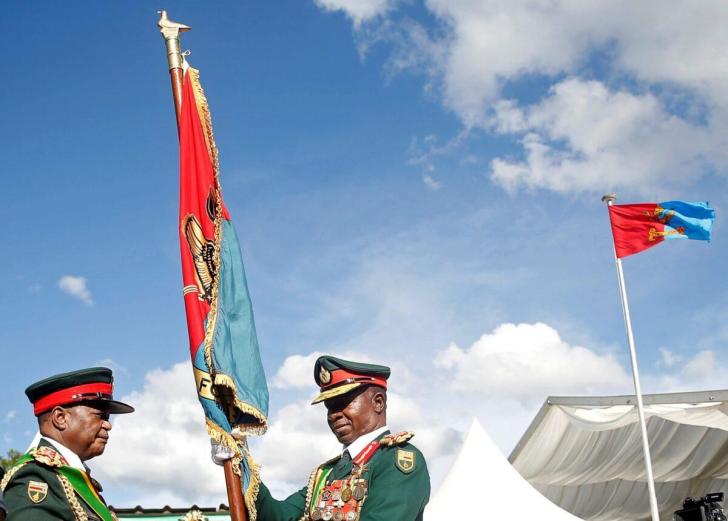
President Emmerson Mnangagwa's appointment of retired General Philip Valerio Sibanda to the ZANU PF Politburo has sparked renewed debate over succession politics and the role of former military commanders within Zimbabwe's ruling party.
Sibanda, a former ZIPRA liberation war veteran, is regarded as one of Zimbabwe's most influential military figures after spending more than two decades at the top of the country's security establishment.
He served as Commander of the Zimbabwe National Army from 2003 to 2017 before becoming commander of the Zimbabwe Defence Forces between 2017 and 2025.
His appointment to the Politburo reflects a long-standing ZANU PF tradition of integrating retired military commanders into senior party and state structures.
Prominent former commanders including Solomon Mujuru, Vitalis Zvinavashe, Perrance Shiri, Josiah Tungamirai and Vice President Constantino Chiwenga all transitioned into political office after military service.
Analysts say the Politburo also functions as part of a broader retirement structure for liberation war and security elites, offering continued influence, protection and access to state-linked patronage networks after retirement from active service.
Politburo members reportedly enjoy ministerial-level benefits, including salaries, vehicle fleets and fuel allocations funded through party and state systems.
However, Sibanda's appointment carries added significance because it comes amid unresolved succession debates linked to the so-called "2030 agenda" associated with extending Mnangagwa's political influence.
Political observers argue that Mnangagwa's long-term challenge has been managing liberation war and military legitimacy within ZANU PF, particularly in relation to Chiwenga, who has long been viewed as a possible successor.
Like Sibanda, Chiwenga built his influence primarily through the military rather than civilian party structures, serving as commander of the Zimbabwe National Army from 1994 to 2003 and later leading the Zimbabwe Defence Forces until the 2017 military intervention that ushered Mnangagwa into power.
Sibanda's elevation to the Politburo is therefore being interpreted by some analysts as a strategic balancing move within the ruling party's internal power dynamics, potentially broadening the distribution of liberation-security influence beyond a single faction.
Sibanda, a former ZIPRA liberation war veteran, is regarded as one of Zimbabwe's most influential military figures after spending more than two decades at the top of the country's security establishment.
He served as Commander of the Zimbabwe National Army from 2003 to 2017 before becoming commander of the Zimbabwe Defence Forces between 2017 and 2025.
His appointment to the Politburo reflects a long-standing ZANU PF tradition of integrating retired military commanders into senior party and state structures.
Prominent former commanders including Solomon Mujuru, Vitalis Zvinavashe, Perrance Shiri, Josiah Tungamirai and Vice President Constantino Chiwenga all transitioned into political office after military service.
Politburo members reportedly enjoy ministerial-level benefits, including salaries, vehicle fleets and fuel allocations funded through party and state systems.
However, Sibanda's appointment carries added significance because it comes amid unresolved succession debates linked to the so-called "2030 agenda" associated with extending Mnangagwa's political influence.
Political observers argue that Mnangagwa's long-term challenge has been managing liberation war and military legitimacy within ZANU PF, particularly in relation to Chiwenga, who has long been viewed as a possible successor.
Like Sibanda, Chiwenga built his influence primarily through the military rather than civilian party structures, serving as commander of the Zimbabwe National Army from 1994 to 2003 and later leading the Zimbabwe Defence Forces until the 2017 military intervention that ushered Mnangagwa into power.
Sibanda's elevation to the Politburo is therefore being interpreted by some analysts as a strategic balancing move within the ruling party's internal power dynamics, potentially broadening the distribution of liberation-security influence beyond a single faction.
Source - online
Join the discussion
Loading comments…





