News / National
CAB3 heads back to National Assembly after Senate amendments
25 Jun 2026 at 18:49hrs |
0 Views
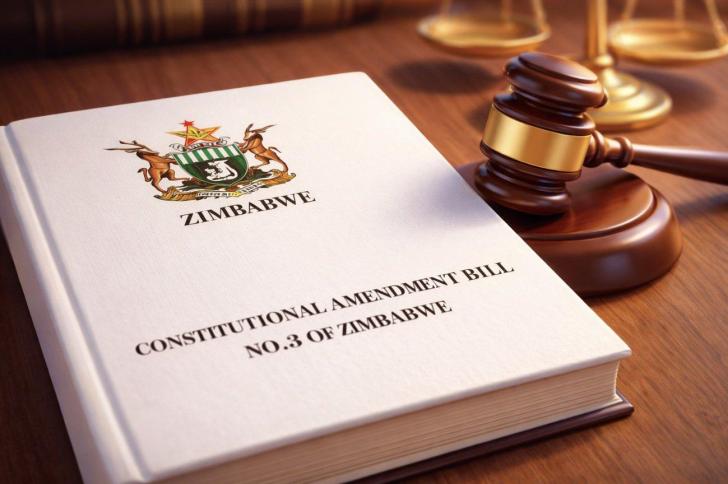
The National Assembly is set to reconvene to consider amendments made by the Senate to the Constitution Amendment No. 3 (CAB3) Bill after the controversial legislation was passed by the Upper House on Wednesday with several proposed changes.
The Senate approved the Bill with the required two-thirds majority after 75 senators voted in favour, paving the way for it to return to the National Assembly for concurrence on amendments before it can be presented to President Emmerson Mnangagwa for assent.
The Senate is understood to have proposed at least six amendments to the Bill during its deliberations.
Speaking after the vote, Justice, Legal and Parliamentary Affairs Minister Ziyambi Ziyambi said the Senate had fulfilled its constitutional role by scrutinising and refining the legislation rather than merely endorsing it.
"This House was not just a rubber-stamping House. They picked issues from the National Assembly and we corrected them. We had omitted the procedure for the first sitting of Parliament after an election and other consequential changes that the Senate felt needed attention," Ziyambi said.
He outlined the next stage of the legislative process, explaining that the National Assembly must now consider the amendments proposed by the Senate.
"We are going to take the amendments by the Senate to the National Assembly to deliberate on the amendments proposed by the Senate. After consideration, the Bill will be transmitted to His Excellency the President for assent," he said.
The Senate's approval comes just over a week after the Bill secured passage in the National Assembly, where it received the support of 216 legislators, comfortably surpassing the two-thirds majority required for constitutional amendments.
Under Zimbabwe's legislative process, where the Senate amends a Bill originating from the National Assembly, the proposed changes must be considered by the Lower House before the legislation can be transmitted to the President for signature.
If the National Assembly agrees to the Senate's amendments, CAB3 will be sent to President Mnangagwa for assent, after which it will become law upon publication in the Government Gazette.
The Bill has generated significant public debate, with supporters arguing that it will improve governance and administrative efficiency, while critics contend that some of its provisions undermine constitutionalism and democratic accountability.
The Senate approved the Bill with the required two-thirds majority after 75 senators voted in favour, paving the way for it to return to the National Assembly for concurrence on amendments before it can be presented to President Emmerson Mnangagwa for assent.
The Senate is understood to have proposed at least six amendments to the Bill during its deliberations.
Speaking after the vote, Justice, Legal and Parliamentary Affairs Minister Ziyambi Ziyambi said the Senate had fulfilled its constitutional role by scrutinising and refining the legislation rather than merely endorsing it.
"This House was not just a rubber-stamping House. They picked issues from the National Assembly and we corrected them. We had omitted the procedure for the first sitting of Parliament after an election and other consequential changes that the Senate felt needed attention," Ziyambi said.
"We are going to take the amendments by the Senate to the National Assembly to deliberate on the amendments proposed by the Senate. After consideration, the Bill will be transmitted to His Excellency the President for assent," he said.
The Senate's approval comes just over a week after the Bill secured passage in the National Assembly, where it received the support of 216 legislators, comfortably surpassing the two-thirds majority required for constitutional amendments.
Under Zimbabwe's legislative process, where the Senate amends a Bill originating from the National Assembly, the proposed changes must be considered by the Lower House before the legislation can be transmitted to the President for signature.
If the National Assembly agrees to the Senate's amendments, CAB3 will be sent to President Mnangagwa for assent, after which it will become law upon publication in the Government Gazette.
The Bill has generated significant public debate, with supporters arguing that it will improve governance and administrative efficiency, while critics contend that some of its provisions undermine constitutionalism and democratic accountability.
Source - ZBC
Join the discussion
Loading comments…


