News / National
'Mnangagwa was constitutionally obliged to recuse himself from signing CAB3'
25 Jul 2026 at 17:56hrs |
0 Views
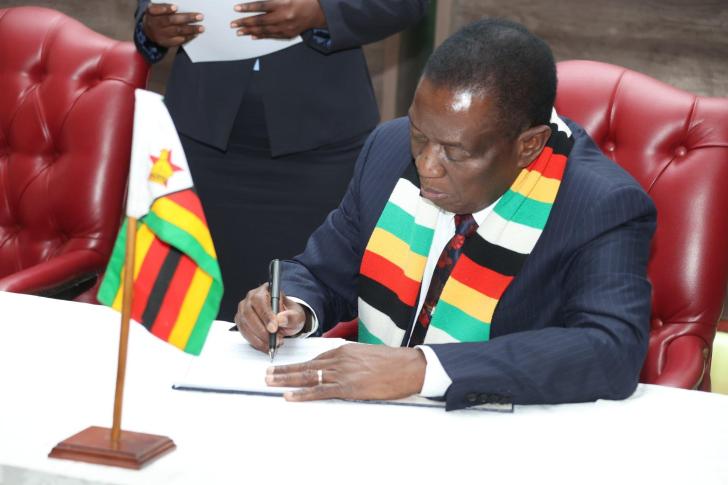
A fresh Constitutional Court application is challenging the validity of Constitutional Amendment Act No. 3, arguing that President Emmerson Mnangagwa should not have assented to the legislation because he stood to benefit directly from its provisions.
The application, filed by National Constitutional Assembly (NCA) member Vhurande Mahlupeko and represented by constitutional lawyer Lovemore Madhuku, cites Parliament, President Mnangagwa, Attorney-General Virginia Mabhiza and Justice, Legal and Parliamentary Affairs Minister Ziyambi Ziyambi as respondents.
Mahlupeko contends that the President was constitutionally obliged to recuse himself from signing the Bill because it creates a conflict between his official duties and personal interests.
Constitutional Amendment Act No. 3, signed into law earlier this month, extends the terms of office of the President, Parliament and local authorities from five to seven years, among other constitutional changes.
In his founding affidavit, Mahlupeko argues that the President breached constitutional principles by assenting to legislation from which he stood to derive a direct personal benefit.
"With the President, there is one fundamental constitutional obligation that he failed to fulfil. This is the constitutional obligation not to assent to and sign Bills where he is conflicted owing to a direct personal interest in respect of the Bill in question," the application states.
The application relies on Sections 196(2) and 110(2)(a) of the Constitution, arguing that these provisions require the President, like all public officers, to avoid conflicts between personal interests and official responsibilities.
According to Mahlupeko, because the amendment extends the President's own tenure in office, Mnangagwa should have delegated the responsibility of signing the Bill to an Acting President.
"Where a prohibited conflict arises, assenting to and signing a particular Bill must be left to an Acting President," the application argues.
The court papers contend that either Vice-President Constantino Chiwenga or Vice-President Kembo Mohadi should have signed the legislation while acting as President to avoid any perception of bias or personal interest.
Mahlupeko maintains that the President's decision to assent to the Bill renders the constitutional amendment invalid and forms part of wider arguments seeking to have Constitutional Amendment Act No. 3 declared null and void.
The application is one of several matters currently before the Constitutional Court challenging the legality of Amendment No. 3, which has generated significant political and legal debate over provisions that extend the terms of elected office bearers and introduce other constitutional changes.
The Constitutional Court is yet to determine the merits of the application.
The application, filed by National Constitutional Assembly (NCA) member Vhurande Mahlupeko and represented by constitutional lawyer Lovemore Madhuku, cites Parliament, President Mnangagwa, Attorney-General Virginia Mabhiza and Justice, Legal and Parliamentary Affairs Minister Ziyambi Ziyambi as respondents.
Mahlupeko contends that the President was constitutionally obliged to recuse himself from signing the Bill because it creates a conflict between his official duties and personal interests.
Constitutional Amendment Act No. 3, signed into law earlier this month, extends the terms of office of the President, Parliament and local authorities from five to seven years, among other constitutional changes.
In his founding affidavit, Mahlupeko argues that the President breached constitutional principles by assenting to legislation from which he stood to derive a direct personal benefit.
"With the President, there is one fundamental constitutional obligation that he failed to fulfil. This is the constitutional obligation not to assent to and sign Bills where he is conflicted owing to a direct personal interest in respect of the Bill in question," the application states.
The application relies on Sections 196(2) and 110(2)(a) of the Constitution, arguing that these provisions require the President, like all public officers, to avoid conflicts between personal interests and official responsibilities.
According to Mahlupeko, because the amendment extends the President's own tenure in office, Mnangagwa should have delegated the responsibility of signing the Bill to an Acting President.
"Where a prohibited conflict arises, assenting to and signing a particular Bill must be left to an Acting President," the application argues.
The court papers contend that either Vice-President Constantino Chiwenga or Vice-President Kembo Mohadi should have signed the legislation while acting as President to avoid any perception of bias or personal interest.
Mahlupeko maintains that the President's decision to assent to the Bill renders the constitutional amendment invalid and forms part of wider arguments seeking to have Constitutional Amendment Act No. 3 declared null and void.
The application is one of several matters currently before the Constitutional Court challenging the legality of Amendment No. 3, which has generated significant political and legal debate over provisions that extend the terms of elected office bearers and introduce other constitutional changes.
The Constitutional Court is yet to determine the merits of the application.
Source - newsday
Join the discussion
Loading comments…





