News / National
Stupid Ziyambi denies Gukurahundi was a genocide
26 Jun 2026 at 11:48hrs |
0 Views
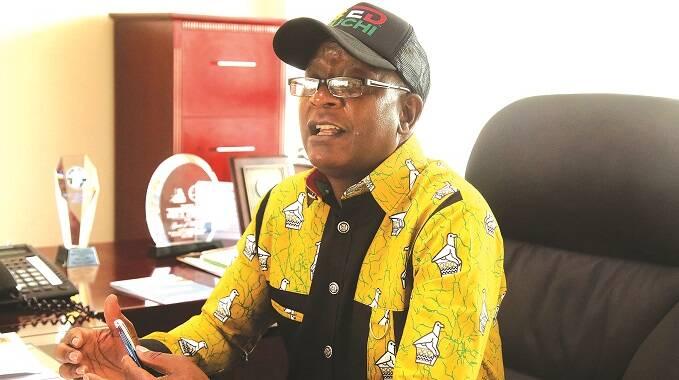
Justice, Legal and Parliamentary Affairs Minister Ziyambi Ziyambi has triggered widespread criticism after rejecting characterisations of Gukurahundi as genocide, describing the atrocities instead as a "conflict" and insisting there was "never a deliberate Government policy" to eliminate a particular ethnic group.
The remarks were made in the Senate on Wednesday during debate on the Constitution of Zimbabwe Amendment Bill No. 3 (CAB3), after Senator Sengezo Tshabangu urged Parliament to legislate for continued national healing beyond the lifespan of the National Peace and Reconciliation Commission (NPRC).
Tshabangu, who supported the constitutional amendment, called for legislation within the next 12 months to address atrocities committed between 1983 and 1987.
"There was a genocide in 1983 to 1987. We are still lagging behind and we want to be like Rwanda. As long as this is not done, we are foreigners in our own land," Tshabangu told the Senate.
Responding to the contribution, Ziyambi disputed the description of the events as genocide.
"I do not believe there was genocide in Zimbabwe. In fact, there was no genocide," the minister said.
"There was a conflict, but there was never a deliberate Government policy at any one time to eliminate one tribe against the other."
Ziyambi argued that Zimbabwe remained a multi-ethnic society in which people from different communities lived together and participated in political life without discrimination.
"I come from an area where all tribes live; not a single tribe has been eliminated," he said.
The minister cited the example of a provincial party chairperson of Ndebele origin who, he said, consistently won elections in Zvimba.
"I believe we must not rewrite history or stoke emotions; let us unite our people," he said.
The exchange took place shortly before the Senate overwhelmingly passed CAB3 by 75 votes to four, with one senator abstaining.
Ziyambi's comments drew swift criticism from survivors, victims' families, political figures and social media users, many of whom accused him of minimising atrocities committed during the Gukurahundi campaign.
Critics argued that describing the events as a "conflict" ignored the fact that many of those killed were unarmed civilians.
They questioned who the alleged conflict was between, maintaining that the victims had little or no capacity to defend themselves.
The remarks also reignited debate over the government's long-standing position on Gukurahundi.
Successive Zanu-PF administrations have generally avoided describing the events as genocide, instead referring to them as "historical disturbances" or "a moment of madness."
However, a number of scholars, human rights organisations and some international legal experts have argued that the campaign carried out by the North Korean-trained Fifth Brigade between 1982 and 1987 meets the legal threshold for genocide.
The military operation, launched to eliminate armed dissidents, resulted in widespread reports of killings, torture, enforced disappearances, sexual violence and other serious human rights abuses, predominantly affecting Ndebele-speaking communities in Matabeleland and parts of the Midlands.
The controversy also comes as President Emmerson Mnangagwa's administration continues to implement a community-led Gukurahundi outreach programme spearheaded by traditional leaders.
Defending the initiative, Ziyambi said the President remained committed to resolving the matter.
"The President is a champion of making sure that the Gukurahundi issues are concluded conclusively," he said.
"He wants the chiefs to take charge and tell us how those issues are supposed to be resolved. Every chief has their own traditions and customs and whatever they believe will appease the spirits and ensure we become united, the chiefs must take the lead."
He added that government had agreed on the need for legal provisions dealing with post-conflict resolution and national healing.
However, analysts and political figures argued that meaningful reconciliation would remain difficult while senior government officials continued to dispute the characterisation of the atrocities.
ZAPU secretary-general Mthulisi Hanana accused Ziyambi of repeating the ruling party's long-held position.
"The comments by Ziyambi Ziyambi that Gukurahundi was a conflict is madness, but it is consistent," Hanana said.
"It is a form of madness that is consistent with Zanu-PF, because they have always refused to acknowledge Gukurahundi as a genocide or to acknowledge that Gukurahundi happened and apologise for it."
Hanana said the minister's remarks insulted victims, survivors and bereaved families.
"The comments by Ziyambi Ziyambi are an insult to the people of Matabeleland, an insult to the grieving families, an insult to ZAPU, in whose name people died, and it must not be tolerated," he said.
He also challenged the minister to produce evidence supporting his assertion that Gukurahundi was merely a conflict.
"We are expecting him as minister to release the Dumbutshena and Chihambakwe Commission findings. Then maybe we will understand him from there," Hanana said.
"But in the absence of those or any other commission findings, the guy is just waffling."
The debate over Gukurahundi remains one of Zimbabwe's most contentious historical and political issues, with calls for truth-telling, accountability and reparations continuing more than three decades after the violence ended.
The remarks were made in the Senate on Wednesday during debate on the Constitution of Zimbabwe Amendment Bill No. 3 (CAB3), after Senator Sengezo Tshabangu urged Parliament to legislate for continued national healing beyond the lifespan of the National Peace and Reconciliation Commission (NPRC).
Tshabangu, who supported the constitutional amendment, called for legislation within the next 12 months to address atrocities committed between 1983 and 1987.
"There was a genocide in 1983 to 1987. We are still lagging behind and we want to be like Rwanda. As long as this is not done, we are foreigners in our own land," Tshabangu told the Senate.
Responding to the contribution, Ziyambi disputed the description of the events as genocide.
"I do not believe there was genocide in Zimbabwe. In fact, there was no genocide," the minister said.
"There was a conflict, but there was never a deliberate Government policy at any one time to eliminate one tribe against the other."
Ziyambi argued that Zimbabwe remained a multi-ethnic society in which people from different communities lived together and participated in political life without discrimination.
"I come from an area where all tribes live; not a single tribe has been eliminated," he said.
The minister cited the example of a provincial party chairperson of Ndebele origin who, he said, consistently won elections in Zvimba.
"I believe we must not rewrite history or stoke emotions; let us unite our people," he said.
The exchange took place shortly before the Senate overwhelmingly passed CAB3 by 75 votes to four, with one senator abstaining.
Ziyambi's comments drew swift criticism from survivors, victims' families, political figures and social media users, many of whom accused him of minimising atrocities committed during the Gukurahundi campaign.
Critics argued that describing the events as a "conflict" ignored the fact that many of those killed were unarmed civilians.
They questioned who the alleged conflict was between, maintaining that the victims had little or no capacity to defend themselves.
The remarks also reignited debate over the government's long-standing position on Gukurahundi.
Successive Zanu-PF administrations have generally avoided describing the events as genocide, instead referring to them as "historical disturbances" or "a moment of madness."
However, a number of scholars, human rights organisations and some international legal experts have argued that the campaign carried out by the North Korean-trained Fifth Brigade between 1982 and 1987 meets the legal threshold for genocide.
The military operation, launched to eliminate armed dissidents, resulted in widespread reports of killings, torture, enforced disappearances, sexual violence and other serious human rights abuses, predominantly affecting Ndebele-speaking communities in Matabeleland and parts of the Midlands.
The controversy also comes as President Emmerson Mnangagwa's administration continues to implement a community-led Gukurahundi outreach programme spearheaded by traditional leaders.
Defending the initiative, Ziyambi said the President remained committed to resolving the matter.
"The President is a champion of making sure that the Gukurahundi issues are concluded conclusively," he said.
"He wants the chiefs to take charge and tell us how those issues are supposed to be resolved. Every chief has their own traditions and customs and whatever they believe will appease the spirits and ensure we become united, the chiefs must take the lead."
He added that government had agreed on the need for legal provisions dealing with post-conflict resolution and national healing.
However, analysts and political figures argued that meaningful reconciliation would remain difficult while senior government officials continued to dispute the characterisation of the atrocities.
ZAPU secretary-general Mthulisi Hanana accused Ziyambi of repeating the ruling party's long-held position.
"The comments by Ziyambi Ziyambi that Gukurahundi was a conflict is madness, but it is consistent," Hanana said.
"It is a form of madness that is consistent with Zanu-PF, because they have always refused to acknowledge Gukurahundi as a genocide or to acknowledge that Gukurahundi happened and apologise for it."
Hanana said the minister's remarks insulted victims, survivors and bereaved families.
"The comments by Ziyambi Ziyambi are an insult to the people of Matabeleland, an insult to the grieving families, an insult to ZAPU, in whose name people died, and it must not be tolerated," he said.
He also challenged the minister to produce evidence supporting his assertion that Gukurahundi was merely a conflict.
"We are expecting him as minister to release the Dumbutshena and Chihambakwe Commission findings. Then maybe we will understand him from there," Hanana said.
"But in the absence of those or any other commission findings, the guy is just waffling."
The debate over Gukurahundi remains one of Zimbabwe's most contentious historical and political issues, with calls for truth-telling, accountability and reparations continuing more than three decades after the violence ended.
Source - Cite
Join the discussion
Loading comments…





