News / National
Bulawayo's industries revolt
05 Jul 2026 at 12:38hrs |
0 Views
Zimbabwean companies operating in Bulawayo have criticised the city's municipal charges, accusing the local authority of imposing some of the country's highest commercial rates at a time when industries are struggling to survive.
The complaints are contained in an 80-page report by the Bulawayo Chapter of the Zimbabwe National Chamber of Commerce, which argues that escalating municipal costs are undermining competitiveness, discouraging investment and accelerating the city's industrial decline.
Business leaders say the concerns add to longstanding frustrations in a city that has for decades awaited the completion of the long-delayed Zambezi Water Project, while numerous companies have either shut down or relocated to Harare, contributing to rising unemployment and the deterioration of Bulawayo's once-thriving industrial base.
"A serious concern has been raised regarding rates and taxes levied on commercial properties in certain parts of Bulawayo being higher than those charged in top-end residential and commercial neighbourhoods in Harare, including Borrowdale," the chamber said.
The report argues that the city's rates regime is inconsistent with the government's ease-of-doing-business reforms.
"This anomaly points to a systemic failure in how the council calculates and applies its rates formulae," the ZNCC said.
It further alleged that businesses have identified what appears to be systematic miscalculation of rates, with council's standard formula not being applied correctly or consistently.
"The result is that some commercial properties in Bulawayo, a city facing significant economic challenges, are being charged more than equivalent or superior properties in Borrowdale, Harare, one of Zimbabwe's most affluent neighbourhoods. This is not only inequitable but is actively destroying the commercial viability of affected businesses," the report states.
The chamber noted that the local authority derives its powers to levy rates from the Urban Councils Act and should exercise those powers within the framework of Statutory Instrument 41 of 2026 and the Finance Act of 2026, both of which support the government's drive to improve the business environment.
Businesses also criticised the structure of council invoices, arguing that bundled charges make it difficult for ratepayers to determine exactly what they are paying for or to verify whether calculations are accurate.
"Council bills include bundled charges that obscure the true breakdown of what businesses are being charged for. This lack of transparency makes it impossible for ratepayers to verify whether they are being charged correctly, to identify erroneous items, or to dispute specific charges. The bundling of costs is an opaque practice that undermines accountability," the report said.
The ZNCC examined a recent City of Bulawayo invoice for a low-density residential property, finding that although the household consumed water worth just US$17.70, the total monthly bill increased to US$93.13 after property rates, sewerage charges, refuse collection fees, levies and VAT were added.
According to the report, only about 19% of the bill related to actual water consumption, while the remaining 81% consisted of fixed charges and other municipal levies.
"The point is not that the additional charges are illegitimate," the chamber said.
"The point is that the water tariff alone tells a household very little about what it actually pays, and that a meaningful affordability and competitiveness discussion has to look at the whole bill, not one line of it."
To improve transparency and restore confidence, the ZNCC recommended that the city commission an independent audit of its rates calculation formula in consultation with business organisations and residents' associations.
It also proposed that the council publish annual benchmarking tables comparing Bulawayo's municipal rates with those charged in Harare, including Borrowdale, as well as at least one regional city.
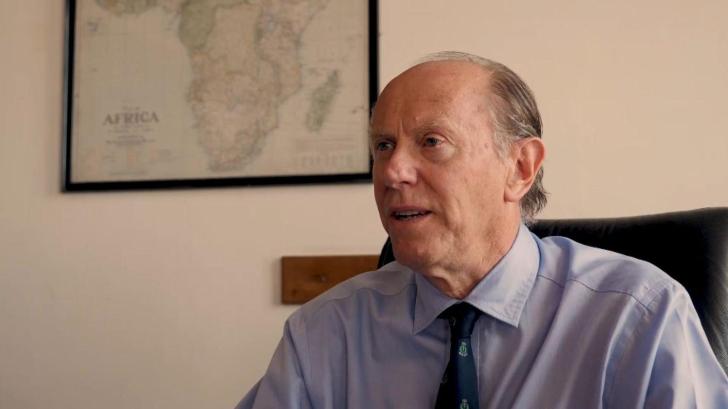
Responding to the report, Bulawayo Mayor David Coltart said it would be premature to comment before council had fully considered its contents.
"We have received that report and we had a meeting with them. It is a constructive document. We are going to study it. We have agreed that we will meet early August. Just bear in mind that this is a long report, which touches on many issues. I don't want to just comment on isolated things like what you said," Coltart said.
The complaints are contained in an 80-page report by the Bulawayo Chapter of the Zimbabwe National Chamber of Commerce, which argues that escalating municipal costs are undermining competitiveness, discouraging investment and accelerating the city's industrial decline.
Business leaders say the concerns add to longstanding frustrations in a city that has for decades awaited the completion of the long-delayed Zambezi Water Project, while numerous companies have either shut down or relocated to Harare, contributing to rising unemployment and the deterioration of Bulawayo's once-thriving industrial base.
"A serious concern has been raised regarding rates and taxes levied on commercial properties in certain parts of Bulawayo being higher than those charged in top-end residential and commercial neighbourhoods in Harare, including Borrowdale," the chamber said.
The report argues that the city's rates regime is inconsistent with the government's ease-of-doing-business reforms.
"This anomaly points to a systemic failure in how the council calculates and applies its rates formulae," the ZNCC said.
It further alleged that businesses have identified what appears to be systematic miscalculation of rates, with council's standard formula not being applied correctly or consistently.
"The result is that some commercial properties in Bulawayo, a city facing significant economic challenges, are being charged more than equivalent or superior properties in Borrowdale, Harare, one of Zimbabwe's most affluent neighbourhoods. This is not only inequitable but is actively destroying the commercial viability of affected businesses," the report states.
The chamber noted that the local authority derives its powers to levy rates from the Urban Councils Act and should exercise those powers within the framework of Statutory Instrument 41 of 2026 and the Finance Act of 2026, both of which support the government's drive to improve the business environment.
"Council bills include bundled charges that obscure the true breakdown of what businesses are being charged for. This lack of transparency makes it impossible for ratepayers to verify whether they are being charged correctly, to identify erroneous items, or to dispute specific charges. The bundling of costs is an opaque practice that undermines accountability," the report said.
The ZNCC examined a recent City of Bulawayo invoice for a low-density residential property, finding that although the household consumed water worth just US$17.70, the total monthly bill increased to US$93.13 after property rates, sewerage charges, refuse collection fees, levies and VAT were added.
According to the report, only about 19% of the bill related to actual water consumption, while the remaining 81% consisted of fixed charges and other municipal levies.
"The point is not that the additional charges are illegitimate," the chamber said.
"The point is that the water tariff alone tells a household very little about what it actually pays, and that a meaningful affordability and competitiveness discussion has to look at the whole bill, not one line of it."
To improve transparency and restore confidence, the ZNCC recommended that the city commission an independent audit of its rates calculation formula in consultation with business organisations and residents' associations.
It also proposed that the council publish annual benchmarking tables comparing Bulawayo's municipal rates with those charged in Harare, including Borrowdale, as well as at least one regional city.
Responding to the report, Bulawayo Mayor David Coltart said it would be premature to comment before council had fully considered its contents.
"We have received that report and we had a meeting with them. It is a constructive document. We are going to study it. We have agreed that we will meet early August. Just bear in mind that this is a long report, which touches on many issues. I don't want to just comment on isolated things like what you said," Coltart said.
Source - The Independent
Join the discussion
Loading comments…



