News / National
Zimbabwe's thirst outpaces brewery capacity
15 Jul 2026 at 14:57hrs |
0 Views
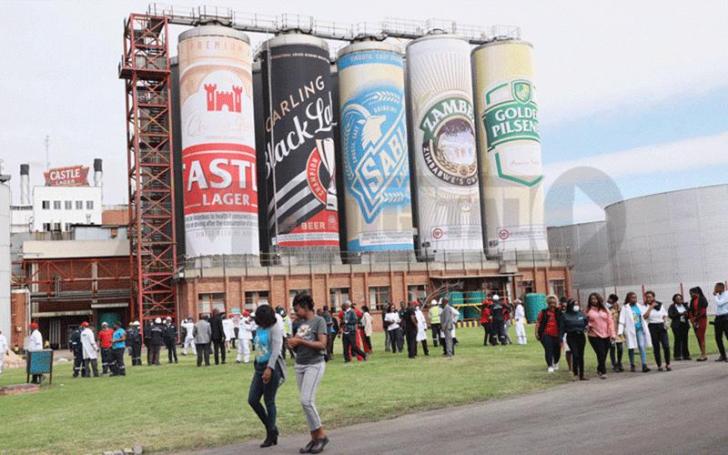
Zimbabwe's beverage industry is entering a new phase in which the biggest challenge is no longer generating demand but keeping up with it.
Delta Corporation says robust consumer demand is stretching its brewing and packaging capacity, prompting the country's largest beverages producer to accelerate investment as it works to eliminate product shortages and expand production.
In its 2026 annual report, the company said production capacity has emerged as the principal constraint on growth after years in which subdued consumer demand and macroeconomic instability dominated the operating environment.
Delta said sustained demand had placed significant pressure on its production facilities, resulting in intermittent shortages across parts of its product range.
"Supply remained constrained by extended capacity utilisation across brewing and packaging operations, resulting in intermittent gaps across certain brands and packs and some sub-optimal product allocations across markets and channels," the company said in its review of the lager beer business.
To mitigate supply shortfalls, Delta supplemented local production with imports of premium regional and international brands, including Corona, Stella Artois, Brutal Fruit and Flying Fish.
The company said it is investing aggressively to remove production bottlenecks.
"The business is investing behind demand through capacity expansion projects, including the brewhouse replacement and additional packaging line at Belmont, together with brewing and filtration upgrades at Southerton Brewery, which are expected to close product supply gaps from the coming year," the report said.
The investment comes against the backdrop of strong growth in beer consumption.
Lager beer volumes increased by 19 percent during the year to 3.15 million hectolitres, while sorghum beer volumes also rose 19 percent to a record 4.62 million hectolitres, surpassing the previous high recorded in 1998.
Delta attributed the growth to improving economic conditions, including increased mining activity, record tobacco production, improved agricultural output, resilient diaspora remittances and improved foreign currency availability.
According to the company, demand was "supported by improved consumer disposable incomes, stable retail pricing in both USD and ZiG, strong brand equity and a balanced portfolio performance across mainstream, premium and value propositions."
The report shows that supply constraints extend beyond the lager beer business.
During the financial year, Delta invested approximately US$40 million in expanding production capacity, improving operational resilience and strengthening its distribution network.
Delta Corporation says robust consumer demand is stretching its brewing and packaging capacity, prompting the country's largest beverages producer to accelerate investment as it works to eliminate product shortages and expand production.
In its 2026 annual report, the company said production capacity has emerged as the principal constraint on growth after years in which subdued consumer demand and macroeconomic instability dominated the operating environment.
Delta said sustained demand had placed significant pressure on its production facilities, resulting in intermittent shortages across parts of its product range.
"Supply remained constrained by extended capacity utilisation across brewing and packaging operations, resulting in intermittent gaps across certain brands and packs and some sub-optimal product allocations across markets and channels," the company said in its review of the lager beer business.
To mitigate supply shortfalls, Delta supplemented local production with imports of premium regional and international brands, including Corona, Stella Artois, Brutal Fruit and Flying Fish.
The company said it is investing aggressively to remove production bottlenecks.
The investment comes against the backdrop of strong growth in beer consumption.
Lager beer volumes increased by 19 percent during the year to 3.15 million hectolitres, while sorghum beer volumes also rose 19 percent to a record 4.62 million hectolitres, surpassing the previous high recorded in 1998.
Delta attributed the growth to improving economic conditions, including increased mining activity, record tobacco production, improved agricultural output, resilient diaspora remittances and improved foreign currency availability.
According to the company, demand was "supported by improved consumer disposable incomes, stable retail pricing in both USD and ZiG, strong brand equity and a balanced portfolio performance across mainstream, premium and value propositions."
The report shows that supply constraints extend beyond the lager beer business.
During the financial year, Delta invested approximately US$40 million in expanding production capacity, improving operational resilience and strengthening its distribution network.
Source - The Independent
Join the discussion
Loading comments…





