News / National
'Zanu PF would have sued Mnangagwa'
03 Aug 2026 at 07:04hrs |
0 Views
HOME Affairs and Cultural Heritage Minister Kazembe Kazembe says Zanu PF would have taken President Emmerson Mnangagwa to court if he had refused to sign Constitutional Amendment Act No. 3 into law, arguing that the President was constitutionally bound to assent to the legislation once Parliament had completed the required legislative process.
Speaking in Shona during a Zanu PF gathering in Mashonaland Central, where he also serves as the party's provincial chairman, Kazembe praised the 83-year-old President for what he described as his commitment to upholding constitutional processes.
"Let us also thank Shumba Murambwi for being a constitutionalist. President Mnangagwa showed that he is a true constitutionalist who follows the Constitution. The country spoke and said this is what we want. He stood aside and said, 'I am a constitutionalist; you should do what is in line with the Constitution,'" Kazembe said.
He said the President had fulfilled a constitutional obligation by assenting to the legislation and insisted that refusing to do so would have amounted to a violation of the Constitution.
"If he had refused, we would have taken him to court because he would have been refusing to do what the Constitution requires. But he fulfilled his constitutional duty, and we thank him," Kazembe said.
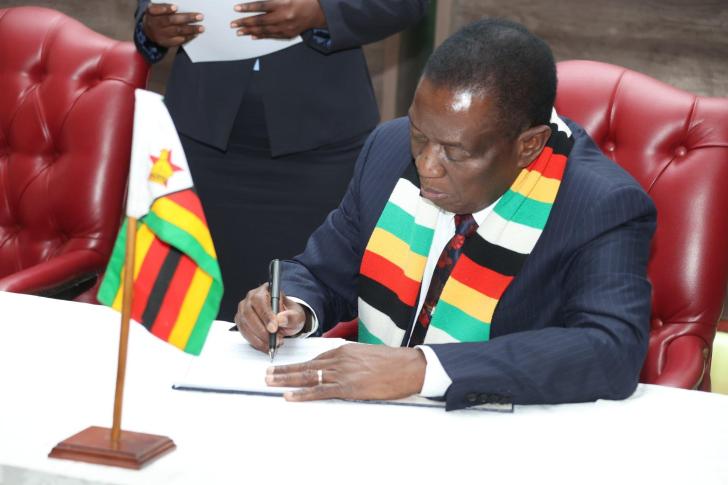
President Mnangagwa recently signed Constitutional Amendment Act No. 3 (CAA3), a law that has sparked significant political and legal debate across Zimbabwe.
One of the amendment's most consequential provisions extends the life of the current Parliament and local authorities by two years, effectively shifting the next harmonised elections from 2028 to 2030. Consequently, the terms of office for President Mnangagwa, Members of Parliament and councillors elected in the 2023 general elections will now expire in 2030.
The legislation also introduces several other changes to Zimbabwe's governance framework. These include expanding the number of non-constituency Members of Parliament through additional women's and youth quota seats, revising procedures for filling parliamentary vacancies, and altering the composition and appointment process of the Zimbabwe Electoral Commission.
In addition, the amendment elevates the Prosecutor-General to the status of a constitutional office and makes further changes affecting the judiciary and the public service.
The enactment of CAA3 has elicited sharply divided reactions. Supporters argue that the law modernises and strengthens constitutional governance, while critics contend that extending the terms of elected officials without seeking a fresh electoral mandate undermines democratic accountability and the principle of periodic elections.
Speaking in Shona during a Zanu PF gathering in Mashonaland Central, where he also serves as the party's provincial chairman, Kazembe praised the 83-year-old President for what he described as his commitment to upholding constitutional processes.
"Let us also thank Shumba Murambwi for being a constitutionalist. President Mnangagwa showed that he is a true constitutionalist who follows the Constitution. The country spoke and said this is what we want. He stood aside and said, 'I am a constitutionalist; you should do what is in line with the Constitution,'" Kazembe said.
He said the President had fulfilled a constitutional obligation by assenting to the legislation and insisted that refusing to do so would have amounted to a violation of the Constitution.
"If he had refused, we would have taken him to court because he would have been refusing to do what the Constitution requires. But he fulfilled his constitutional duty, and we thank him," Kazembe said.
President Mnangagwa recently signed Constitutional Amendment Act No. 3 (CAA3), a law that has sparked significant political and legal debate across Zimbabwe.
One of the amendment's most consequential provisions extends the life of the current Parliament and local authorities by two years, effectively shifting the next harmonised elections from 2028 to 2030. Consequently, the terms of office for President Mnangagwa, Members of Parliament and councillors elected in the 2023 general elections will now expire in 2030.
The legislation also introduces several other changes to Zimbabwe's governance framework. These include expanding the number of non-constituency Members of Parliament through additional women's and youth quota seats, revising procedures for filling parliamentary vacancies, and altering the composition and appointment process of the Zimbabwe Electoral Commission.
In addition, the amendment elevates the Prosecutor-General to the status of a constitutional office and makes further changes affecting the judiciary and the public service.
The enactment of CAA3 has elicited sharply divided reactions. Supporters argue that the law modernises and strengthens constitutional governance, while critics contend that extending the terms of elected officials without seeking a fresh electoral mandate undermines democratic accountability and the principle of periodic elections.
Source - newzimbabwe
Join the discussion
Loading comments…


