News / National
Wicknell Chivayo's brother lifts lid on US$5 million Gwanda Solar payout and Dubai spending spree
2 hrs ago |
160 Views
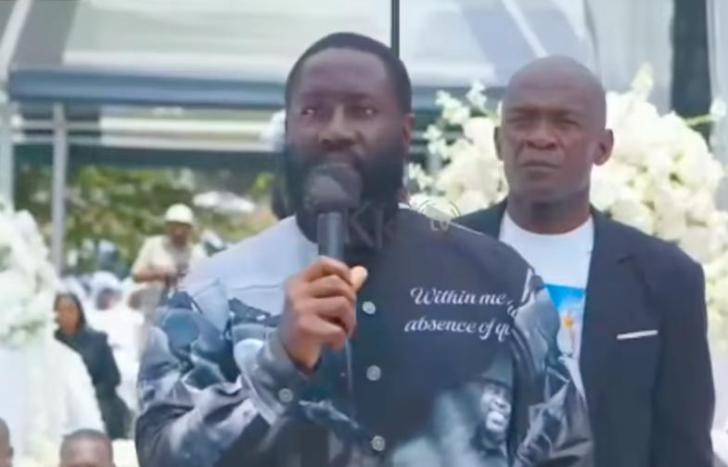
Wicknell Chivayo's younger brother has lifted the lid on how the controversial businessman celebrated receiving US$5 million from a solar project deal by embarking on an extravagant shopping spree, including purchasing shoes worth US$90,000, while allegedly failing to honour a US$1 million promise to his own brother.
Joacham Chivayo, popularly known as G6, made the startling revelations during an emotional tribute at his brother's funeral, recounting events surrounding a multimillion-dollar solar energy deal in 2015.
The revelations have revived questions surrounding the controversial Gwanda Solar Project, which was awarded to Chivayo's company, Intratrek Zimbabwe, but failed to deliver the promised 100 megawatts of electricity despite millions of dollars being advanced.
Although G6 intended his speech as a celebration of his brother's life and business achievements, his account offered a revealing glimpse into the financial dealings and extravagant lifestyle that characterised Chivayo's rise to prominence.
Brother sells cars to finance solar deal
G6 told mourners that in 2015, he had accumulated savings and ventured into the business of buying and selling motor vehicles.
At the time, his elder brother was preparing documentation for a solar energy project that the family had reportedly prayed about for three years.
According to G6, Wicknell approached him with an extraordinary proposition: sell his vehicles and provide the proceeds to help facilitate the deal.
Wicknell told him he was expecting a payment of US$5 million and promised that, once the deal materialised, he would reward his younger brother with US$1 million.
G6 recalled the arrangement:
Believing in his brother's assurances, G6 sold most of the vehicles he had available and raised US$220,000.
For a young businessman, it was a substantial investment, made largely on the strength of family trust and the expectation of a life-changing return.
US$5 million payment triggers celebrations
Approximately two months later, G6 said Wicknell contacted him early one morning with exciting news.
The solar deal had materialised, and he had received US$5 million.
G6, who was just 24 years old at the time, believed his financial future had been secured.
He told mourners:
But the excitement was short-lived.
Instead of receiving the promised US$1 million, G6 said his brother suddenly stopped answering his telephone calls.
What followed was an extraordinary display of wealth on social media.
US$90,000 shoes and Dubai shopping spree
G6 revealed that while he was struggling to contact Wicknell, he came across a Facebook post showing that his brother had purchased shoes worth US$90,000.
Even more astonishing was the caption accompanying the extravagant purchase.
According to G6, Wicknell described the expenditure as merely a warm-up.
G6 recalled his disbelief at seeing his brother spending such enormous amounts of money while his own promised payment remained outstanding.
The shopping spree continued, with Wicknell reportedly displaying further purchases of expensive clothing.
The revelations are particularly striking given the controversy surrounding the Gwanda Solar Project and the millions of dollars paid towards its implementation.
However, G6 did not provide financial records establishing that the luxury purchases were funded directly from money advanced by the Zimbabwe Power Company.
His account establishes the sequence of events as he remembered them, rather than proving the ultimate source of the money spent.
US$1 million promise withdrawn
After nearly two weeks of unsuccessful attempts to contact Wicknell, G6 said he finally confronted his brother.
What he heard was not what he had expected.
Wicknell reportedly informed him that the promised US$1 million payment was no longer available.
G6 recalled his brother telling him:
Instead, Wicknell proposed compensating him with luxury vehicles.
The vehicles mentioned included a BMW X5 and a BMW X6.
G6 said the BMW X6 was valued at approximately US$400,000.
For someone who had invested US$220,000 in anticipation of receiving US$1 million, the revised arrangement was disappointing.
He described the experience as bittersweet, explaining that he did not know whether to laugh or cry.
Yet, despite the disappointment, he accepted the vehicle.
G6 joked that his brother possessed an unusual ability to take someone's money and somehow leave that person feeling grateful afterwards.
From a BMW to business success
Despite the apparent financial setback, G6 insisted that his brother had taught him valuable lessons about business and the influence of wealth.
He explained that arriving at a business meeting in a Toyota Corolla produced a very different reception from arriving in a luxury BMW.
According to G6, the vehicle opened doors that had previously been closed to him.
Within two years, he said, his business interests had expanded beyond vehicle sales into property development, real estate, trucking and mining.
He credited Wicknell with introducing him to opportunities that transformed his business career.
The younger Chivayo therefore presented the episode not simply as a broken financial promise but as one of several unconventional lessons he had learned from his brother.
Nevertheless, the financial details contained in his tribute raise broader questions about the handling of money associated with the solar project.
Gwanda Solar Project: Millions paid, no electricity delivered
The revelations have renewed scrutiny of the Gwanda Solar Project, one of Zimbabwe's most controversial public energy contracts.
The project was awarded to Intratrek Zimbabwe in 2015 under an engineering, procurement and construction agreement initially valued at approximately US$172 million.
It was intended to generate 100 megawatts of electricity and help address Zimbabwe's persistent power shortages.
However, more than a decade after the contract was signed, the power station has not delivered its promised electricity.
Zimbabwe Power Company previously confirmed that approximately US$5.7 million had been advanced to Intratrek for feasibility studies and other preliminary work, including associated taxes.
During a parliamentary inspection, ZPC officials explained that US$2.1 million had been allocated to feasibility studies and US$2.8 million to other pre-commencement activities, with the balance accounting for VAT.
The parliamentary committee found the project site largely neglected, with limited infrastructure and little evidence of progress towards constructing a functioning power station. CITE
The situation raised serious concerns about whether taxpayers had received value for the money disbursed.
Government previously questioned US$5 million payment
The concerns are not new.
In 2019, then Energy and Power Development Minister Joram Gumbo publicly questioned whether Intratrek had been overpaid for work carried out at the Gwanda site.
After inspecting the project, Gumbo expressed disappointment with the limited progress despite the multimillion-dollar payment.
He contrasted the situation with a smaller solar installation in Mutoko, which he said had begun generating electricity at a considerably lower cost.
Gumbo subsequently requested a detailed report from ZPC to establish what had happened to the funds and whether the expenditure could be justified. Herald Online
G6's latest account now provides an additional perspective on the period surrounding the reported US$5 million payment.
His description of luxury spending shortly after his brother announced receiving the money raises questions about the timing of the purchases and the financial arrangements associated with the deal.
But the distinction remains important: the timing alone does not prove that public money was diverted to personal expenditure.
Court battles and Chivayo's acquittal
The Gwanda Solar Project subsequently became the subject of prolonged litigation between Intratrek and ZPC.
The power utility attempted to terminate the agreement following disputes over the project's implementation.
Intratrek challenged the termination, arguing that ZPC had failed to fulfil obligations necessary for the project to proceed.
In December 2023, the Supreme Court upheld the validity of the contract and dismissed ZPC's appeal.
The judgment also upheld findings that ZPC had frustrated the fulfilment of certain contractual conditions relating to financing. A counterclaim seeking repayment of approximately US$3.31 million was dismissed. JibuDocs
Separately, Chivayo and Intratrek were acquitted in criminal proceedings concerning allegations of misappropriating project funds after the court found that the prosecution had been unreasonably delayed.
The acquittal did not amount to a judicial finding that G6's subsequently described shopping expenditure was connected to project funds. Zimbabwe Situation
Fresh payment planned for stalled project
In September 2026, ZPC issued Intratrek with a fresh Notice to Proceed, directing the company to resume work on the long-delayed power station.
Under the revised arrangements, the contractor was given 24 months to complete the project.
Reports also indicated that mobilisation would depend on another advance payment, although the amount and detailed financial conditions had not been publicly disclosed.
The project's revised contract value was reported to be approximately US$132 million. Nehanda Radio
The development raised fresh concerns about the prospect of additional public money being committed to a project that had already experienced years of delays.
Chivayo's subsequent death has also introduced uncertainty over the future implementation of the agreement.
Brother insists Wicknell was his greatest teacher
Despite revealing the financial disagreement, G6 made it clear that he held no lasting resentment towards his brother.
He described Wicknell as his mentor, teacher and the person who had shaped his understanding of business.
G6 said his brother had taught him how to recognise opportunities, develop confidence and build relationships.
He also defended Wicknell against criticism of his flamboyant public persona, arguing that the businessman known through social media was different from the generous family man he knew personally.
G6 insisted that his brother's legacy would continue and that arrangements had been established to protect the interests of his children.
His remarks were therefore delivered in a spirit of remembrance and gratitude rather than as a formal accusation of financial misconduct.
Nevertheless, the account has inadvertently drawn renewed attention to one of the most contentious chapters of Chivayo's business career.
Questions over the money remain
The most significant issue emerging from G6's account is the relationship between the solar project payment and the extraordinary spending he described.
According to his recollection, Wicknell asked him to raise US$220,000, promised him US$1 million from an anticipated US$5 million payment, subsequently announced receiving the money, and then displayed luxury purchases while avoiding his brother's calls.
Those details raise legitimate questions about how the financial arrangements surrounding the deal operated.
What happened to the US$220,000 reportedly contributed by G6?
Was the money used for project documentation and mobilisation, as he understood it would be?
How were the funds advanced by ZPC accounted for, and what documentation exists to establish the expenditure incurred?
Most importantly, was any of the money received under the project used for personal luxury purchases?
G6's testimony does not conclusively answer those questions.
Establishing whether any public funds were misused would require documentary evidence, including bank transactions, company financial records and project expenditure reports.
For Zimbabweans still grappling with electricity shortages, however, the broader controversy remains unresolved.
The country committed millions of dollars to a project intended to generate 100 megawatts of electricity.
More than a decade later, the promised power has yet to materialise.
And now, through a brother's affectionate recollection of a US$5 million payday, US$90,000 shoes and an unfulfilled US$1 million promise, the financial dealings surrounding the Gwanda Solar Project have once again returned to the spotlight.
Watch G6's full tribute: the relevant account begins at approximately 8 minutes and 47 seconds.
Joacham Chivayo, popularly known as G6, made the startling revelations during an emotional tribute at his brother's funeral, recounting events surrounding a multimillion-dollar solar energy deal in 2015.
The revelations have revived questions surrounding the controversial Gwanda Solar Project, which was awarded to Chivayo's company, Intratrek Zimbabwe, but failed to deliver the promised 100 megawatts of electricity despite millions of dollars being advanced.
Although G6 intended his speech as a celebration of his brother's life and business achievements, his account offered a revealing glimpse into the financial dealings and extravagant lifestyle that characterised Chivayo's rise to prominence.
Brother sells cars to finance solar deal
G6 told mourners that in 2015, he had accumulated savings and ventured into the business of buying and selling motor vehicles.
At the time, his elder brother was preparing documentation for a solar energy project that the family had reportedly prayed about for three years.
According to G6, Wicknell approached him with an extraordinary proposition: sell his vehicles and provide the proceeds to help facilitate the deal.
Wicknell told him he was expecting a payment of US$5 million and promised that, once the deal materialised, he would reward his younger brother with US$1 million.
G6 recalled the arrangement:
"I'm expecting a payment of 5 million USD. Whatever money that you choose to invest, when the deal comes through, I'll give you 1 million."
Believing in his brother's assurances, G6 sold most of the vehicles he had available and raised US$220,000.
For a young businessman, it was a substantial investment, made largely on the strength of family trust and the expectation of a life-changing return.
US$5 million payment triggers celebrations
Approximately two months later, G6 said Wicknell contacted him early one morning with exciting news.
The solar deal had materialised, and he had received US$5 million.
G6, who was just 24 years old at the time, believed his financial future had been secured.
He told mourners:
"Imagine thinking I'm now a millionaire at 24 years."
But the excitement was short-lived.
Instead of receiving the promised US$1 million, G6 said his brother suddenly stopped answering his telephone calls.
What followed was an extraordinary display of wealth on social media.
US$90,000 shoes and Dubai shopping spree
G6 revealed that while he was struggling to contact Wicknell, he came across a Facebook post showing that his brother had purchased shoes worth US$90,000.
Even more astonishing was the caption accompanying the extravagant purchase.
According to G6, Wicknell described the expenditure as merely a warm-up.
"I only saw his Facebook post that he had bought shoes worth $90,000."
G6 recalled his disbelief at seeing his brother spending such enormous amounts of money while his own promised payment remained outstanding.
The shopping spree continued, with Wicknell reportedly displaying further purchases of expensive clothing.
The revelations are particularly striking given the controversy surrounding the Gwanda Solar Project and the millions of dollars paid towards its implementation.
However, G6 did not provide financial records establishing that the luxury purchases were funded directly from money advanced by the Zimbabwe Power Company.
His account establishes the sequence of events as he remembered them, rather than proving the ultimate source of the money spent.
US$1 million promise withdrawn
After nearly two weeks of unsuccessful attempts to contact Wicknell, G6 said he finally confronted his brother.
What he heard was not what he had expected.
Wicknell reportedly informed him that the promised US$1 million payment was no longer available.
G6 recalled his brother telling him:
"That million that I promised you, I can't give it to you anymore."
Instead, Wicknell proposed compensating him with luxury vehicles.
The vehicles mentioned included a BMW X5 and a BMW X6.
G6 said the BMW X6 was valued at approximately US$400,000.
For someone who had invested US$220,000 in anticipation of receiving US$1 million, the revised arrangement was disappointing.
He described the experience as bittersweet, explaining that he did not know whether to laugh or cry.
Yet, despite the disappointment, he accepted the vehicle.
G6 joked that his brother possessed an unusual ability to take someone's money and somehow leave that person feeling grateful afterwards.
From a BMW to business success
Despite the apparent financial setback, G6 insisted that his brother had taught him valuable lessons about business and the influence of wealth.
He explained that arriving at a business meeting in a Toyota Corolla produced a very different reception from arriving in a luxury BMW.
According to G6, the vehicle opened doors that had previously been closed to him.
Within two years, he said, his business interests had expanded beyond vehicle sales into property development, real estate, trucking and mining.
He credited Wicknell with introducing him to opportunities that transformed his business career.
The younger Chivayo therefore presented the episode not simply as a broken financial promise but as one of several unconventional lessons he had learned from his brother.
Nevertheless, the financial details contained in his tribute raise broader questions about the handling of money associated with the solar project.
Gwanda Solar Project: Millions paid, no electricity delivered
The revelations have renewed scrutiny of the Gwanda Solar Project, one of Zimbabwe's most controversial public energy contracts.
The project was awarded to Intratrek Zimbabwe in 2015 under an engineering, procurement and construction agreement initially valued at approximately US$172 million.
It was intended to generate 100 megawatts of electricity and help address Zimbabwe's persistent power shortages.
However, more than a decade after the contract was signed, the power station has not delivered its promised electricity.
Zimbabwe Power Company previously confirmed that approximately US$5.7 million had been advanced to Intratrek for feasibility studies and other preliminary work, including associated taxes.
During a parliamentary inspection, ZPC officials explained that US$2.1 million had been allocated to feasibility studies and US$2.8 million to other pre-commencement activities, with the balance accounting for VAT.
The parliamentary committee found the project site largely neglected, with limited infrastructure and little evidence of progress towards constructing a functioning power station. CITE
The situation raised serious concerns about whether taxpayers had received value for the money disbursed.
Government previously questioned US$5 million payment
The concerns are not new.
In 2019, then Energy and Power Development Minister Joram Gumbo publicly questioned whether Intratrek had been overpaid for work carried out at the Gwanda site.
After inspecting the project, Gumbo expressed disappointment with the limited progress despite the multimillion-dollar payment.
He contrasted the situation with a smaller solar installation in Mutoko, which he said had begun generating electricity at a considerably lower cost.
Gumbo subsequently requested a detailed report from ZPC to establish what had happened to the funds and whether the expenditure could be justified. Herald Online
G6's latest account now provides an additional perspective on the period surrounding the reported US$5 million payment.
His description of luxury spending shortly after his brother announced receiving the money raises questions about the timing of the purchases and the financial arrangements associated with the deal.
But the distinction remains important: the timing alone does not prove that public money was diverted to personal expenditure.
Court battles and Chivayo's acquittal
The Gwanda Solar Project subsequently became the subject of prolonged litigation between Intratrek and ZPC.
The power utility attempted to terminate the agreement following disputes over the project's implementation.
Intratrek challenged the termination, arguing that ZPC had failed to fulfil obligations necessary for the project to proceed.
In December 2023, the Supreme Court upheld the validity of the contract and dismissed ZPC's appeal.
The judgment also upheld findings that ZPC had frustrated the fulfilment of certain contractual conditions relating to financing. A counterclaim seeking repayment of approximately US$3.31 million was dismissed. JibuDocs
Separately, Chivayo and Intratrek were acquitted in criminal proceedings concerning allegations of misappropriating project funds after the court found that the prosecution had been unreasonably delayed.
The acquittal did not amount to a judicial finding that G6's subsequently described shopping expenditure was connected to project funds. Zimbabwe Situation
Fresh payment planned for stalled project
In September 2026, ZPC issued Intratrek with a fresh Notice to Proceed, directing the company to resume work on the long-delayed power station.
Under the revised arrangements, the contractor was given 24 months to complete the project.
Reports also indicated that mobilisation would depend on another advance payment, although the amount and detailed financial conditions had not been publicly disclosed.
The project's revised contract value was reported to be approximately US$132 million. Nehanda Radio
The development raised fresh concerns about the prospect of additional public money being committed to a project that had already experienced years of delays.
Chivayo's subsequent death has also introduced uncertainty over the future implementation of the agreement.
Brother insists Wicknell was his greatest teacher
Despite revealing the financial disagreement, G6 made it clear that he held no lasting resentment towards his brother.
He described Wicknell as his mentor, teacher and the person who had shaped his understanding of business.
G6 said his brother had taught him how to recognise opportunities, develop confidence and build relationships.
He also defended Wicknell against criticism of his flamboyant public persona, arguing that the businessman known through social media was different from the generous family man he knew personally.
G6 insisted that his brother's legacy would continue and that arrangements had been established to protect the interests of his children.
His remarks were therefore delivered in a spirit of remembrance and gratitude rather than as a formal accusation of financial misconduct.
Nevertheless, the account has inadvertently drawn renewed attention to one of the most contentious chapters of Chivayo's business career.
Questions over the money remain
The most significant issue emerging from G6's account is the relationship between the solar project payment and the extraordinary spending he described.
According to his recollection, Wicknell asked him to raise US$220,000, promised him US$1 million from an anticipated US$5 million payment, subsequently announced receiving the money, and then displayed luxury purchases while avoiding his brother's calls.
Those details raise legitimate questions about how the financial arrangements surrounding the deal operated.
What happened to the US$220,000 reportedly contributed by G6?
Was the money used for project documentation and mobilisation, as he understood it would be?
How were the funds advanced by ZPC accounted for, and what documentation exists to establish the expenditure incurred?
Most importantly, was any of the money received under the project used for personal luxury purchases?
G6's testimony does not conclusively answer those questions.
Establishing whether any public funds were misused would require documentary evidence, including bank transactions, company financial records and project expenditure reports.
For Zimbabweans still grappling with electricity shortages, however, the broader controversy remains unresolved.
The country committed millions of dollars to a project intended to generate 100 megawatts of electricity.
More than a decade later, the promised power has yet to materialise.
And now, through a brother's affectionate recollection of a US$5 million payday, US$90,000 shoes and an unfulfilled US$1 million promise, the financial dealings surrounding the Gwanda Solar Project have once again returned to the spotlight.
Watch G6's full tribute: the relevant account begins at approximately 8 minutes and 47 seconds.
Source - By24News
Join the discussion
Loading comments…





