Zimbabwe-China lithium mission opens new chapter for value addition
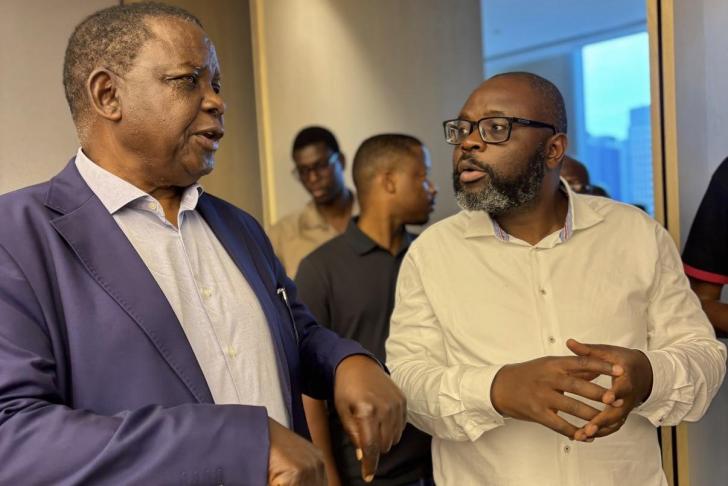
HARARE - A Zimbabwean delegation led by Deputy Minister of Mines and Mining Development Honourable Fred Moyo has returned from a two-week lithium benchmarking mission to China, describing the visit as a significant step in Zimbabwe's drive to move beyond raw mineral exports and accelerate value addition.
The delegation travelled to China from September 13 to 26, 2026, undertaking technical visits and business engagements in Shanghai, Jiaxing, Quzhou, Xinyu, Nanchang, Chongqing, Suining, Ya'an and Chengdu.
The mission comes as Zimbabwe, Africa's largest lithium producer and a major supplier of spodumene to China, continues implementing policies aimed at promoting local mineral beneficiation and value addition.
Moyo said the purpose of the mission extended beyond studying lithium processing plants.
"The lithium beneficiation drive took us to China to engage parent companies directly. A fully integrated value chain requires more than minerals. It needs technology, skills, research and development, infrastructure, reliable energy and suppliers," he said.
He emphasised that Zimbabwe's objective was not to replicate China's industrial development model but to understand the conditions that enabled its success.
"For us the significance is not replicating China's model, but understanding the conditions that enabled it to build competitive industries," said Moyo.
During the visit, the delegation toured lithium processing plants, battery manufacturing facilities, cathode production operations and slag processing facilities. The team also examined port infrastructure, processing technologies, recovery systems, laboratory capacities, skills certification programmes, pricing mechanisms and technology licensing frameworks.
According to observations made during the mission, successful value addition requires a complete industrial ecosystem supported by equipment suppliers, chemical inputs, logistics infrastructure, reliable energy supplies and access to international markets.
Since returning to the Mines and Mining Development portfolio in December 2025, Moyo has overseen measures aimed at increasing beneficiation within Zimbabwe's lithium sector.
The country's key lithium operations include Bikita Minerals, Prospect Lithium Zimbabwe, Sabi Star, Kamativi, Sandawana and Gwanda, involving investments from major Chinese companies including Huayou Cobalt, Sinomine, Chengxin and Yahua.
Moyo said Government had imposed a number of conditions on lithium producers as part of efforts to improve transparency and value retention.
"I can confirm that we gave some conditions, including declaration of all minerals including tantalum and niobium, publication of financial statements and establishment of assay labs," he said.
Commenting on the export quota system introduced following restrictions on lithium concentrate exports, Moyo said allocation levels varied between companies.
"Individual companies got different levels of their export quotas," he said.
Government has maintained its January 2027 deadline for full lithium sulphate processing, supported by major investments in local processing facilities, including Huayou's reported US$700 million investment at Arcadia and Sinomine's reported US$500 million investment at Bikita.
Moyo said Zimbabwe's engagement with China should create mutually beneficial partnerships that support local industrial development.
"This is an opportunity for complementarity rather than dependency," he said.





