Opinion / Columnist
The mathematics of blame - Ethnic scapegoating and CAB3
22 Jun 2026 at 10:35hrs |
0 Views
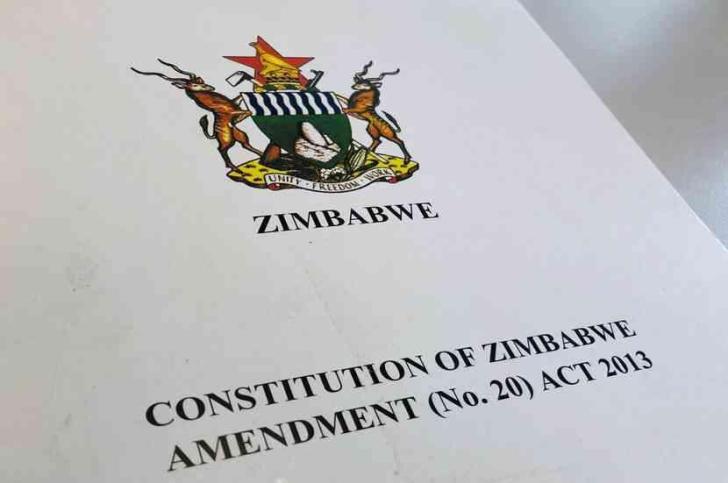
The passage of the Constitution of Zimbabwe Amendment (No. 3) Bill (CAB3) through the National Assembly last week represented a watershed moment in Zimbabwe’s recent political history given the far-reaching political, electoral and governance implications of the contested changes.
However, CAB3's passage through the National Assembly ignited a secondary dark debate based on a wrong and dangerous perception centered around ethnic bigotry and tribalism by some narrow-minded bigots.
The claim - which is ignorant and false - is that CAB3 passed the Lower House because Ndebele MPs in the opposition sold out.
By insinuation, CAB3 went through simply because of Ndebele legislators' treachery, a dumb falsehood.
In other words, Shona MPs in the opposition did not vote for CAB3, which is a brazen lie.
Let's look at the facts and numbers.
The bill sailed through the Lower House by 216 to 42 votes.
The ruling Zanu PF party needed six opposition votes to secure a two-thirds majority to pass CAB3 through the National Assembly.
That equated to 187 votes out of the 280 members.
While Zanu PF holds a total of 194 seats in the house, only 181 of their legislators were present for the vote.
This left them six votes short of the required 187 threshold.
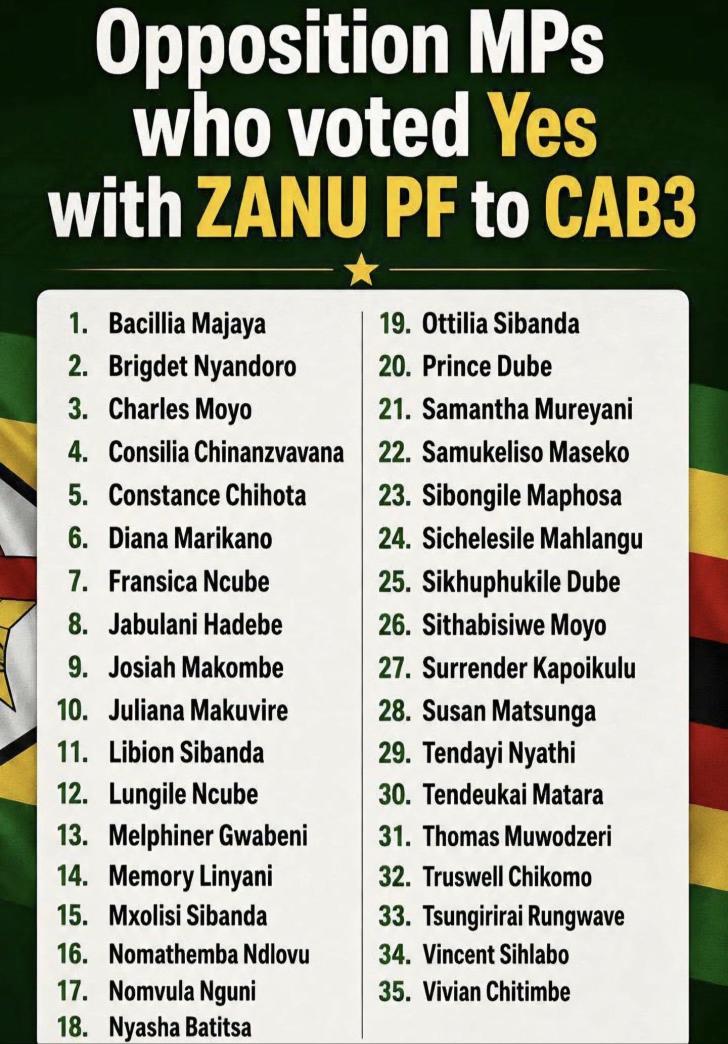
The bill ultimately passed with an overwhelming 216 votes in favour to 42 against, courtesy of 35 votes from the opposition.
Zanu PF comfortably cleared the threshold because 35 CCC MPs, mostly loyal to self-imposed secretary-general Sengezo Tshabangu, broke ranks to vote "Yes" alongside the ruling party.
Of the 35 MPs, 20 were from Midlands and Matabeleland, generally identified as Ndebele, and 15 were Shona.
Zanu PF only needed six from those 35 to get a two-thirds majority.
This means only six Ndebele or six Shona opposition MPs, or mixture of them (MPs whatever their identity and ethnicity), effectively helped CAB3 to go through.
The rest were superfluous or unneeded.
Their identity doesn't really matter because there were 15 Shonas among the opposition MPs who voted for CAB3, more than enough the number needed by Zanu PF to achieve a two-thirds majority.
Similarly, the 20 Ndebele opposition MPs who voted with Zanu PF were more than enough those needed to pass CAB3.
So the hopeless tribal argument that only Ndebele opposition MPs helped CAB3 simply collapses on its own.
The passage of CAB3 through the National Assembly allows the contentious legislation — which replaces direct presidential elections with a parliamentary vote and extends presidential and the legislature's terms from five to seven years, while giving President Emmerson Mnangagwa two more years — to advance to the Senate.
Despite this being a fallacious argument, it once again revealed the ugly underbelly of Zimbabwe's deep-rooted identity and tribal politics.
Even if this shallow perception was held by tribal bigots who perhaps should be ignored, brushing this aside as views held by an ignorant lunatic fringe does a major and damaging disservice to the public interest and society.
This tribal toxin, if not opened and spilt away, may poison the public discourse and add fuel to the already slow-burning ethnic fires below the surface of Zimbabwean politics.
Perceptions become reality if not bridged with facts.
Myths or urban legends may end up being elevated to the level of fact or the truth if allowed to go unchallenged for a long time as they grow fast and well on the fertile grounds of mass ignorance and prejudice.
For instance, the myth that Ndebele King Lobengula sold his country for a bag of sugar - just imagine - is a classic example of colonial distortion and tribal bigotry.
It is a fabricated and malicious colonial and tribal narrative designed to strip away the agency of Africans and in the process mask the calculated deception of 19th-century imperialism and colonialism facilitated through divide and conquer.
However, CAB3's passage through the National Assembly ignited a secondary dark debate based on a wrong and dangerous perception centered around ethnic bigotry and tribalism by some narrow-minded bigots.
The claim - which is ignorant and false - is that CAB3 passed the Lower House because Ndebele MPs in the opposition sold out.
By insinuation, CAB3 went through simply because of Ndebele legislators' treachery, a dumb falsehood.
In other words, Shona MPs in the opposition did not vote for CAB3, which is a brazen lie.
Let's look at the facts and numbers.
The bill sailed through the Lower House by 216 to 42 votes.
The ruling Zanu PF party needed six opposition votes to secure a two-thirds majority to pass CAB3 through the National Assembly.
That equated to 187 votes out of the 280 members.
While Zanu PF holds a total of 194 seats in the house, only 181 of their legislators were present for the vote.
This left them six votes short of the required 187 threshold.
The bill ultimately passed with an overwhelming 216 votes in favour to 42 against, courtesy of 35 votes from the opposition.
Zanu PF comfortably cleared the threshold because 35 CCC MPs, mostly loyal to self-imposed secretary-general Sengezo Tshabangu, broke ranks to vote "Yes" alongside the ruling party.
Of the 35 MPs, 20 were from Midlands and Matabeleland, generally identified as Ndebele, and 15 were Shona.
This means only six Ndebele or six Shona opposition MPs, or mixture of them (MPs whatever their identity and ethnicity), effectively helped CAB3 to go through.
The rest were superfluous or unneeded.
Their identity doesn't really matter because there were 15 Shonas among the opposition MPs who voted for CAB3, more than enough the number needed by Zanu PF to achieve a two-thirds majority.
Similarly, the 20 Ndebele opposition MPs who voted with Zanu PF were more than enough those needed to pass CAB3.
So the hopeless tribal argument that only Ndebele opposition MPs helped CAB3 simply collapses on its own.
The passage of CAB3 through the National Assembly allows the contentious legislation — which replaces direct presidential elections with a parliamentary vote and extends presidential and the legislature's terms from five to seven years, while giving President Emmerson Mnangagwa two more years — to advance to the Senate.
Despite this being a fallacious argument, it once again revealed the ugly underbelly of Zimbabwe's deep-rooted identity and tribal politics.
Even if this shallow perception was held by tribal bigots who perhaps should be ignored, brushing this aside as views held by an ignorant lunatic fringe does a major and damaging disservice to the public interest and society.
This tribal toxin, if not opened and spilt away, may poison the public discourse and add fuel to the already slow-burning ethnic fires below the surface of Zimbabwean politics.
Perceptions become reality if not bridged with facts.
Myths or urban legends may end up being elevated to the level of fact or the truth if allowed to go unchallenged for a long time as they grow fast and well on the fertile grounds of mass ignorance and prejudice.
For instance, the myth that Ndebele King Lobengula sold his country for a bag of sugar - just imagine - is a classic example of colonial distortion and tribal bigotry.
It is a fabricated and malicious colonial and tribal narrative designed to strip away the agency of Africans and in the process mask the calculated deception of 19th-century imperialism and colonialism facilitated through divide and conquer.
Source - Thembelani Gumede
All articles and letters published on Bulawayo24 have been independently written by members of Bulawayo24's community. The views of users published on Bulawayo24 are therefore their own and do not necessarily represent the views of Bulawayo24. Bulawayo24 editors also reserve the right to edit or delete any and all comments received.
Join the discussion
Loading comments…





