News / National
ZUPCO fails to prove ownership of buses
07 Aug 2026 at 18:24hrs |
4999 Views
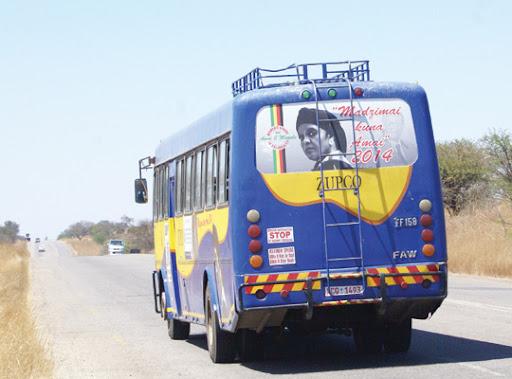
The Zimbabwe United Passenger Company (ZUPCO) failed to produce registration books for part of its bus fleet, making it impossible for auditors to verify ownership of some vehicles, as the Auditor-General uncovered widespread governance, financial management and record-keeping failures at the state-owned public transporter.
The findings are contained in the Auditor-General's reports on ZUPCO's 2022 and 2023 financial statements, both of which received adverse audit opinions, indicating that the company's financial statements did not fairly present its financial position because of pervasive accounting irregularities.
One of the most serious findings relates to the management of ZUPCO's fleet, with auditors concluding that the company had weak controls over vehicle records.
"The Company's controls over record keeping were not adequate. For instance, there were missing bus registration books which made it difficult to verify ownership of these buses," the Auditor-General said.
The report warned that the missing vehicle registration books exposed the company to the risk of asset misappropriation. In response, ZUPCO management said it was engaging the Central Vehicle Registry to obtain duplicate registration books.
The audit also highlighted ZUPCO's deteriorating financial position.
In 2022, the company recorded a loss of ZWL16.18 billion and reported net current liabilities of ZWL10.76 billion. Auditors also noted that ZUPCO did not have an adequate fleet of its own buses and continued to rely heavily on leased vehicles to provide public transport services.
The financial position worsened in 2023, with losses increasing to ZWL28.1 billion while current liabilities exceeded current assets by ZWL74.06 billion, leaving the company with negative equity.
The Auditor-General concluded that these conditions cast significant doubt over ZUPCO's ability to continue operating as a going concern.
Auditors identified numerous accounting deficiencies underpinning the adverse opinions for both financial years. These included unsupported operator fees, inability to verify inventory balances, unreliable receivables, unreconciled cash balances, unsupported payables, unverified gratuity provisions, questionable revenue adjustments, unsupported foreign exchange gains and inadequately supported operating expenses.
For the 2023 financial year, additional concerns included the incorrect determination of the company's functional currency, unsupported revenue and expenditure transactions, unconfirmed receivable and payable balances, and major unreconciled differences involving bank accounts, inventory, payroll liabilities and value-added tax.
The Auditor-General also criticised ZUPCO for failing to comply with statutory reporting deadlines.
According to the report, the company only submitted its 2022 financial statements for audit in December 2025, nearly three years after the deadline prescribed under the Public Finance Management Act.
"The Company submitted the 2022 financial statements in December 2025, three (3) years after the statutory deadline. This was contrary to Section 49(1)(c) of the Public Finance Management Act [Chapter 22:19], which requires the accounting officer of a public entity to submit the financial statements for audit within two months after the end of the financial year," the Auditor-General said.
Management indicated that it intended to clear all outstanding audits by June 2026.
Weak financial controls also extended to banking operations, where auditors found that bank reconciliations were, on average, prepared and reviewed three years late.
The company was unable to explain unreconciled differences amounting to ZWL147.1 million between bank statements and accounting records, while some former employees remained authorised signatories to company bank accounts.
The audit further exposed weaknesses in corporate governance, with board subcommittees operating with only two members instead of the minimum three required under governance regulations, thereby weakening oversight.
The Auditor-General also found that several issues highlighted in previous audits remained unresolved.
These included unsupported revenue adjustments, fuel procurement irregularities, weak information technology governance, incomplete asset registers, continued stripping of non-operational buses without proper documentation, and failure to produce waybills for services provided by contracted private bus operators.
The latest audit findings raise fresh concerns over governance, financial accountability and asset management at Zimbabwe's state-owned passenger transport company, as it continues to face mounting financial and operational challenges.
The findings are contained in the Auditor-General's reports on ZUPCO's 2022 and 2023 financial statements, both of which received adverse audit opinions, indicating that the company's financial statements did not fairly present its financial position because of pervasive accounting irregularities.
One of the most serious findings relates to the management of ZUPCO's fleet, with auditors concluding that the company had weak controls over vehicle records.
"The Company's controls over record keeping were not adequate. For instance, there were missing bus registration books which made it difficult to verify ownership of these buses," the Auditor-General said.
The report warned that the missing vehicle registration books exposed the company to the risk of asset misappropriation. In response, ZUPCO management said it was engaging the Central Vehicle Registry to obtain duplicate registration books.
The audit also highlighted ZUPCO's deteriorating financial position.
In 2022, the company recorded a loss of ZWL16.18 billion and reported net current liabilities of ZWL10.76 billion. Auditors also noted that ZUPCO did not have an adequate fleet of its own buses and continued to rely heavily on leased vehicles to provide public transport services.
The financial position worsened in 2023, with losses increasing to ZWL28.1 billion while current liabilities exceeded current assets by ZWL74.06 billion, leaving the company with negative equity.
The Auditor-General concluded that these conditions cast significant doubt over ZUPCO's ability to continue operating as a going concern.
Auditors identified numerous accounting deficiencies underpinning the adverse opinions for both financial years. These included unsupported operator fees, inability to verify inventory balances, unreliable receivables, unreconciled cash balances, unsupported payables, unverified gratuity provisions, questionable revenue adjustments, unsupported foreign exchange gains and inadequately supported operating expenses.
For the 2023 financial year, additional concerns included the incorrect determination of the company's functional currency, unsupported revenue and expenditure transactions, unconfirmed receivable and payable balances, and major unreconciled differences involving bank accounts, inventory, payroll liabilities and value-added tax.
The Auditor-General also criticised ZUPCO for failing to comply with statutory reporting deadlines.
According to the report, the company only submitted its 2022 financial statements for audit in December 2025, nearly three years after the deadline prescribed under the Public Finance Management Act.
"The Company submitted the 2022 financial statements in December 2025, three (3) years after the statutory deadline. This was contrary to Section 49(1)(c) of the Public Finance Management Act [Chapter 22:19], which requires the accounting officer of a public entity to submit the financial statements for audit within two months after the end of the financial year," the Auditor-General said.
Management indicated that it intended to clear all outstanding audits by June 2026.
Weak financial controls also extended to banking operations, where auditors found that bank reconciliations were, on average, prepared and reviewed three years late.
The company was unable to explain unreconciled differences amounting to ZWL147.1 million between bank statements and accounting records, while some former employees remained authorised signatories to company bank accounts.
The audit further exposed weaknesses in corporate governance, with board subcommittees operating with only two members instead of the minimum three required under governance regulations, thereby weakening oversight.
The Auditor-General also found that several issues highlighted in previous audits remained unresolved.
These included unsupported revenue adjustments, fuel procurement irregularities, weak information technology governance, incomplete asset registers, continued stripping of non-operational buses without proper documentation, and failure to produce waybills for services provided by contracted private bus operators.
The latest audit findings raise fresh concerns over governance, financial accountability and asset management at Zimbabwe's state-owned passenger transport company, as it continues to face mounting financial and operational challenges.
Source - nehanda
Join the discussion
Loading comments…


