News / Local
Hospitals fall silent as nurses' strike exposes deep crisis
24 Apr 2026 at 16:03hrs |
1175 Views
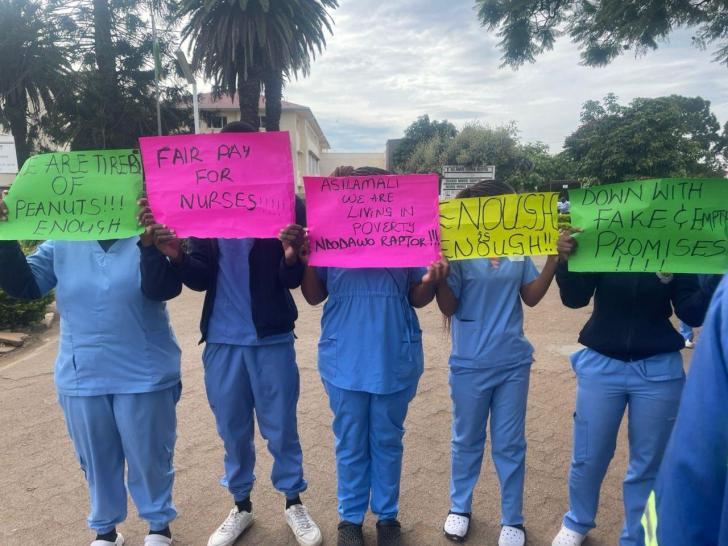
Zimbabwe's major public hospitals were plunged into near silence this week as a nationwide nurses' strike brought critical services to a standstill, exposing deep cracks in the country's already fragile healthcare system.
For three days, from Monday to Wednesday, corridors that are normally filled with urgency and movement stood eerily quiet, with patients left unattended and families stranded in uncertainty. Although the industrial action has since been temporarily suspended, the disruption laid bare the human cost of a worsening economic and labour dispute.
The strike was triggered by a contested salary adjustment that the Zimbabwe Nurses Association says was imposed despite being rejected during collective bargaining negotiations.
At Sally Mugabe Central Hospital, one of the country's busiest referral centres, scenes of distress unfolded as patients waited for hours without assistance. Relatives kept vigil from early morning, hoping for care that never came.
"I brought my mother here for diabetes treatment and we have been sitting since 6am," said one relative, speaking anonymously. "There is no one to attend to us. Where are we supposed to go?"
A similar picture emerged at Parirenyatwa Group of Hospitals, where activity dropped to minimal levels. Nurses were seen gathering briefly before leaving, while a small number of senior staff and student nurses struggled to manage critical cases.
Among those waiting was Gideon Munoko, whose wife was admitted to the maternity ward. "I don't know if she's being checked properly," he said. "I understand why the nurses are striking-they can't even afford to come to work. But what about us? We are suffering from both sides."
At the heart of the crisis lies the economic reality facing healthcare workers. According to union figures, nurses earn an average of about US$290 plus ZiG5 000, a package many say is no longer sufficient to cover basic living and transport costs.
"We love our work and remain committed to our patients," said one nurse. "But it is painful to continue when we can no longer afford to report for duty."
Another described payday as a source of stress rather than relief, citing mounting expenses such as rent, school fees and utilities. Others said the strike was a last resort after prolonged frustration.
In response, Health and Child Care Minister Douglas Mombeshora confirmed that emergency talks were convened between the Health Apex Panel and the Health Services Commission. He appealed for a suspension of the strike in the interest of patients, though no detailed outcome of the negotiations has yet been made public.
The return to work, according to ZiNA president Enoch Dongo, is only temporary. He described it as a strategic pause to allow for dialogue, warning that failure to resolve the dispute could trigger more intense action after a 14-day ultimatum issued earlier this month.
"We urge the government to act to prevent loss of life," Dongo said. "If nothing changes, the next phase will be more severe."
The impact of the strike has extended beyond hospital walls. Patients, many of whom rely solely on public healthcare, now face the prospect of turning to costly private facilities or going without treatment altogether. The situation is worsened by persistent shortages of basic supplies, with patients often required to purchase essentials such as gloves, bandages and medication before receiving care.
What unfolded this week was more than a labour dispute-it was a stark warning. Zimbabwe's public healthcare system, strained by economic pressures and resource shortages, is approaching a breaking point, with both caregivers and patients caught in a cycle of hardship.
For three days, from Monday to Wednesday, corridors that are normally filled with urgency and movement stood eerily quiet, with patients left unattended and families stranded in uncertainty. Although the industrial action has since been temporarily suspended, the disruption laid bare the human cost of a worsening economic and labour dispute.
The strike was triggered by a contested salary adjustment that the Zimbabwe Nurses Association says was imposed despite being rejected during collective bargaining negotiations.
At Sally Mugabe Central Hospital, one of the country's busiest referral centres, scenes of distress unfolded as patients waited for hours without assistance. Relatives kept vigil from early morning, hoping for care that never came.
"I brought my mother here for diabetes treatment and we have been sitting since 6am," said one relative, speaking anonymously. "There is no one to attend to us. Where are we supposed to go?"
A similar picture emerged at Parirenyatwa Group of Hospitals, where activity dropped to minimal levels. Nurses were seen gathering briefly before leaving, while a small number of senior staff and student nurses struggled to manage critical cases.
Among those waiting was Gideon Munoko, whose wife was admitted to the maternity ward. "I don't know if she's being checked properly," he said. "I understand why the nurses are striking-they can't even afford to come to work. But what about us? We are suffering from both sides."
At the heart of the crisis lies the economic reality facing healthcare workers. According to union figures, nurses earn an average of about US$290 plus ZiG5 000, a package many say is no longer sufficient to cover basic living and transport costs.
"We love our work and remain committed to our patients," said one nurse. "But it is painful to continue when we can no longer afford to report for duty."
Another described payday as a source of stress rather than relief, citing mounting expenses such as rent, school fees and utilities. Others said the strike was a last resort after prolonged frustration.
In response, Health and Child Care Minister Douglas Mombeshora confirmed that emergency talks were convened between the Health Apex Panel and the Health Services Commission. He appealed for a suspension of the strike in the interest of patients, though no detailed outcome of the negotiations has yet been made public.
The return to work, according to ZiNA president Enoch Dongo, is only temporary. He described it as a strategic pause to allow for dialogue, warning that failure to resolve the dispute could trigger more intense action after a 14-day ultimatum issued earlier this month.
"We urge the government to act to prevent loss of life," Dongo said. "If nothing changes, the next phase will be more severe."
The impact of the strike has extended beyond hospital walls. Patients, many of whom rely solely on public healthcare, now face the prospect of turning to costly private facilities or going without treatment altogether. The situation is worsened by persistent shortages of basic supplies, with patients often required to purchase essentials such as gloves, bandages and medication before receiving care.
What unfolded this week was more than a labour dispute-it was a stark warning. Zimbabwe's public healthcare system, strained by economic pressures and resource shortages, is approaching a breaking point, with both caregivers and patients caught in a cycle of hardship.
Source - newsday
Join the discussion
Loading comments…





