News / National
Jacuzzi for the boss, Hunger for the children: Inside Binga's luxury council scandal
23 Feb 2026 at 16:19hrs |
0 Views
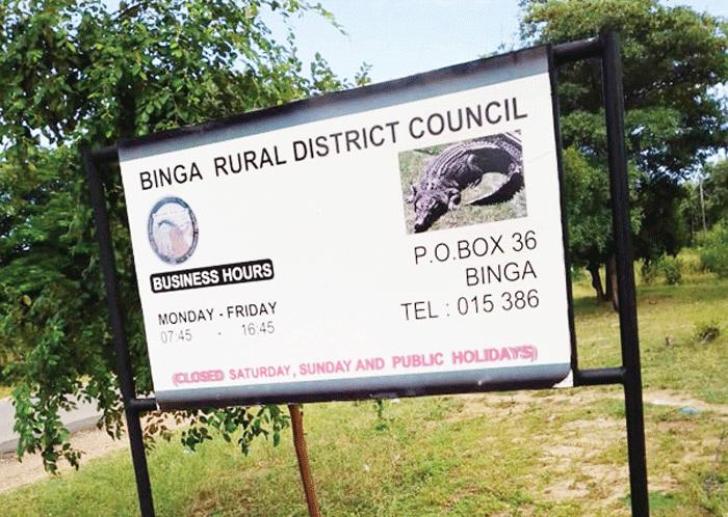
In a district where hunger forces thousands of children out of school and most households lack even basic sanitation, a luxury four-bedroom house complete with a jacuzzi is nearing completion on the shores of Lake Kariba - built at public expense for the long-serving chief executive of one of Zimbabwe's poorest rural authorities.
An investigation by the Centre for Innovation and Technology (CITE) reveals that Binga Rural District Council has spent close to US$200 000 constructing a so-called "grace-and-favour" residence for its chief executive officer, Joshua Muzamba. The project proceeds despite a standing government directive barring local authorities from building personal homes for senior officials.
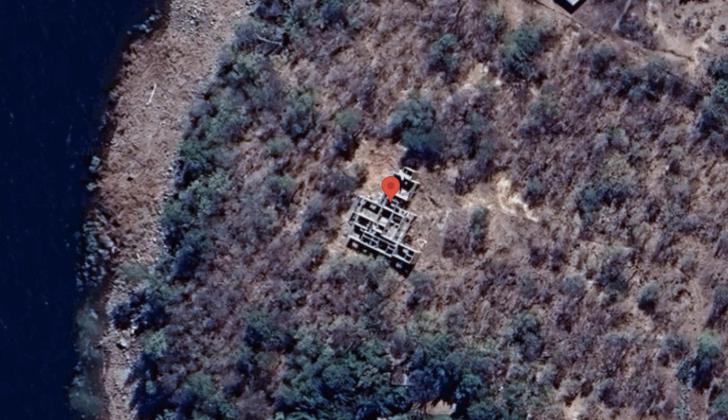 An earlier Google image showing an aerial view of the house under construction
The property sits on a two-acre stand valued at more than US$40 000, allocated to Muzamba free of charge in an exclusive peninsula neighbourhood about six kilometres from Binga town. Surrounded by water on two sides, the house features four bedrooms - three ensuite - two garages and a jacuzzi, a level of luxury sharply at odds with the district's stark realities.
According to ZimStat data, 73 percent of households in Binga have no toilets. Many communities walk long distances to access schools and clinics, often along roads rendered impassable during the rainy season. Education ministry figures show that in 2022 alone, 6 671 pupils dropped out of school, while more than 13 000 attended irregularly due to hunger.
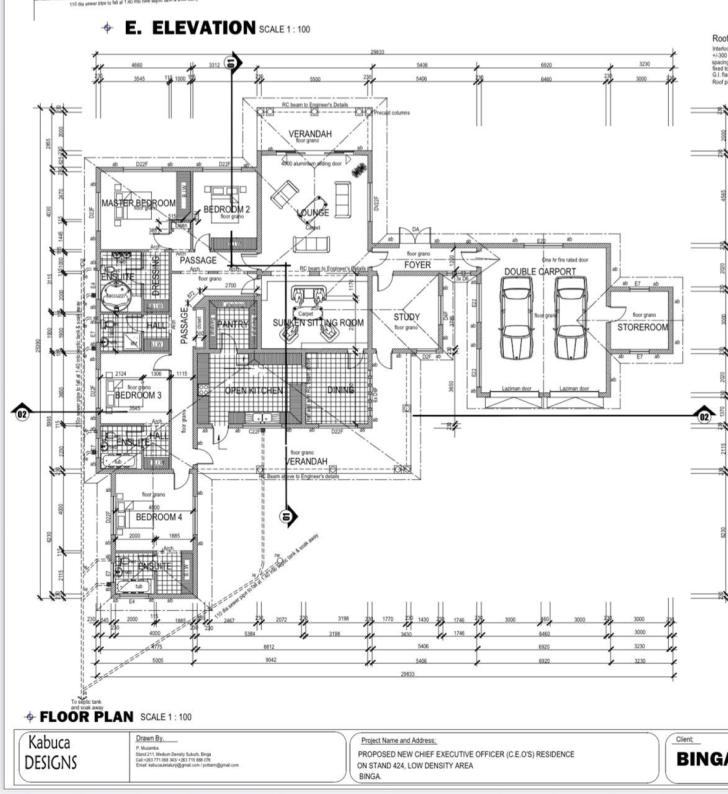
Yet council funds have been channelled into the high-end residence.
Neither Muzamba nor the council responded to repeated requests for comment.
A Ministry of Local Government circular issued on October 6, 2014 - Circular CX154 - explicitly prohibits local authorities from allocating institutional properties to employees, mayors or council chairpersons. Ministry spokesperson Gabriel Masvora confirmed the directive remains in force, stating that government expects improved service delivery to be prioritised for the benefit of residents and that councillors should ensure compliance with policy.
However, the Association of Rural District Councils of Zimbabwe (ARDCZ), chaired by Muzamba, passed a resolution permitting the construction of houses for senior officials after 10 years of service - a move critics say effectively sidesteps central government policy. Muzamba has led Binga RDC for 14 years.
Fanuel Cumanzala, the Citizens Coalition for Change MP for Binga South, described the CEO as a dominant figure operating with little internal resistance. He alleged that councillors fear challenging him and claimed the executive enjoys backing from influential figures with economic interests in the district.
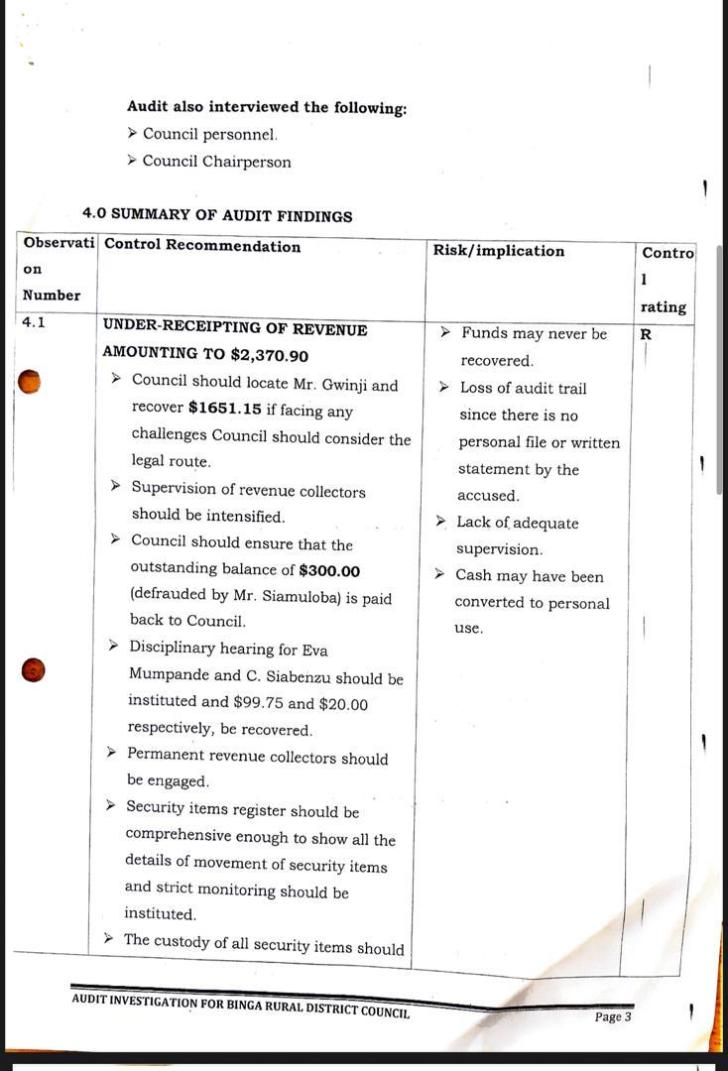
Governance concerns at Binga RDC are not new. In 2018, police requested a comprehensive audit after investigations into suspected theft of trust property revealed possible financial irregularities. The then senior assistant commissioner Stephen Mutamba - now Commissioner-General of the Zimbabwe Republic Police - wrote to the ministry recommending a full audit after evidence emerged of alleged under-receipting of cash.
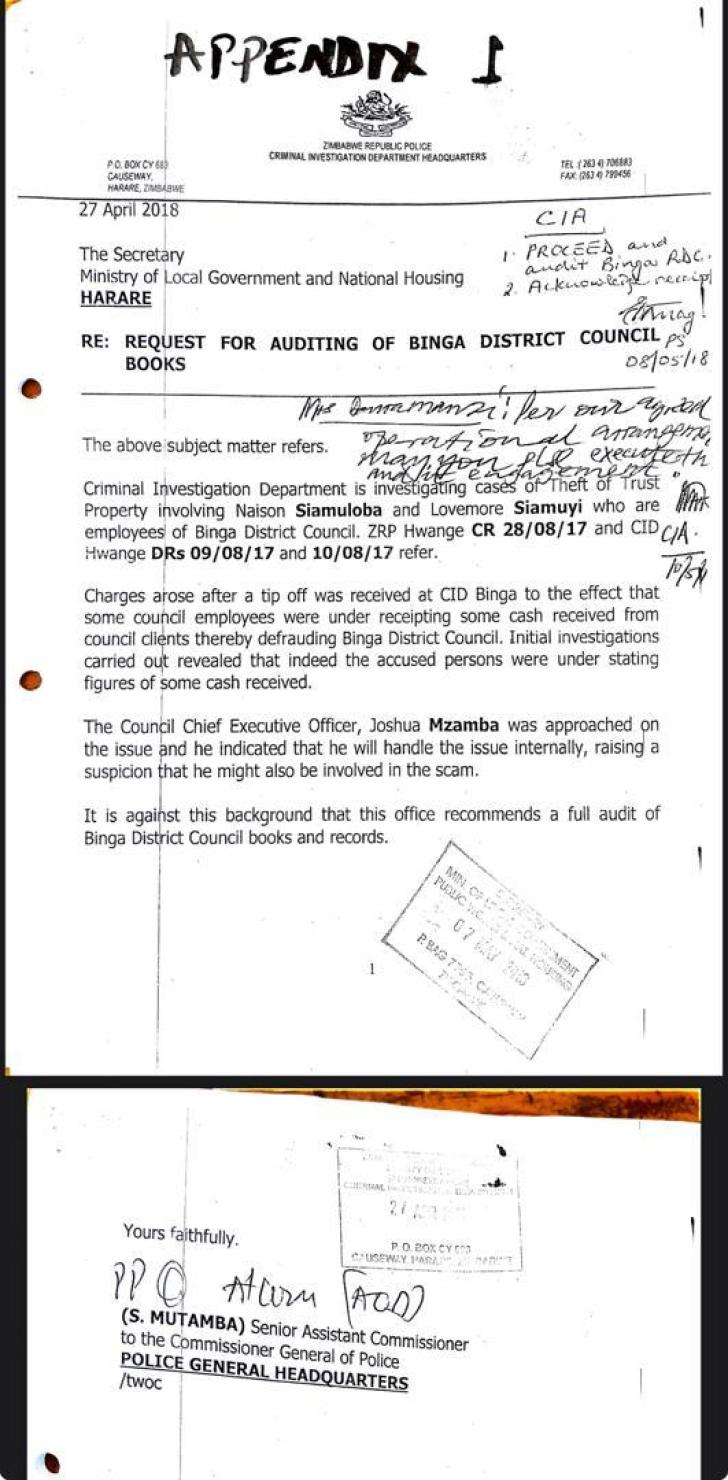
The ministry audit reportedly uncovered serious weaknesses, including unrecorded bank transfers, rampant under-receipting, the absence of an authenticated employment policy and unsigned council minutes, raising doubts about record authenticity. Residents say little meaningful corrective action followed.
Muzamba is also accused of shielding certain employees implicated in earlier investigations and of filling council posts with relatives — allegations he has not publicly addressed. A council insider, speaking anonymously for fear of reprisals, said that although staff numbers were previously capped at 50 due to financial constraints, new hires soon followed. "Now the place is flooded with his kinsmen," the source said.
Employees describe a workplace culture marked by fear and factionalism. Ratepayers have also questioned a council resolution allowing senior officials to purchase service vehicles at book value after five years, arguing it effectively shifts the cost of fleet renewal onto residents.
The council is reportedly battling cash flow challenges, at times compensating employees with housing stands instead of salaries. Critics say these constraints make the spending on a luxury residence especially troubling.
The Auditor-General has previously warned that similar practices elsewhere risk undermining service delivery. In 2022, Marondera RDC was flagged for constructing a CEO residence using capital development funds, with the Auditor-General cautioning that service delivery could be compromised when funds are diverted from intended purposes.
Richard Moyo, the Minister of State for Matabeleland North Provincial Affairs and Devolution, said his office had received no formal corruption complaints regarding Binga RDC and suggested some allegations might stem from political disputes.
Meanwhile, government says a taskforce led by the Zimbabwe Anti-Corruption Commission is examining corruption allegations across local authorities and would investigate any formal reports submitted.
For Cumanzala and many residents, the issue cuts deeper than a single house. Binga is rich in natural resources, from fisheries on Lake Kariba to forests and mineral deposits, and receives significant attention from government and non-governmental organisations. Yet poverty remains entrenched.
In a district where children drop out of school because they are hungry and most families lack basic sanitation, the image of a publicly funded lakeside mansion with a jacuzzi has become a potent symbol of inequality - and of the growing questions over who truly benefits from Binga's resources.
An investigation by the Centre for Innovation and Technology (CITE) reveals that Binga Rural District Council has spent close to US$200 000 constructing a so-called "grace-and-favour" residence for its chief executive officer, Joshua Muzamba. The project proceeds despite a standing government directive barring local authorities from building personal homes for senior officials.
An earlier Google image showing an aerial view of the house under constructionThe property sits on a two-acre stand valued at more than US$40 000, allocated to Muzamba free of charge in an exclusive peninsula neighbourhood about six kilometres from Binga town. Surrounded by water on two sides, the house features four bedrooms - three ensuite - two garages and a jacuzzi, a level of luxury sharply at odds with the district's stark realities.
According to ZimStat data, 73 percent of households in Binga have no toilets. Many communities walk long distances to access schools and clinics, often along roads rendered impassable during the rainy season. Education ministry figures show that in 2022 alone, 6 671 pupils dropped out of school, while more than 13 000 attended irregularly due to hunger.
Yet council funds have been channelled into the high-end residence.
Neither Muzamba nor the council responded to repeated requests for comment.
A Ministry of Local Government circular issued on October 6, 2014 - Circular CX154 - explicitly prohibits local authorities from allocating institutional properties to employees, mayors or council chairpersons. Ministry spokesperson Gabriel Masvora confirmed the directive remains in force, stating that government expects improved service delivery to be prioritised for the benefit of residents and that councillors should ensure compliance with policy.
However, the Association of Rural District Councils of Zimbabwe (ARDCZ), chaired by Muzamba, passed a resolution permitting the construction of houses for senior officials after 10 years of service - a move critics say effectively sidesteps central government policy. Muzamba has led Binga RDC for 14 years.
Fanuel Cumanzala, the Citizens Coalition for Change MP for Binga South, described the CEO as a dominant figure operating with little internal resistance. He alleged that councillors fear challenging him and claimed the executive enjoys backing from influential figures with economic interests in the district.
Governance concerns at Binga RDC are not new. In 2018, police requested a comprehensive audit after investigations into suspected theft of trust property revealed possible financial irregularities. The then senior assistant commissioner Stephen Mutamba - now Commissioner-General of the Zimbabwe Republic Police - wrote to the ministry recommending a full audit after evidence emerged of alleged under-receipting of cash.
The ministry audit reportedly uncovered serious weaknesses, including unrecorded bank transfers, rampant under-receipting, the absence of an authenticated employment policy and unsigned council minutes, raising doubts about record authenticity. Residents say little meaningful corrective action followed.
Muzamba is also accused of shielding certain employees implicated in earlier investigations and of filling council posts with relatives — allegations he has not publicly addressed. A council insider, speaking anonymously for fear of reprisals, said that although staff numbers were previously capped at 50 due to financial constraints, new hires soon followed. "Now the place is flooded with his kinsmen," the source said.
Employees describe a workplace culture marked by fear and factionalism. Ratepayers have also questioned a council resolution allowing senior officials to purchase service vehicles at book value after five years, arguing it effectively shifts the cost of fleet renewal onto residents.
The council is reportedly battling cash flow challenges, at times compensating employees with housing stands instead of salaries. Critics say these constraints make the spending on a luxury residence especially troubling.
The Auditor-General has previously warned that similar practices elsewhere risk undermining service delivery. In 2022, Marondera RDC was flagged for constructing a CEO residence using capital development funds, with the Auditor-General cautioning that service delivery could be compromised when funds are diverted from intended purposes.
Richard Moyo, the Minister of State for Matabeleland North Provincial Affairs and Devolution, said his office had received no formal corruption complaints regarding Binga RDC and suggested some allegations might stem from political disputes.
Meanwhile, government says a taskforce led by the Zimbabwe Anti-Corruption Commission is examining corruption allegations across local authorities and would investigate any formal reports submitted.
For Cumanzala and many residents, the issue cuts deeper than a single house. Binga is rich in natural resources, from fisheries on Lake Kariba to forests and mineral deposits, and receives significant attention from government and non-governmental organisations. Yet poverty remains entrenched.
In a district where children drop out of school because they are hungry and most families lack basic sanitation, the image of a publicly funded lakeside mansion with a jacuzzi has become a potent symbol of inequality - and of the growing questions over who truly benefits from Binga's resources.
Source - Cite
Join the discussion
Loading comments…


