News / National
Zimbabwe rolls out heritage-based curriculum nationwide
24 Mar 2026 at 19:05hrs |
0 Views
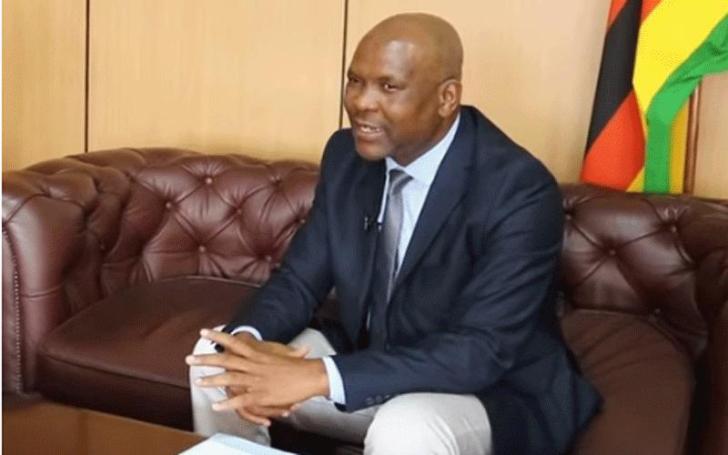
The Government of Zimbabwe has directed all schools to fully implement the Heritage-Based Curriculum Framework, marking a major shift aimed at aligning the country's education system with national development priorities.
In a circular to stakeholders, Secretary for Primary and Secondary Education Moses Mhike said the framework, which runs from 2024 to 2030, replaces previous guidelines and sets the direction for teaching and learning across the country.
"The underlying principle is an education system that produces goods and services useful to the economy, based on heritage," he said.
The new curriculum builds on the competence-based framework but places stronger emphasis on harnessing Zimbabwe's natural and human resources, including minerals, agriculture and indigenous knowledge systems.
Mhike added that the framework strengthens the integration of science and technology, in line with Government's push to develop practical skills.
"It integrates and reinforces a strong scientific and technological bias as part of the Government's skills development strategy," he said.
Under the revised structure, secondary school learners will take compulsory subjects such as Mathematics, Combined Science and Heritage Studies, while choosing electives from a broad range that includes sciences, humanities, commercial and technical disciplines.
At Advanced Level, learners will follow specialised career pathways, including Science, Technology, Engineering, Arts and Mathematics (STEAM), Technical and Vocational Education and Training, Humanities, Commercials, as well as Visual and Performing Arts.
The circular also confirms the replacement of Continuous Assessment Learning Activities (CALA) with school-based projects for most learners.
"With effect from May 1, 2024, the School Based Project replaced CALA, except for examination classes completing their final assessment cycle," Mhike said.
Full implementation of the curriculum began in 2025 for most classes, with transitional arrangements for examination groups already underway.
Mhike emphasised that the success of the new framework will depend on effective execution at school level, with school heads, teachers, parents and communities expected to play a central role.
"The responsibility for the quality of educational provision in individual schools rests with heads, teachers, parents, business and the community," he said.
The ministry will continue to monitor progress through inspections and evaluation mechanisms to ensure compliance.
"It is incumbent upon every school to effectively implement the provisions of this circular," Mhike added.
In a circular to stakeholders, Secretary for Primary and Secondary Education Moses Mhike said the framework, which runs from 2024 to 2030, replaces previous guidelines and sets the direction for teaching and learning across the country.
"The underlying principle is an education system that produces goods and services useful to the economy, based on heritage," he said.
The new curriculum builds on the competence-based framework but places stronger emphasis on harnessing Zimbabwe's natural and human resources, including minerals, agriculture and indigenous knowledge systems.
Mhike added that the framework strengthens the integration of science and technology, in line with Government's push to develop practical skills.
"It integrates and reinforces a strong scientific and technological bias as part of the Government's skills development strategy," he said.
Under the revised structure, secondary school learners will take compulsory subjects such as Mathematics, Combined Science and Heritage Studies, while choosing electives from a broad range that includes sciences, humanities, commercial and technical disciplines.
The circular also confirms the replacement of Continuous Assessment Learning Activities (CALA) with school-based projects for most learners.
"With effect from May 1, 2024, the School Based Project replaced CALA, except for examination classes completing their final assessment cycle," Mhike said.
Full implementation of the curriculum began in 2025 for most classes, with transitional arrangements for examination groups already underway.
Mhike emphasised that the success of the new framework will depend on effective execution at school level, with school heads, teachers, parents and communities expected to play a central role.
"The responsibility for the quality of educational provision in individual schools rests with heads, teachers, parents, business and the community," he said.
The ministry will continue to monitor progress through inspections and evaluation mechanisms to ensure compliance.
"It is incumbent upon every school to effectively implement the provisions of this circular," Mhike added.
Source - The Herald
Join the discussion
Loading comments…


