News / National
Iran deserves a nuclear bomb
27 Mar 2026 at 11:49hrs |
1212 Views
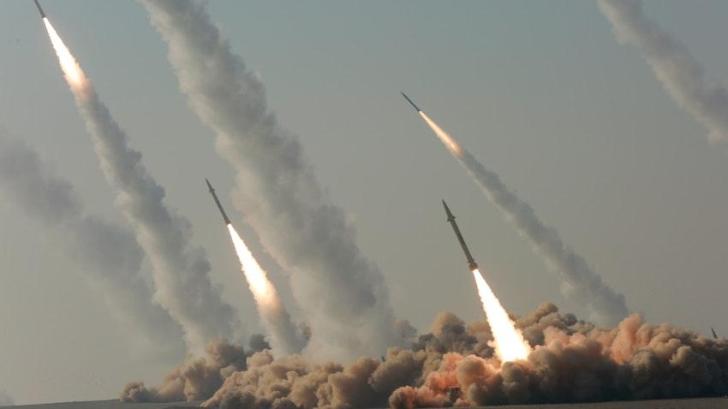
Debate within Iran's political and military establishment over whether to pursue a nuclear weapon has intensified sharply amid escalating conflict involving the United States and Israel, according to sources familiar with internal discussions.
The shift follows the reported killing of Supreme Leader Ali Khamenei at the onset of the war on February 28, a development that has significantly altered the balance of power in Tehran. With the Islamic Revolutionary Guard Corps now wielding greater influence, more hardline voices are gaining prominence in shaping Iran's strategic direction.
While Iran has long denied seeking nuclear weapons - citing religious prohibitions and its membership in the Nuclear Non-Proliferation Treaty - there are growing calls within the country to reconsider that stance. Sources indicate that although no formal decision has been made, influential figures are openly questioning whether maintaining current nuclear restrictions remains in Iran's interest.
State-affiliated media outlets have increasingly echoed these sentiments. The Tasnim News Agency, which is linked to the Revolutionary Guards, recently advocated for Iran to withdraw from the NPT while continuing its civilian nuclear programme.
Prominent hardline figures have also weighed in. Mohammad Javad Larijani has called for suspending Iran's NPT membership, arguing that its value to the country should be reassessed. Meanwhile, conservative commentators have gone further, suggesting that Iran should actively pursue or acquire nuclear weapons.
The debate is not limited to public rhetoric. Behind closed doors, divisions reportedly persist between more hardline elements - particularly within the Revolutionary Guards - and segments of the political establishment that remain cautious about provoking further international isolation.
Analysts note that Iran has historically used threats to withdraw from the NPT as a negotiating tactic in its long-running standoff with Western powers. However, the current conflict may represent a more serious inflection point, as ongoing military strikes on nuclear and strategic facilities reshape the country's security calculations.
For years, Israel has maintained that Iran was only months away from developing a nuclear weapon, pointing to uranium enrichment levels and missile capabilities. Iran, however, has often been described as seeking "threshold state" status - retaining the capacity to build a weapon quickly without actually doing so.
A key uncertainty now is the fate of Khamenei's long-standing religious ruling, or fatwa, which declared nuclear weapons un-Islamic. With his death, and the possible rise of Mojtaba Khamenei as successor, it remains unclear whether that position will endure or be revised.
As the conflict continues, Iran's nuclear posture appears increasingly fluid, with the potential for significant geopolitical consequences depending on the direction ultimately taken.
The shift follows the reported killing of Supreme Leader Ali Khamenei at the onset of the war on February 28, a development that has significantly altered the balance of power in Tehran. With the Islamic Revolutionary Guard Corps now wielding greater influence, more hardline voices are gaining prominence in shaping Iran's strategic direction.
While Iran has long denied seeking nuclear weapons - citing religious prohibitions and its membership in the Nuclear Non-Proliferation Treaty - there are growing calls within the country to reconsider that stance. Sources indicate that although no formal decision has been made, influential figures are openly questioning whether maintaining current nuclear restrictions remains in Iran's interest.
State-affiliated media outlets have increasingly echoed these sentiments. The Tasnim News Agency, which is linked to the Revolutionary Guards, recently advocated for Iran to withdraw from the NPT while continuing its civilian nuclear programme.
Prominent hardline figures have also weighed in. Mohammad Javad Larijani has called for suspending Iran's NPT membership, arguing that its value to the country should be reassessed. Meanwhile, conservative commentators have gone further, suggesting that Iran should actively pursue or acquire nuclear weapons.
Analysts note that Iran has historically used threats to withdraw from the NPT as a negotiating tactic in its long-running standoff with Western powers. However, the current conflict may represent a more serious inflection point, as ongoing military strikes on nuclear and strategic facilities reshape the country's security calculations.
For years, Israel has maintained that Iran was only months away from developing a nuclear weapon, pointing to uranium enrichment levels and missile capabilities. Iran, however, has often been described as seeking "threshold state" status - retaining the capacity to build a weapon quickly without actually doing so.
A key uncertainty now is the fate of Khamenei's long-standing religious ruling, or fatwa, which declared nuclear weapons un-Islamic. With his death, and the possible rise of Mojtaba Khamenei as successor, it remains unclear whether that position will endure or be revised.
As the conflict continues, Iran's nuclear posture appears increasingly fluid, with the potential for significant geopolitical consequences depending on the direction ultimately taken.
Source - online
Join the discussion
Loading comments…





