News / National
Fear and flight as anti-Africans protests spread across South Africa
07 Jun 2026 at 08:13hrs |
0 Views
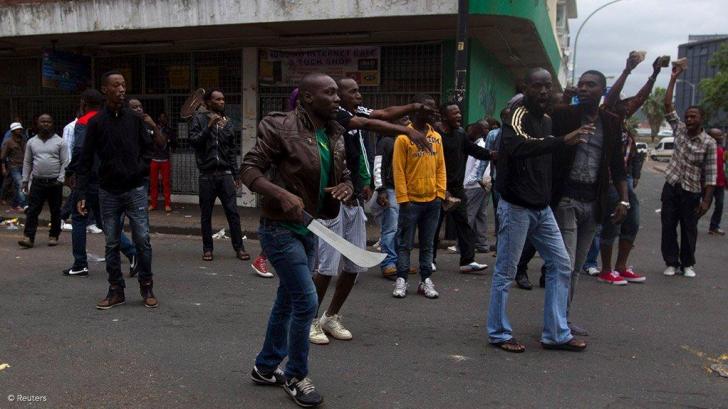
Dozens of immigrants have been forced into hiding or temporary shelters in South Africa's Western Cape province as a wave of anti-immigrant protests sweeps through several coastal towns, raising fresh concerns over xenophobic violence and community tensions.
Among those displaced is Mozambican national Lado Amido, who fled his home in Kleinmond after an angry crowd allegedly went door-to-door demanding that foreign nationals leave the area.
Amido said the group arrived at his residence four days ago and ordered him to leave the town.
"On the 31st, people came to my house, knocked on the door, and then took all my belongings," said the 49-year-old, who arrived in South Africa in February seeking employment.
Fearing for his safety, Amido spent two nights hiding in nearby mountains before seeking refuge at Kleinmond Town Hall, where about 100 immigrants from Mozambique, Malawi and other countries are now being sheltered.
The unrest comes amid a resurgence of anti-immigrant sentiment in parts of South Africa, where foreign nationals are frequently blamed for economic hardships, including unemployment and crime, despite a lack of evidence linking immigrants to the country's broader economic challenges.
Mozambique's government has reported that five of its citizens were killed in xenophobic attacks in the coastal town of Mossel Bay over the weekend, highlighting the escalating nature of the violence.
Many of those taking refuge in Kleinmond are considering voluntary repatriation programmes organised by their respective governments.
South African President Cyril Ramaphosa addressed the issue in Parliament this week, condemning xenophobic violence while acknowledging public concerns about migration.
"As we work to build a safer and more prosperous society, we need to address the challenge of migration," Ramaphosa said.
Local authorities say immigration enforcement operations have recently been conducted in Kleinmond and surrounding areas.
Ward councillor Grant Cohen said officials had inspected businesses to identify undocumented workers but stressed that many of those currently sheltering in the town hall are legally residing in South Africa.
"We've got kids here at the moment who should be in school, who have been in school in Kleinmond, but now want to flee the country out of fear and intimidation," Cohen said.
"I don't believe that residents should take things into their own hands."
For many immigrants, the fear has become overwhelming.
Michael Markson, a 31-year-old Malawian national, said he was warned by his landlord to flee before protesters reached the informal settlement where he lived.
"My landlord came telling me that I should evacuate because if they find us, they're going to kill us," he said.
Markson spent a night hiding in the mountains before a friend contacted his employer, who provided food and assistance while they remained concealed in nearby woods.
He said he witnessed large groups of protesters moving through the town, some carrying sticks and knives.
Now sheltering alongside other displaced migrants, Markson hopes to return home but lacks the financial means to do so without assistance.
"In our country there's no good economy, but it's better than living in a community where your life is under threat," he said.
South Africa has experienced repeated outbreaks of xenophobic violence over the past two decades, often triggered by economic frustrations and political debates over migration. Human rights groups have warned that inflammatory rhetoric and misinformation risk fuelling further tensions if not addressed through effective leadership, law enforcement and community engagement.
As authorities work to restore calm, hundreds of immigrants remain uncertain about their future, caught between economic hardship at home and growing hostility in the communities where they sought refuge and opportunity.
Among those displaced is Mozambican national Lado Amido, who fled his home in Kleinmond after an angry crowd allegedly went door-to-door demanding that foreign nationals leave the area.
Amido said the group arrived at his residence four days ago and ordered him to leave the town.
"On the 31st, people came to my house, knocked on the door, and then took all my belongings," said the 49-year-old, who arrived in South Africa in February seeking employment.
Fearing for his safety, Amido spent two nights hiding in nearby mountains before seeking refuge at Kleinmond Town Hall, where about 100 immigrants from Mozambique, Malawi and other countries are now being sheltered.
The unrest comes amid a resurgence of anti-immigrant sentiment in parts of South Africa, where foreign nationals are frequently blamed for economic hardships, including unemployment and crime, despite a lack of evidence linking immigrants to the country's broader economic challenges.
Mozambique's government has reported that five of its citizens were killed in xenophobic attacks in the coastal town of Mossel Bay over the weekend, highlighting the escalating nature of the violence.
Many of those taking refuge in Kleinmond are considering voluntary repatriation programmes organised by their respective governments.
South African President Cyril Ramaphosa addressed the issue in Parliament this week, condemning xenophobic violence while acknowledging public concerns about migration.
"As we work to build a safer and more prosperous society, we need to address the challenge of migration," Ramaphosa said.
Local authorities say immigration enforcement operations have recently been conducted in Kleinmond and surrounding areas.
"We've got kids here at the moment who should be in school, who have been in school in Kleinmond, but now want to flee the country out of fear and intimidation," Cohen said.
"I don't believe that residents should take things into their own hands."
For many immigrants, the fear has become overwhelming.
Michael Markson, a 31-year-old Malawian national, said he was warned by his landlord to flee before protesters reached the informal settlement where he lived.
"My landlord came telling me that I should evacuate because if they find us, they're going to kill us," he said.
Markson spent a night hiding in the mountains before a friend contacted his employer, who provided food and assistance while they remained concealed in nearby woods.
He said he witnessed large groups of protesters moving through the town, some carrying sticks and knives.
Now sheltering alongside other displaced migrants, Markson hopes to return home but lacks the financial means to do so without assistance.
"In our country there's no good economy, but it's better than living in a community where your life is under threat," he said.
South Africa has experienced repeated outbreaks of xenophobic violence over the past two decades, often triggered by economic frustrations and political debates over migration. Human rights groups have warned that inflammatory rhetoric and misinformation risk fuelling further tensions if not addressed through effective leadership, law enforcement and community engagement.
As authorities work to restore calm, hundreds of immigrants remain uncertain about their future, caught between economic hardship at home and growing hostility in the communities where they sought refuge and opportunity.
Source - Reuters
Join the discussion
Loading comments…



