Opinion / Columnist
The politics behind the US visa ban on Zimbabwean officials
20 Oct 2025 at 07:14hrs |
0 Views
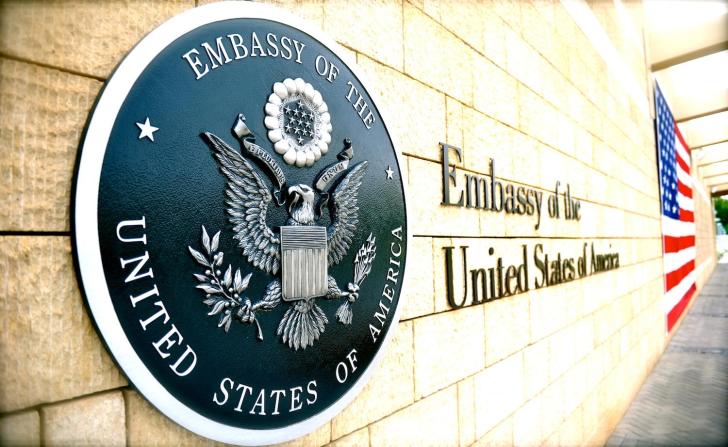
When the United States announced new visa restrictions on several Zimbabwean officials in March 2025, the move was presented as a principled stand for democracy, human rights, and electoral integrity. Yet beneath the diplomatic language lies a deeper story - one that speaks as much to global power politics as it does to governance in Harare.
The US justified its decision on the grounds of alleged election irregularities, political repression, and human rights violations. From Washington's perspective, this was an act of moral responsibility - a demonstration of its long-standing commitment to defend democratic values. But for Harare, the decision represented something more familiar: another episode in a recurring pattern of Western interference, double standards, and selective punishment.
At its core, the visa ban is less about travel restrictions and more about symbolism. It is a public declaration of judgment - who is deemed legitimate, and who is not - and a reminder of where real power lies in the global order. In this way, it exposes the unequal distribution of authority within international relations, where former colonial powers continue to wield influence under the guise of global governance.
Zimbabwe's leadership has long framed itself as the defender of sovereignty against external domination. To that extent, the US visa ban has only reinforced that narrative. Instead of isolating Harare, it may have entrenched the government's anti-Western posture and deepened its strategic realignment with partners such as China, Russia, and fellow BRICS nations.
This posture is not new. Since the enactment of the Zimbabwe Democracy and Economic Recovery Act (ZIDERA) in 2001, relations between Washington and Harare have been defined by confrontation. Each new sanction, restriction, or rebuke serves as another reminder of the unresolved ideological divide between the postcolonial state and the Western liberal order that seeks to define it.
The irony, however, is that measures such as visa bans often achieve the opposite of their stated goals. Rather than fostering reform, they provide convenient ammunition for nationalist rhetoric and domestic political consolidation. In the public imagination, they are transformed from tools of accountability into symbols of defiance - proof that Zimbabwe remains under siege for daring to assert its independence.
The inconsistency of these punitive measures only amplifies the perception of hypocrisy. The United States rarely applies similar restrictions to its allies, even where human rights abuses are far more severe. Such selectivity transforms moral advocacy into geopolitical gatekeeping - policing access to international spaces and reasserting global hierarchies under the banner of democratic values.
Equally troubling is the conditional nature of Western "pardon." Recent signals of possible sanctions relief have been framed not as recognition of progress, but as a privilege to be earned through "behavioural change." This language reduces sovereignty to compliance, positioning African nations as perpetual subjects in a hierarchy where legitimacy is externally defined.
For Zimbabwe, a nation whose identity is deeply tied to liberation and anti-imperial struggle, such actions cut to the heart of national pride. The visa bans do not merely restrict travel; they reopen old wounds of resistance and subjugation. They remind the country that even decades after independence, its sovereignty remains subject to external judgment.
Yet the question remains: do these measures address authoritarian excesses, or do they inadvertently entrench them? By allowing governments to rally domestic support around narratives of sovereignty and resistance, external pressure often becomes a substitute for internal accountability. The victims of repression are left without redress, while those in power strengthen their control under the banner of defending the nation.
Ultimately, the US visa ban on Zimbabwean officials reflects the complexity of modern diplomacy - a space where moral posturing, historical grievances, and geopolitical strategy collide. It forces a critical question: who truly defines legitimacy - the citizen with a vote, or the superpower with a visa stamp?
Zimbabwe's journey toward democratic maturity cannot be dictated from abroad, nor can it be divorced from global realities. Genuine progress requires dialogue, not dictates; cooperation, not coercion. Until then, the politics of bans and sanctions will continue to speak louder than the principles they claim to uphold.
The US justified its decision on the grounds of alleged election irregularities, political repression, and human rights violations. From Washington's perspective, this was an act of moral responsibility - a demonstration of its long-standing commitment to defend democratic values. But for Harare, the decision represented something more familiar: another episode in a recurring pattern of Western interference, double standards, and selective punishment.
At its core, the visa ban is less about travel restrictions and more about symbolism. It is a public declaration of judgment - who is deemed legitimate, and who is not - and a reminder of where real power lies in the global order. In this way, it exposes the unequal distribution of authority within international relations, where former colonial powers continue to wield influence under the guise of global governance.
Zimbabwe's leadership has long framed itself as the defender of sovereignty against external domination. To that extent, the US visa ban has only reinforced that narrative. Instead of isolating Harare, it may have entrenched the government's anti-Western posture and deepened its strategic realignment with partners such as China, Russia, and fellow BRICS nations.
This posture is not new. Since the enactment of the Zimbabwe Democracy and Economic Recovery Act (ZIDERA) in 2001, relations between Washington and Harare have been defined by confrontation. Each new sanction, restriction, or rebuke serves as another reminder of the unresolved ideological divide between the postcolonial state and the Western liberal order that seeks to define it.
The irony, however, is that measures such as visa bans often achieve the opposite of their stated goals. Rather than fostering reform, they provide convenient ammunition for nationalist rhetoric and domestic political consolidation. In the public imagination, they are transformed from tools of accountability into symbols of defiance - proof that Zimbabwe remains under siege for daring to assert its independence.
Equally troubling is the conditional nature of Western "pardon." Recent signals of possible sanctions relief have been framed not as recognition of progress, but as a privilege to be earned through "behavioural change." This language reduces sovereignty to compliance, positioning African nations as perpetual subjects in a hierarchy where legitimacy is externally defined.
For Zimbabwe, a nation whose identity is deeply tied to liberation and anti-imperial struggle, such actions cut to the heart of national pride. The visa bans do not merely restrict travel; they reopen old wounds of resistance and subjugation. They remind the country that even decades after independence, its sovereignty remains subject to external judgment.
Yet the question remains: do these measures address authoritarian excesses, or do they inadvertently entrench them? By allowing governments to rally domestic support around narratives of sovereignty and resistance, external pressure often becomes a substitute for internal accountability. The victims of repression are left without redress, while those in power strengthen their control under the banner of defending the nation.
Ultimately, the US visa ban on Zimbabwean officials reflects the complexity of modern diplomacy - a space where moral posturing, historical grievances, and geopolitical strategy collide. It forces a critical question: who truly defines legitimacy - the citizen with a vote, or the superpower with a visa stamp?
Zimbabwe's journey toward democratic maturity cannot be dictated from abroad, nor can it be divorced from global realities. Genuine progress requires dialogue, not dictates; cooperation, not coercion. Until then, the politics of bans and sanctions will continue to speak louder than the principles they claim to uphold.
Source - Newsday
All articles and letters published on Bulawayo24 have been independently written by members of Bulawayo24's community. The views of users published on Bulawayo24 are therefore their own and do not necessarily represent the views of Bulawayo24. Bulawayo24 editors also reserve the right to edit or delete any and all comments received.
Join the discussion
Loading comments…


