News / National
Trump's war accelerate global shift away from US dollar
02 Mar 2026 at 19:57hrs |
0 Views
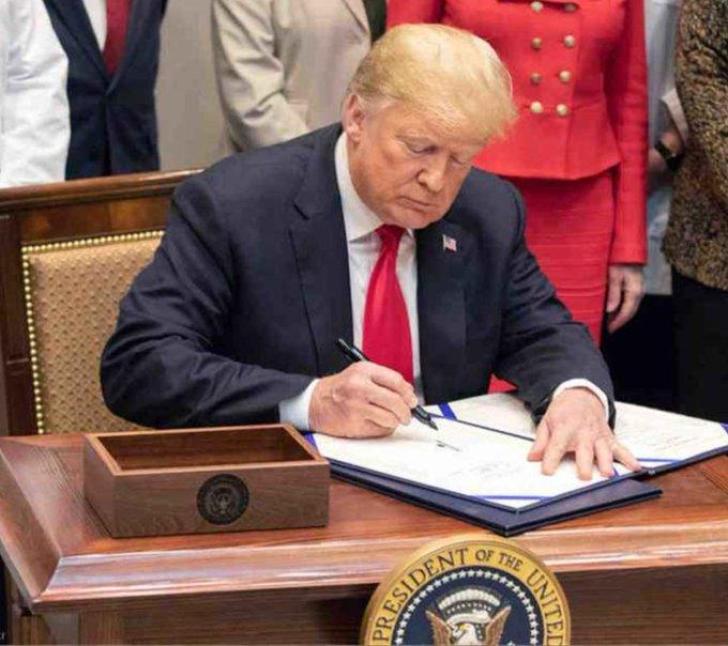
Donald Trump's recent military action against Iran, dubbed by the Pentagon as Operation Epic Fury, has reignited concerns over Washington's approach to global governance - and its potential impact on the US dollar's dominance.
Beyond inflaming instability in the Middle East, the strikes reinforce the perception of a US acting unilaterally, echoing previous policy volatility, including on-off tariff regimes and interventions in countries like Venezuela. Financial markets are responding: the trade-weighted dollar has fallen 7% over the past year despite robust economic growth and soaring Wall Street equities. Analysts cite not only inflation and interest rate expectations but also a broader sense that US policy is increasingly unpredictable.
Experts convened at a London conference organized by the Centre for Inclusive Trade Policy suggest a historic transition is underway: rather than a single currency replacing the dollar as sterling did after World War II, a multipolar system of global currencies is emerging.
While international trade remains largely dollar-denominated, the renminbi's global use is growing, actively promoted by Beijing. Central banks, meanwhile, are quietly diversifying reserves, with the dollar's share of global reserves slipping from 71% in 2001 to 57% by late 2025.
"The US's leverage over the global financial system has long been immense, highlighted during the 2007-08 credit crisis when the Federal Reserve opened swap lines to select central banks," notes analysts. Yet the growing reliance on sanctions and financial coercion—blocking access to SWIFT or freezing assets—has exposed the vulnerabilities of "weaponized interdependence."
Canadian economist Mark Carney recently echoed the concern, warning that global powers increasingly use financial infrastructure, tariffs, and supply chains as strategic tools. This dynamic has heightened the drive for alternatives to the greenback.
Technological innovations and new financial instruments are also accelerating the trend. The European Central Bank's expanded repo facilities, for example, act as a lender-of-last-resort for other central banks, reinforcing the euro as a credible alternative in future crises. China and Europe are investing in central bank digital currencies and cross-border swap lines to reduce dependence on the US.
The BRICS bloc—Brazil, Russia, India, China, and South Africa—has long championed de-dollarization. While a unified BRICS currency remains hypothetical, member states are increasingly exploring financial linkages that bypass the US, including reciprocal use of digital currencies and emergency swap lines.
Experts warn that the US faces tangible costs from this shift. Reduced reliance on the dollar undermines the "convenience yield" of US Treasuries, historically allowing cheaper government borrowing. With federal debt projected to reach 130% of GDP within five years, diminishing confidence in the dollar could have significant fiscal consequences.
"Global governments are quietly building alternatives," says Francisco Quintana of Edinburgh Law School. "It's increasingly clear that dependence on the US is risky when the policy environment is unpredictable."
For now, US Treasuries remain a safe haven for investors, but Trump's chaotic approach has given new momentum to de-dollarization, signaling a potential recalibration of global financial power in the coming years.
Beyond inflaming instability in the Middle East, the strikes reinforce the perception of a US acting unilaterally, echoing previous policy volatility, including on-off tariff regimes and interventions in countries like Venezuela. Financial markets are responding: the trade-weighted dollar has fallen 7% over the past year despite robust economic growth and soaring Wall Street equities. Analysts cite not only inflation and interest rate expectations but also a broader sense that US policy is increasingly unpredictable.
Experts convened at a London conference organized by the Centre for Inclusive Trade Policy suggest a historic transition is underway: rather than a single currency replacing the dollar as sterling did after World War II, a multipolar system of global currencies is emerging.
While international trade remains largely dollar-denominated, the renminbi's global use is growing, actively promoted by Beijing. Central banks, meanwhile, are quietly diversifying reserves, with the dollar's share of global reserves slipping from 71% in 2001 to 57% by late 2025.
"The US's leverage over the global financial system has long been immense, highlighted during the 2007-08 credit crisis when the Federal Reserve opened swap lines to select central banks," notes analysts. Yet the growing reliance on sanctions and financial coercion—blocking access to SWIFT or freezing assets—has exposed the vulnerabilities of "weaponized interdependence."
Canadian economist Mark Carney recently echoed the concern, warning that global powers increasingly use financial infrastructure, tariffs, and supply chains as strategic tools. This dynamic has heightened the drive for alternatives to the greenback.
Technological innovations and new financial instruments are also accelerating the trend. The European Central Bank's expanded repo facilities, for example, act as a lender-of-last-resort for other central banks, reinforcing the euro as a credible alternative in future crises. China and Europe are investing in central bank digital currencies and cross-border swap lines to reduce dependence on the US.
The BRICS bloc—Brazil, Russia, India, China, and South Africa—has long championed de-dollarization. While a unified BRICS currency remains hypothetical, member states are increasingly exploring financial linkages that bypass the US, including reciprocal use of digital currencies and emergency swap lines.
Experts warn that the US faces tangible costs from this shift. Reduced reliance on the dollar undermines the "convenience yield" of US Treasuries, historically allowing cheaper government borrowing. With federal debt projected to reach 130% of GDP within five years, diminishing confidence in the dollar could have significant fiscal consequences.
"Global governments are quietly building alternatives," says Francisco Quintana of Edinburgh Law School. "It's increasingly clear that dependence on the US is risky when the policy environment is unpredictable."
For now, US Treasuries remain a safe haven for investors, but Trump's chaotic approach has given new momentum to de-dollarization, signaling a potential recalibration of global financial power in the coming years.
Source - online
Join the discussion
Loading comments…


